Giovanni B. Pittaluga – författare
Visar alla böcker från författaren Giovanni B. Pittaluga. Handla med fri frakt och snabb leverans.
3 produkter
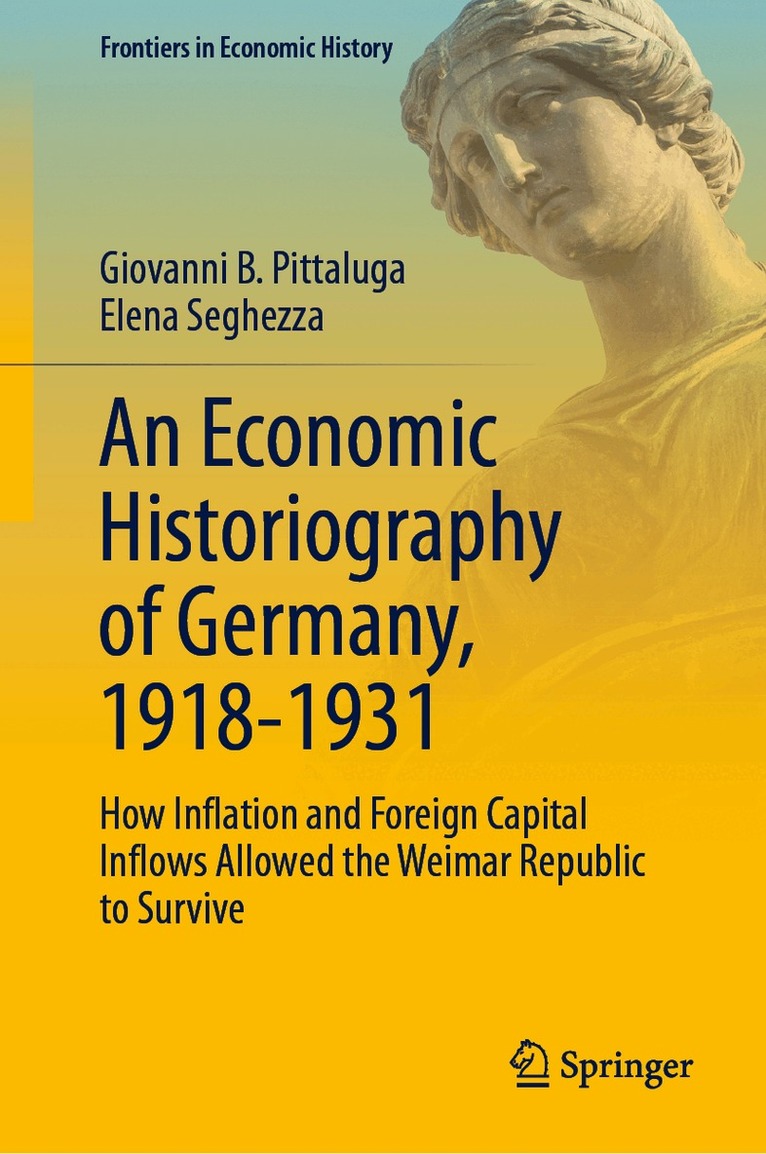
Economic Historiography of Germany, 1918-1931
How Inflation and Foreign Capital Inflows Allowed the Weimar Republic to Survive
Av Giovanni B. Pittaluga, Elena Seghezza
Inbunden, 2024
1355 kr
Lägg i varukorg
Contrary to existing economic analyses of the Weimar Republic, this book looks beyond the explanations of the individual events that characterized it - in particular hyperinflation, Brüning's fiscal policy, and the 1931 crisis. Instead, it adopts a more unified approach, and thereby sheds light on …
Economic Historiography of Germany, 1918-1931
How Inflation and Foreign Capital Inflows Allowed the Weimar Republic to Survive
Av Elena Seghezza, Giovanni B. Pittaluga
E-bok, 2024
1788 kr
Lägg i varukorg
Contrary to existing economic analyses of the Weimar Republic, this book looks beyond the explanations of the individual events that characterized it - in particular hyperinflation, Brüning''s fiscal policy, and the 1931 crisis. Instead, it adopts a more unified approach, and thereby sheds light on …
Economic Historiography of Germany, 1918-1931
How Inflation and Foreign Capital Inflows Allowed the Weimar Republic to Survive
Av Giovanni B. Pittaluga, Elena Seghezza
Häftad, 2025
1355 kr
Lägg i varukorg
Contrary to existing economic analyses of the Weimar Republic, this book looks beyond the explanations of the individual events that characterized it - in particular hyperinflation, Brüning's fiscal policy, and the 1931 crisis. Instead, it adopts a more unified approach, and thereby sheds light on …