Giovanni Organtini – författare
Visar alla böcker från författaren Giovanni Organtini. Handla med fri frakt och snabb leverans.
5 produkter
5 produkter
Inbunden, Engelska, 2025
1 694 kr
Skickas inom 5-8 vardagar
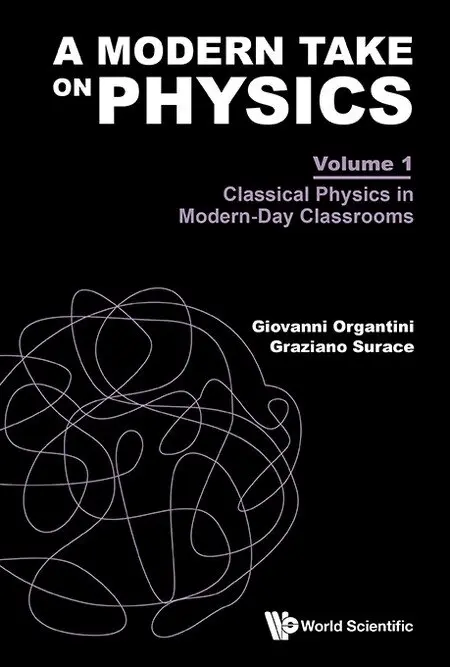
These two volumes cover the classical topics typically taught in undergraduate physics courses and beyond. However, we teach classical physics using a very different language from traditional books, influenced by the language of modern physics, in a move to encourage a positive approach towards the latter subject. Based around the unifying concept of energy, we take a distinct approach to the organisation of material, presenting physics in a cohesive manner without separating topics such as mechanics, kinematics, thermodynamics, electricity, and magnetism. Instead, physics is revealed gradually, emphasising a holistic approach to science. Despite this peculiarity, we have maintained the conventional separation between Physics I and II to assist teachers in smoothly integrating these books into their courses.These innovative volumes present valuable new perspectives. Although their approach is bold, they will certainly prompt interesting reflections on traditional teachings. This first volume contains chapters on temperature, optics, waves, motion, special relativity, Newton's laws, forces and work, inertial and non-inertial frames, momentum, the physics of gases, and thermodynamics, among other topics.
Inbunden, Engelska, 2025
1 709 kr
Skickas inom 5-8 vardagar
These two volumes cover the classical topics typically taught in undergraduate physics courses and beyond. However, we teach classical physics using a very different language from traditional books, influenced by the language of modern physics, in a move to encourage a positive approach towards the latter subject. Based around the unifying concept of energy, we take a distinct approach to the organisation of material, presenting physics in a cohesive manner without separating topics such as mechanics, kinematics, thermodynamics, electricity, and magnetism. Instead, physics is revealed gradually, emphasising a holistic approach to science. Despite this peculiarity, we have maintained the conventional separation between Physics I and II to assist teachers in smoothly integrating these books into their courses.These innovative volumes present valuable new perspectives. Although their approach is bold, they will certainly prompt interesting reflections on traditional teachings. A significant portion of this second volume is committed to modern physics, including an introduction to the standard model of fundamental interactions. The old quantum mechanics is largely excluded in favour of quantum field theory, which we present in a manner accessible to undergraduate students.
Häftad, Engelska, 2021
442 kr
Skickas inom 5-8 vardagar
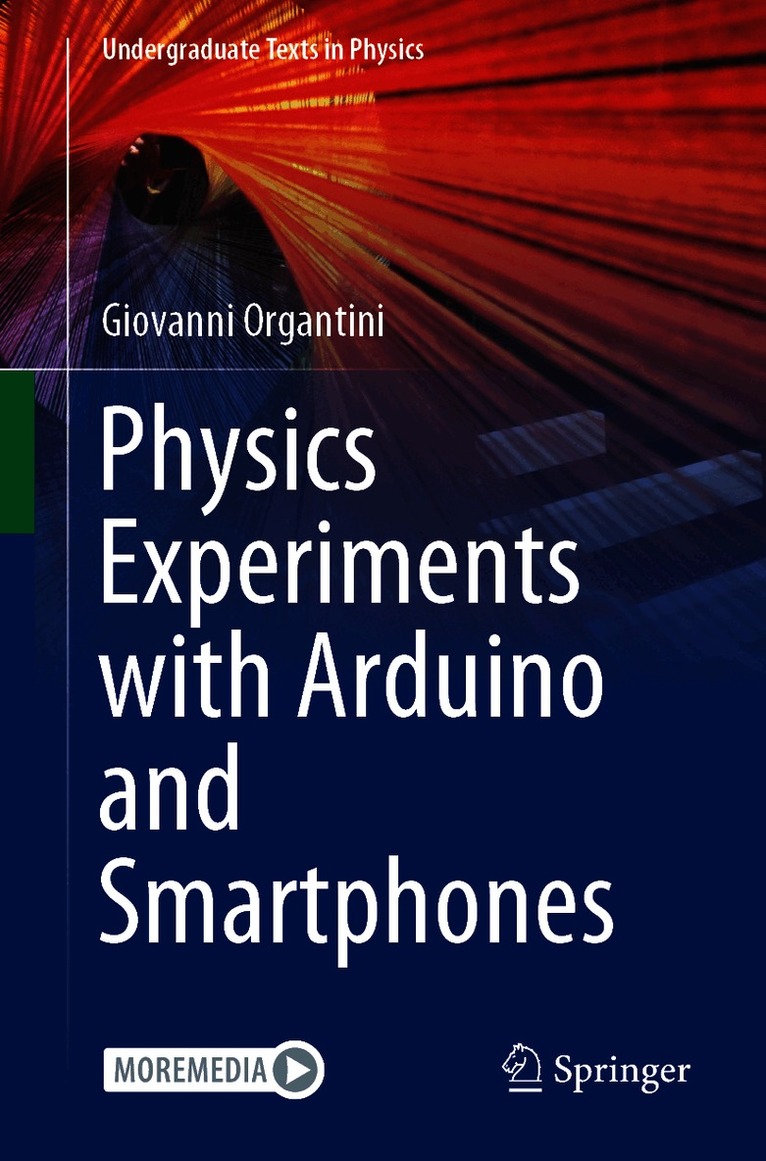
This book on the use of Arduino and Smartphones in physics experiments, with a focus on mechanics, introduces various techniques by way of examples. The main aim is to teach students how to take meaningful measurements and how to interpret them. Each topic is introduced by an experiment. Those at the beginning of the book are rather simple to build and analyze. As the lessons proceed, the experiments become more refined and new techniques are introduced. Rather than providing recipes to be adopted while taking measurements, the need for new concepts is raised by observing the results of an experiment. A formal justification is given only after a concept has been introduced experimentally. The discussion extends beyond the taking of measurements to their meaning in terms of physics, the importance of what is learned from the laws that are derived, and their limits. Stress is placed on the importance of careful design of experiments as to reduce systematic errors and on good practices toavoid common mistakes. Data are always analyzed using computer software. C-like structures are introduced in teaching how to program Arduino, while data collection and analysis is done using Python. Several methods of graphical representation of data are used.
E-bok
Engelska, 2021916 kr
Läs direkt efter köp
This book on the use of Arduino and Smartphones in physics experiments, with a focus on mechanics, introduces various techniques by way of examples. The main aim is to teach students how to take meaningful measurements and how to interpret them. Each topic is introduced by an experiment. Those at the beginning of the book are rather simple to build and analyze. As the lessons proceed, the experiments become more refined and new techniques are introduced. Rather than providing recipes to be adopted while taking measurements, the need for new concepts is raised by observing the results of an experiment. A formal justification is given only after a concept has been introduced experimentally. The discussion extends beyond the taking of measurements to their meaning in terms of physics, the importance of what is learned from the laws that are derived, and their limits. Stress is placed on the importance of careful design of experiments as to reduce systematic errors and on good practices toavoid common mistakes. Data are always analyzed using computer software. C-like structures are introduced in teaching how to program Arduino, while data collection and analysis is done using Python. Several methods of graphical representation of data are used.
Inbunden, Engelska, 2013
3 419 kr
Skickas inom 3-6 vardagar
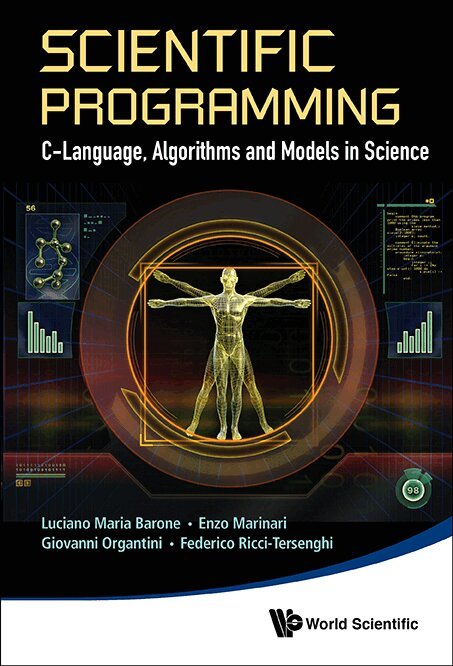
The book teaches a student to model a scientific problem and write a computer program in C language to solve that problem. To do that, the book first introduces the student to the basics of C language, dealing with all syntactical aspects, but without the pedantic content of a typical programming language manual. Then the book describes and discusses many algorithms commonly used in scientific applications (e.g. searching, graphs, statistics, equation solving, Monte Carlo methods etc.).This important book fills a gap in current available bibliography. There are many manuals for programming in C, but they never explain programming technicalities to solve a given problem. This book illustrates many relevant algorithms and shows how to translate them in a working computer program.