Girdhar K. Pandey – författare
Visar alla böcker från författaren Girdhar K. Pandey. Handla med fri frakt och snabb leverans.
13 produkter
13 produkter
Inbunden, Engelska, 2017
3 867 kr
Skickas inom 11-20 vardagar
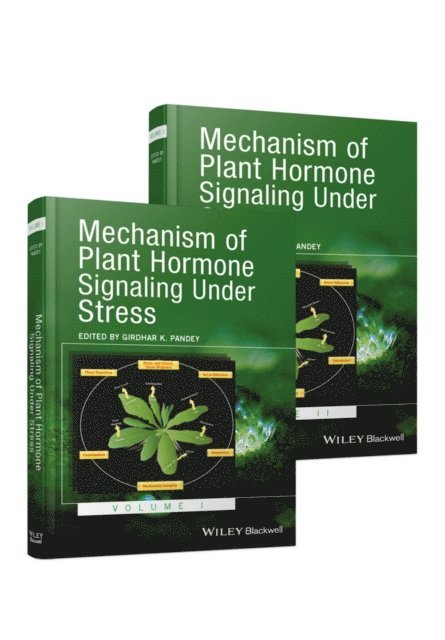
Plant hormone signaling plays an important role in many physiological and developmental processes including stress response. With the advent of new post-genomic molecular techniques, the potential for increasing our understanding of the impact of hormone signaling on gene expression and adaptive processes has never been higher. Unlocking the molecular underpinnings of these processes shows great promise for the development of new plant biotechnologies and improved crop varieties.The topics included in this book emphasize on genomics and functional genomics aspects, to understand the global and whole genome level changes upon particular stress conditions. With the functional genomics tools, the mechanism of phytohormone signaling and their target genes can be defined in a more systematic manner. The integrated analysis of phytohormone signaling under single or multiple stress conditions may prove exceptional to design stress tolerant crop plants in the field conditions.Bringing together the latest advances, as well as the work being done to apply these findings to plant and crop science, Mechanism of Plant Hormone Signaling Under Stress will prove extremely useful to plant and stress biologists, plant biotechnology researchers, as well as students and teachers.
Inbunden, Engelska, 2021
2 328 kr
Skickas inom 5-8 vardagar
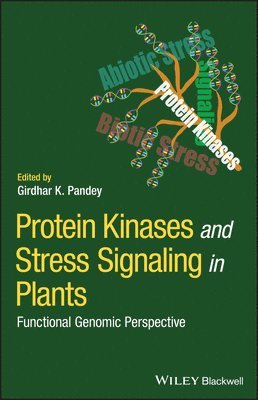
A comprehensive review of stress signaling in plants using genomics and functional genomic approachesImproving agricultural production and meeting the needs of a rapidly growing global population requires crop systems capable of overcoming environmental stresses. Understanding the role of different signaling components in plant stress regulation is vital to developing crops which can withstand abiotic and biotic stresses without loss of crop yield and productivity. Emphasizing genomics and functional genomic approaches, Protein Kinases and Stress Signaling in Plants is a comprehensive review of cutting-edge research on stress perception, signal transduction, and stress response generation.Detailed chapters cover a broad range of topics central to improving agricultural production developing crop systems capable of overcoming environmental stresses to meet the needs of a rapidly growing global population. This book describes the field of protein kinases and stress signaling with a special emphasis on functional genomics. It presents a highly valuable contribution in the field of stress perception, signal transduction and generation of responses against one or multiple stress signals.This timely resource: Summarizes the role of various kinases involved in stress management Enumerates the role of TOR, GSK3-like kinase, SnRK kinases in different physiological conditionsExamines mitogen-activated protein kinases (MAPKs) in different stressesDescribes the different aspects of calcium signaling under different stress conditionsExamines photo-activated kinases (PAPKs) in varying light conditionsBriefs the presence of tyrosine kinases in plantsHighlights the cellular functions of receptor]like protein kinases (RLKs)Possible implication of these kinases in developing stress tolerant cropsProtein Kinases and Stress Signaling in Plants: Functional Genomic Perspective is an essential resource for researchers and students in the fields of plant molecular biology and signal transduction, plant responses to stress, plant cell signaling, plant protein kinases, plant biotechnology, transgenic plants and stress biology.
Inbunden, Engelska, 2015
1 619 kr
Skickas inom 10-15 vardagar
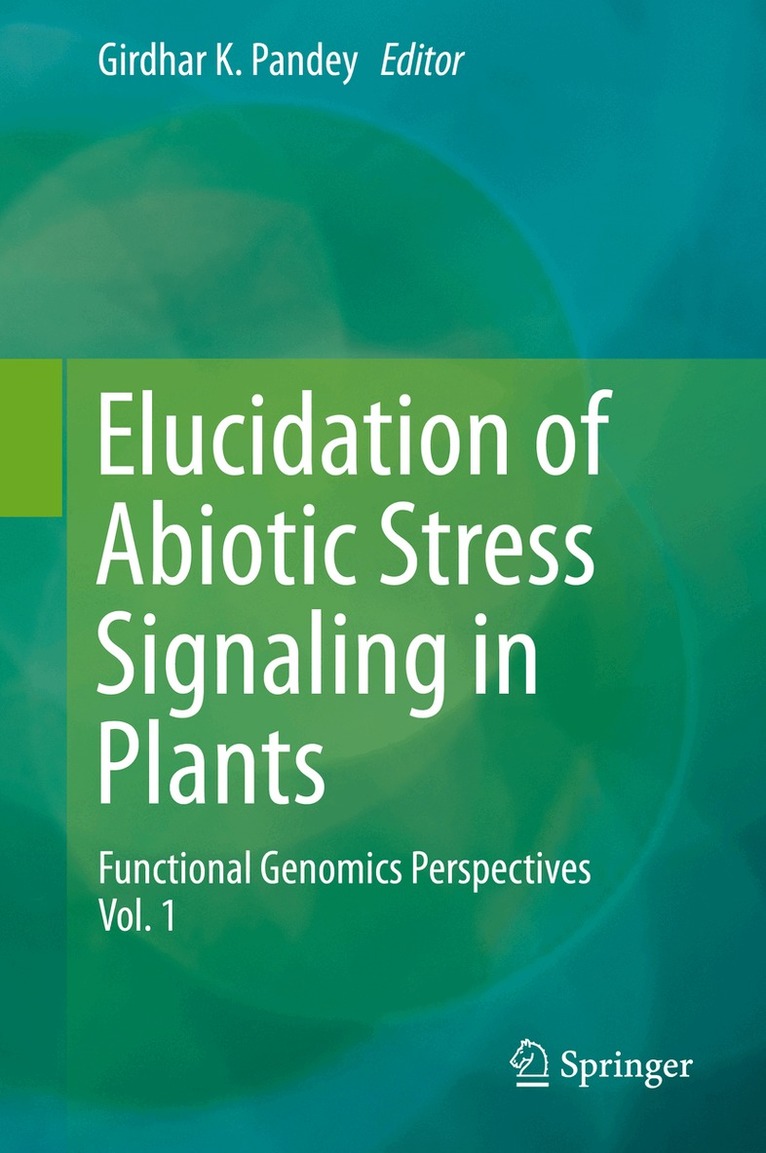
Elucidation of Abiotic Stress Signaling in Plants
Inbunden, Engelska, 2015
1 619 kr
Skickas inom 10-15 vardagar
Abiotic stresses such as high temperature, low-temperature, drought, and salinity limit crop productivity worldwide. Understanding plant responses to these stresses is essential for rational engineering of crop plants. In Arabidopsis, the signal transduction pathways for abiotic stresses, light, several phytohormones and pathogenesis have been elucidated. A significant portion of plant genomes (most studies are Arabidopsis and rice genome) encodes for proteins involves in signaling such as receptor, sensors, kinases, phosphatases, transcription factors and transporters/channels. Despite decades of physiological and molecular effort, knowledge pertaining to how plants sense and transduce low and high temperature, low-water availability (drought), water-submergence and salinity signals is still a major question before plant biologists. One major constraint hampering our understanding of these signal transduction processes in plants has been the lack or slow pace of application of molecular genomic and genetics knowledge in the form of gene function. In the post-genomic era, one of the major challenges is investigation and understanding of multiple genes and gene families regulating a particular physiological and developmental aspect of plant life cycle. One of the important physiological processes is regulation of stress response, which leads to adaptation or adjustment in response to adverse stimuli. With the holistic understanding of the signaling pathways involving not only one gene family but multiple genes or gene families, plant biologists can lay a foundation for designing and generating future crops that can withstand the higher degree of environmental stresses (especially abiotic stresses, which are the major cause of crop loss throughout the world) without losing crop yield and productivity. Therefore, in this proposed book, we intend to incorporate the contribution from leading plant biologists to elucidate several aspects of stress signaling by functional genomic approaches.
Häftad, Engelska, 2016
1 619 kr
Skickas inom 10-15 vardagar
Abiotic stresses such as high temperature, low-temperature, drought, and salinity limit crop productivity worldwide. Understanding plant responses to these stresses is essential for rational engineering of crop plants. In Arabidopsis, the signal transduction pathways for abiotic stresses, light, several phytohormones and pathogenesis have been elucidated. A significant portion of plant genomes (most studies are Arabidopsis and rice genome) encodes for proteins involves in signaling such as receptor, sensors, kinases, phosphatases, transcription factors and transporters/channels. Despite decades of physiological and molecular effort, knowledge pertaining to how plants sense and transduce low and high temperature, low-water availability (drought), water-submergence and salinity signals is still a major question before plant biologists. One major constraint hampering our understanding of these signal transduction processes in plants has been the lack or slow pace of application of molecular genomic and genetics knowledge in the form of gene function. In the post-genomic era, one of the major challenges is investigation and understanding of multiple genes and gene families regulating a particular physiological and developmental aspect of plant life cycle. One of the important physiological processes is regulation of stress response, which leads to adaptation or adjustment in response to adverse stimuli. With the holistic understanding of the signaling pathways involving not only one gene family but multiple genes or gene families, plant biologists can lay a foundation for designing and generating future crops that can withstand the higher degree of environmental stresses (especially abiotic stresses, which are the major cause of crop loss throughout the world) without losing crop yield and productivity. Therefore, in this proposed book, we intend to incorporate the contribution from leading plant biologists to elucidate several aspects of stress signaling by functional genomic approaches.
Häftad, Engelska, 2016
1 619 kr
Skickas inom 10-15 vardagar
Abiotic stresses such as high temperature, low-temperature, drought, and salinity limit crop productivity worldwide. Understanding plant responses to these stresses is essential for rational engineering of crop plants. In Arabidopsis, the signal transduction pathways for abiotic stresses, light, several phytohormones and pathogenesis have been elucidated. A significant portion of plant genomes (most studies are Arabidopsis and rice genome) encodes for proteins involves in signaling such as receptor, sensors, kinases, phosphatases, transcription factors and transporters/channels. Despite decades of physiological and molecular effort, knowledge pertaining to how plants sense and transduce low and high temperature, low-water availability (drought), water-submergence and salinity signals is still a major question before plant biologists. One major constraint hampering our understanding of these signal transduction processes in plants has been the lack or slow pace of application of molecular genomic and genetics knowledge in the form of gene function. In the post-genomic era, one of the major challenges is investigation and understanding of multiple genes and gene families regulating a particular physiological and developmental aspect of plant life cycle. One of the important physiological processes is regulation of stress response, which leads to adaptation or adjustment in response to adverse stimuli. With the holistic understanding of the signaling pathways involving not only one gene family but multiple genes or gene families, plant biologists can lay a foundation for designing and generating future crops that can withstand the higher degree of environmental stresses (especially abiotic stresses, which are the major cause of crop loss throughout the world) without losing crop yield and productivity.
Häftad, Engelska, 2020
544 kr
Skickas inom 10-15 vardagar
Overall performance of the plant, and operation of metabolic machinery depends upon intracellular K+ homeostasis (K+ uptake and efflux) via K+ channels and transporters acting as mediators of cellular responses during plant development.
Inbunden, Engelska, 2020
1 619 kr
Skickas inom 10-15 vardagar
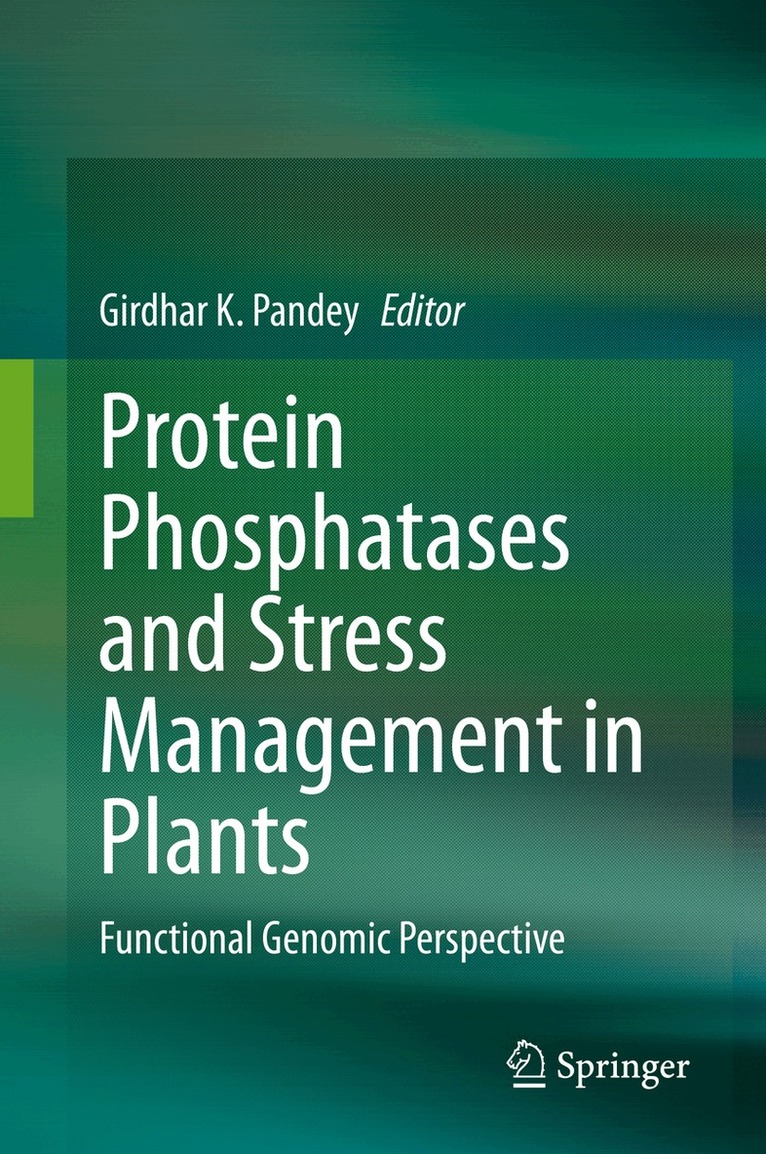
With the holistic understanding of the signaling pathways involving phosphatases, one gene family or multiple genes or gene families, plant biologist can lay a foundation for designing and generating future crops, which can withstand the higher degree of environmental stresses.
Häftad, Engelska, 2021
1 619 kr
Skickas inom 10-15 vardagar
With the holistic understanding of the signaling pathways involving phosphatases, one gene family or multiple genes or gene families, plant biologist can lay a foundation for designing and generating future crops, which can withstand the higher degree of environmental stresses.
Häftad, Engelska, 2020
544 kr
Skickas inom 10-15 vardagar
This book focuses on the significance and implications of Calcium (Ca2+) transport machinery in the plant cell in generating alternating Ca2+ levels and impacting the cell’s physiological, biochemical and developmental processes.
Häftad, Engelska, 2014
561 kr
Skickas inom 10-15 vardagar
This book gives an overview of various interactomes involved in dorsal ventral (DV) and anterior posterior (AP) guidance, their mechanisms of action, subcellular localizations, and functional roles. It will provide readers a better understanding of the development of the nervous system, which in turn will help to find cures to various neural and other disorders.In nematodes there are two types of guidance systems, including DV and AP guidance. The signaling process that guides the growth cones along the DV axis has remained intact in both vertebrates and invertebrates. The adaptor protein UNC-53 appears to play a part in migration along the AP axis in both worms and their human homologs. “Neuron Navigators” (NAV) are also involved in nervous system development
Häftad, Engelska, 2014
544 kr
Skickas inom 10-15 vardagar
Calcium plays pivotal role in regulating the physiological as well as developmental processes in plants. Till now, several calcium sensors have been discovered, which regulate the diverse signaling pathways involved in plant growth and development. One of the major calcium sensors CBL (calcineurin B-like) is decoding the calcium signal during various environmental stresses in plants. Calcium mediated signal is transduced downstream by CBL-interacting protein kinases (CIPKs), which generally phosphorylate the target proteins such as transcription factors or transporters/channel leading to a response. Mutant based approach has provided valuable information in the functional analysis of individual members of CBL and CIPK gene family in Arabidopsis. Both CBL and CIPK gene families have previously been identified and characterized in Arabidopsis and rice. Identification and characterization of CBLs and CIPKs in other plant species such as Oryza sativa, Pisum sativum, Cicer arietinum, Zea mays, Populus euphratica, Vitis vinifera, Malus domestica, Gossypium hirsutum, Sorghum bicolor, Brassica napus, Vicia faba, Phaseolus vulgaris, Ammopiptanthus mongolicus and Triticum aestivum are still in juvenile stage.Overall, Global Comparative Analysis of CBL-CIPK Gene Families in Plants is a comprehensive study focused on the diverse role of CBL-CIPK module in different stress signaling and also to identify a newly emerging role of this calcium-signaling module in plant growth and development across different plant species. In addition, beside Arabidopsis, it will provide backbone of knowledge to perform a detail molecular investigation in crop plant species and could possibly enable in designing strategies to tame abiotic stress tolerance and development in important agronomical crop plants. This book will act as handy andinformative source in this field for students as well as advanced researchers.
Häftad, Engelska, 2014
544 kr
Skickas inom 10-15 vardagar
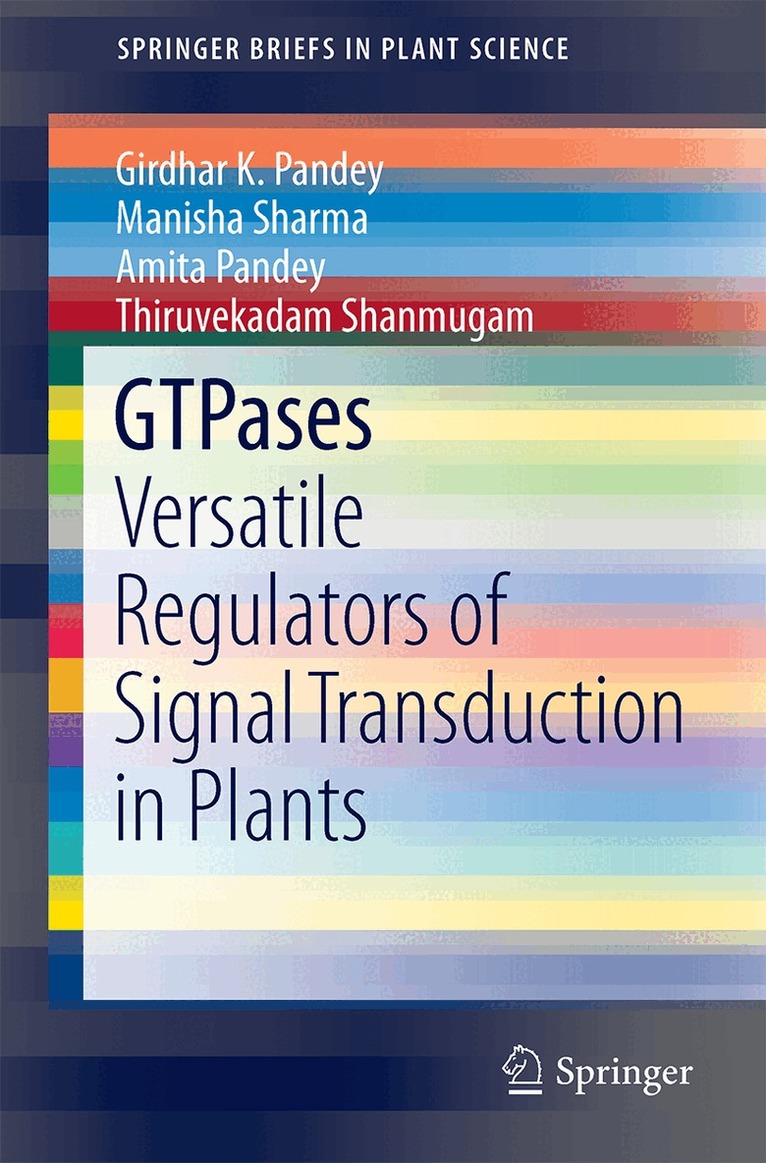
G proteins are the key regulators for a wide range of cellular processes in animals and plants. In comparison to animals and yeast, plants have a single Rho-GTPase subfamily called Rho-like GTPases (ROPs). The ROP family of monomeric GTPases has emerged as a versatile and key regulator in plant signal transduction processes. During the past few years’ studies on plant RHO-type (ROP) GTPase have generated new insights into their role in diverse processes ranging from cytoskeletal organization, polar growth, development to stress and hormonal responses. Studies have shown that plants have evolved specific regulators and effector molecules. ROP GTPases possess the ability to interact with these multiple regulator and effector molecules that ultimately determines their signaling specificity. Recently, genome wide studies in plants have shown that the Arabidopsis genome encodes 93, and rice has nearly 85 small GTPase homologs. And we have been able to identify four new homologs in the rice genome. Here, we focus on the complete phylogenetic, domain, structural and expression analysis during stress and various developmental processes of small GTPases in plants. The comparison of gene expression patterns of the individual members of the GTPase family may help to reveal potential plant specific signaling mechanisms and their relevance. Also, we are summarizing the role of currently known ROP GTPases and their interacting proteins with brief description, simultaneously, comparing their expression pattern based on microarray data. Overall, we will be discussing the functional genomic perspective of plant Rho like GTPases and their role in regulating several physiological processes such as stress, hormonal, pollen tube, root hair-growth and other developmental responses.