Gisela Grupe - Böcker
Visar alla böcker från författaren Gisela Grupe. Handla med fri frakt och snabb leverans.
10 produkter
10 produkter
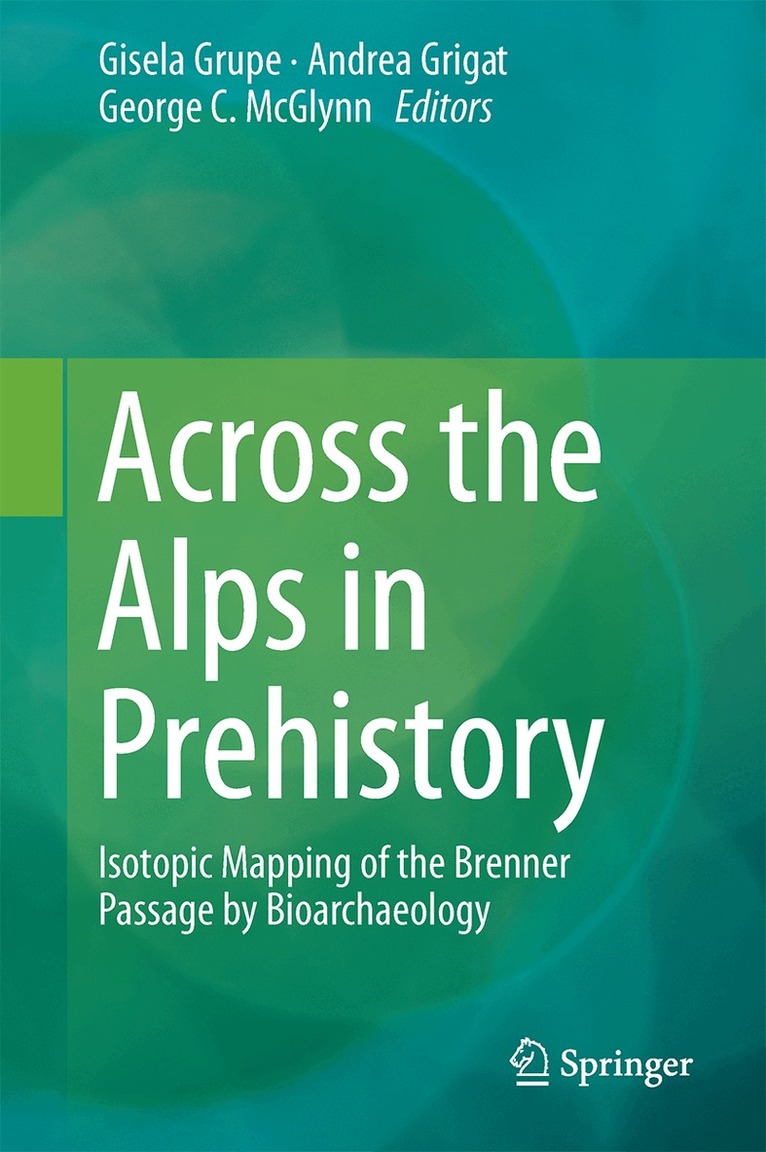
Across the Alps in Prehistory
Isotopic Mapping of the Brenner Passage by Bioarchaeology
Inbunden, Engelska, 2017
1 625 kr
Skickas inom 10-15 vardagar
At the heart of this book is the matter of how isotopic landscapes combined with data mining enriches insights on prehistoric migration and cultural transfer. Isotopic mapping is an indispensable tool for the assessment of mobility and trade in the past, but is limited by eco-geographic redundancies. An interdisciplinary research group focuses on the archaeological isotopic landscape of a reference region of outstanding importance, namely the transalpine migration route via the Brenner Pass which has been in use since the Mesolithic. Over the period of several cultural epochs, cremation was either the most common or exclusive burial custom practiced. For the first time, a systematic and large scale investigation of cremated remains was being conducted in the field of prehistoric migration research.87Sr/86Sr, 208Pb/204Pb, 207Pb/204Pb, 206Pb/204Pb, 208Pb/207Pb, 206Pb/207Pb and – if applicable - also δ18O were measured in human and animal skeletal finds, an isotopic map was established, and innovative methods of data mining and similarity research have been applied to accomplish this novel approach to studying prehistoric migration and culture transfer. The book has interdisciplinary appeal and scholars working in bioarchaeology, physical anthropology and computer applications in life sciences will find it of particular interest.
Across the Alps in Prehistory
Isotopic Mapping of the Brenner Passage by Bioarchaeology
Häftad, Engelska, 2018
1 170 kr
Skickas inom 10-15 vardagar
At the heart of this book is the matter of how isotopic landscapes combined with data mining enriches insights on prehistoric migration and cultural transfer. Isotopic mapping is an indispensable tool for the assessment of mobility and trade in the past, but is limited by eco-geographic redundancies. An interdisciplinary research group focuses on the archaeological isotopic landscape of a reference region of outstanding importance, namely the transalpine migration route via the Brenner Pass which has been in use since the Mesolithic. Over the period of several cultural epochs, cremation was either the most common or exclusive burial custom practiced. For the first time, a systematic and large scale investigation of cremated remains was being conducted in the field of prehistoric migration research.87Sr/86Sr, 208Pb/204Pb, 207Pb/204Pb, 206Pb/204Pb, 208Pb/207Pb, 206Pb/207Pb and – if applicable - also δ18O were measured in human and animal skeletal finds, an isotopic map was established, and innovative methods of data mining and similarity research have been applied to accomplish this novel approach to studying prehistoric migration and culture transfer. The book has interdisciplinary appeal and scholars working in bioarchaeology, physical anthropology and computer applications in life sciences will find it of particular interest.
1 432 kr
Skickas inom 10-15 vardagar
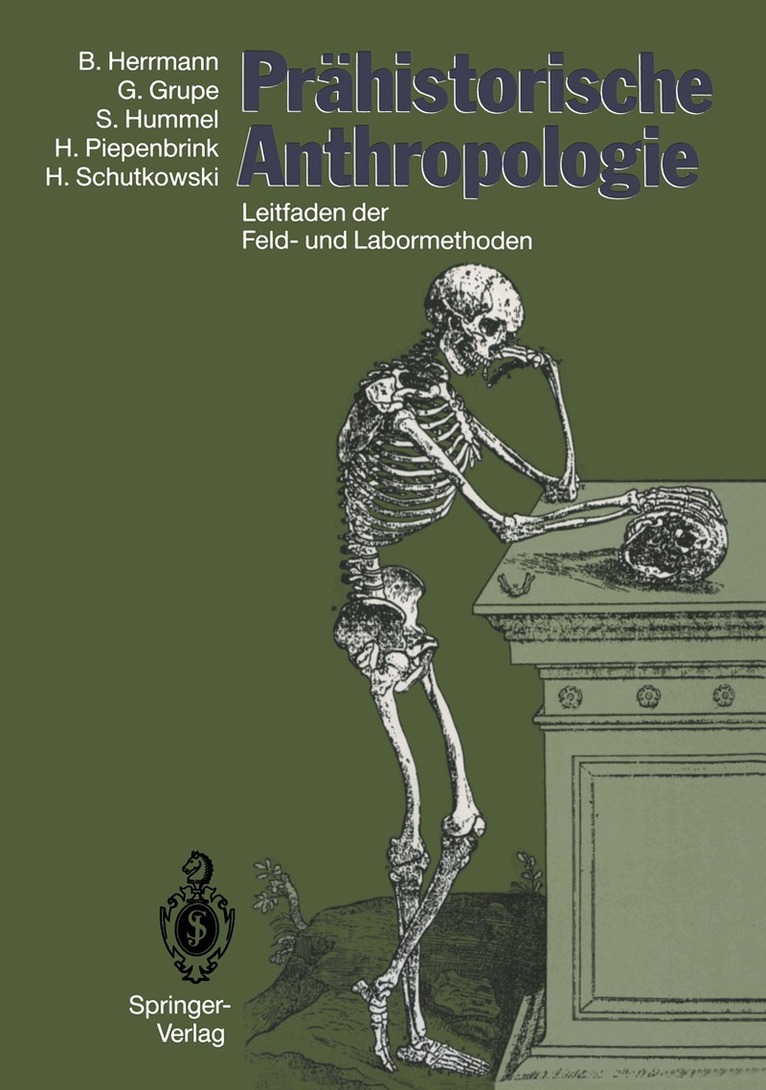
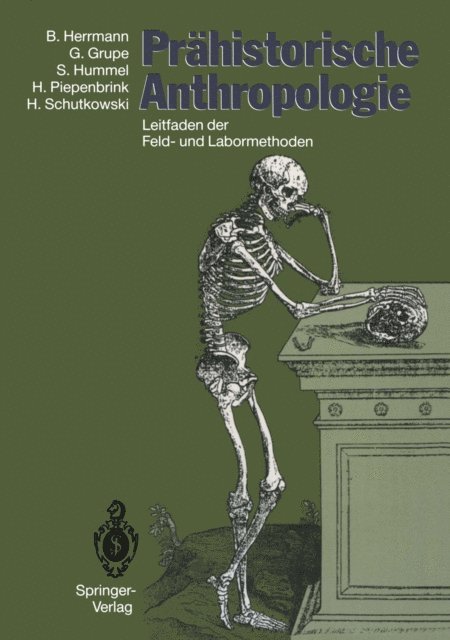
Erstmalig für den deutschen Sprachraum wird ein methodisches Kompendium vorgelegt, mit dessen Hilfe eine umfassende Bearbeitung von historischen menschlichen Skelettresten ohne weiterführende Literatur möglich ist. Dargestellt ist das gesamte gängige methodische Repertoir von der Ausgrabung bis zur vergleichenden Auswertung der Daten. Ein Schwergewicht liegt auf moderner Laboranalytik (u.a. Spurenelement- und DNA-Analyse). Ziel und Nutzen des Buchs sind, daß ein Bearbeiter/Ratsuchender/Studierender allein mit dem vorliegenden Werk seine Arbeit planen und durchführen kann. Hierzu dienen besonders ausführliche Rezepturen und Fallbeispiele, Illustrationen und anatomische Abbildungen. Auf ungewöhnliche Überlieferungsformen menschlicher Überreste (Leichenbrände, Mumien, Moorleichen) wird ebenfalls und ausführlich eingegangen.
649 kr
Skickas inom 7-10 vardagar
Was ist "Anthropologie"?- Wörtlich übersetzt: "die Lehre vom Menschen" - Eine primär biologische Disziplin mit vielfältigen kulturwissenschaftlichen Bezügen- Ein Brückenfach, das zwischen Natur- und Geisteswissenschaften vermitteln will - Anthropologie schließt auch die nächsten Verwandten der Menschen im Tierreich, die nicht-menschlichen Primaten, mit ein- Ihr Anliegen ist, die "Biologie des Menschen" nicht nur auf eine "Zoologie des Menschen" zu reduzieren, sondern seine kulturelle Überformung einzubeziehen. Anthropologie:- Eine Einführung in die wichtigsten Inhalte, besonders geeignet für das Grundstudium- Basierend auf einem Vorschlag der "Gesellschaft für Anthropologie e.V." aus dem Jahre 2002 Fast alle Kapitel sind erheblich erweitert und aktualisiert.
1 475 kr
Skickas inom 10-15 vardagar
Dieses Buch bietet ein modernes methodisches Kompendium, mit dessen Hilfe eine umfassende Bearbeitung von historischen menschlichen Skelettresten möglich ist. Dargestellt ist das gesamte gängige methodische Repertoire von der Ausgrabung bis zur vergleichenden Auswertung der Daten. Ein Schwergewicht liegt auf moderner Laboranalytik (u.a. Isotopen- und DNA-Analyse). Auf ungewöhnliche Überlieferungsformen menschlicher Überreste (Leichenbrände, Mumien, Moorleichen) wird ebenfalls ausführlich eingegangen. Berücksichtigt werden die Entwicklungen der letzen Jahre, v.a. auch auf dem juristischem und dem ethischem Sektor.
Trace Elements in Environmental History
Proceedings of the Symposium held from June 24th to 26th, 1987, at Göttingen
Häftad, Engelska, 2011
1 064 kr
Skickas inom 10-15 vardagar
This book contains the contributions to an European symposium on "Trace Elements in Environmental History", held from June 24th to 26th at GCittingen, FRG. The confe rence was organised by the Institute of Anthropology of the Georg August-University in GCittingen. At first glance, it might be surprising that the organizers are anthropolo gists. But this is a result of change of paradigm prehistoric anthropology is facing at the time. For decades, population development and population processes in the past have been looked at in terms of morphology, thus describing the diversity of human populations by the outer appearance of the skeletal findings and by the reconstruction of population structures. The new approach concentrates less on how people in the past looked like, but moreover on what they did and how they lived. Thus, research is based on ecosystem-theories, and it aims on the evaluation of ancient ecological features and past man/environment relationships. Research is encouraged since anthropologists are asked a lot of questions by historians and social scientists, who became more and more interested in the history of every day's life. Prehistoric anthropology today focu ses also on manners, habits, ways of life and environmental constituents as they can be traced from skeletal remains, which represent an important historical source. The ecosystemic approach is promising since the experiences of daily life certainly influence human behaviour, life style and mentality, thus directing reproduction and therefore population development.
Histology of Ancient Human Bone: Methods and Diagnosis
Proceedings of the “Palaeohistology Workshop” held from 3–5 October 1990 at Göttingen
Häftad, Engelska, 2011
1 096 kr
Skickas inom 10-15 vardagar
The examination of excavated human bone finds is mainly the domain of anthropologists and forensic pathologists, the former working with ancient and historical specimens, the latter with modern finds. The methodological and diagnostic approaches to these skeletal finds are the same, regardless of the time of burial. For physical an thropology, bodily human relics are dealt with as historical resources which give clues to ancient population structure, population develop ment, life-style and subsistence. They are thus able to help scientists understand the present state of human populations. The identification of the finds, whether species diagnosis or the evaluation of individual parameters such as sex, age at death, body size and shape, kinship and pathology follows the same procedure used by forensic patholo gists, whose task is the identification of bodily relics in cases of crime, mass disaster and the like. However, there are other disciplines which benefit from excavated bone finds. Anatomy gains insights into the morphological variability of the skeleton in time and place. The implications for modern physi cians and pathologists are at least two-fold: pathological specimens are suitable to unravel the distribution of many diseases and the susceptibility of individuals to pathogens in pre-antibiotic populations. In addition to this epidemiological aspect, exhumed specimens often exhibit advanced states of bone disease which are no longer or only very rarely present in today's industrialized populations because of efficient surgical intervention and pharmacological treatment.
536 kr
Skickas inom 10-15 vardagar
Locked up within human bone are tantalizing clues concerningthe diets consumed by ancient peoples. On the one hand theamounts of certain elementsin bone (strontium, zinc) serveas measures of protein, fiber, and calcium intake. On theother hand, the ratios of carbon isotopes and of nitrogenisotopes provide information on questions of fish vs. meat,herbivore vs. carnivore, or (for animals) browser (shrubs)vs. grazer (grasses). Such information can provide a windowon many aspects of prehistoric cultures and can supplementthe nonskeletal archaeological record. In addition to thesetwo approaches, the biochemical record in bone from proteinand nucleic acids such as DNA serves as a source ofnondietary information such as genetic relationships. Thisvolume treats all three subjects.: elemental, isotopic, andbiochemical. The foremost experts in the areas providefundamental descriptions of the techniques, express theirconcerns over the limitations of the methods, and describerecent applications to archaeological studies.
1 276 kr
Skickas inom 10-15 vardagar
This work takes a critical look at the current concept of isotopic landscapes ("isoscapes") in bioarchaeology and its application in future research. It specifically addresses the research potential of cremated finds, a somewhat neglected bioarchaeological substrate, resulting primarily from the inherent osteological challenges and complex mineralogy associated with it. In addition, for the first time data mining methods are applied. The chapters are the outcome of an international workshop sponsored by the German Science Foundation and the Centre of Advanced Studies at the Ludwig-Maximilian-University in Munich. Isotopic landscapes are indispensable tracers for the monitoring of the flow of matter through geo/ecological systems since they comprise existing temporally and spatially defined stable isotopic patterns found in geological and ecological samples. Analyses of stable isotopes of the elements nitrogen, carbon, oxygen, strontium, and lead are routinely utilized in bioarchaeologyto reconstruct biodiversity, palaeodiet, palaeoecology, palaeoclimate, migration and trade. The interpretive power of stable isotopic ratios depends not only on firm, testable hypotheses, but most importantly on the cooperative networking of scientists from both natural and social sciences. Application of multi-isotopic tracers generates isotopic patterns with multiple dimensions, which accurately characterize a find, but can only be interpreted by use of modern data mining methods.
1 314 kr
Skickas inom 10-15 vardagar
Isotopic landscapes are indispensable tracers for the monitoring of the flow of matter through geo/ecological systems since they comprise existing temporally and spatially defined stable isotopic patterns found in geological and ecological samples.