Giulia Bonacci – författare
Visar alla böcker från författaren Giulia Bonacci. Handla med fri frakt och snabb leverans.
7 produkter
7 produkter
Inbunden, Engelska, 2026
1 548 kr
Kommande
On April 21, 1966, tens of thousands of Jamaicans exuberantly greeted Ethiopia’s Emperor Haile Selassie I in Kingston, Jamaica. The emperor came to express gratitude for the peoples’ support during the Italo-Ethiopian War and bolster the ongoing struggle for liberation in Rhodesia. This state visit repositioned Rastafari in Jamaican society and ignited widespread cultural, social, and political transformations across the Caribbean. Enter the Lion assembles a vital archive of this landmark event, gathering British colonial records, newspaper reportage from the Caribbean and Ethiopia, the official records of the Ethiopian Ministry of Information, and oral history. The authors paint an illuminating picture of the diverse political interests at play, exploring how the visit reshaped the Rastafari movement, Jamaican society, the wider Caribbean, and their Pan-African connections.
Häftad, Engelska, 2026
352 kr
Kommande
On April 21, 1966, tens of thousands of Jamaicans exuberantly greeted Ethiopia’s Emperor Haile Selassie I in Kingston, Jamaica. The emperor came to express gratitude for the peoples’ support during the Italo-Ethiopian War and bolster the ongoing struggle for liberation in Rhodesia. This state visit repositioned Rastafari in Jamaican society and ignited widespread cultural, social, and political transformations across the Caribbean. Enter the Lion assembles a vital archive of this landmark event, gathering British colonial records, newspaper reportage from the Caribbean and Ethiopia, the official records of the Ethiopian Ministry of Information, and oral history. The authors paint an illuminating picture of the diverse political interests at play, exploring how the visit reshaped the Rastafari movement, Jamaican society, the wider Caribbean, and their Pan-African connections.
Häftad, Engelska, 2021
295 kr
Skickas inom 3-6 vardagar
Häftad, Engelska, 2020
369 kr
Skickas inom 5-8 vardagar
A history of Atlantic solidarity between Cuba and Africa, in struggle for African independence from colonial powersThe Cuban people hold a special place in the hearts of the people of Africa. The Cuban internationalists have made a contribution to African independence, freedom, and justice, unparalleled for its principled and selfless character.'As Nelson Mandela states, Cuba was a key participant in the struggle for the independence of African countries during the Cold War and the definitive ousting of colonialism from the continent. Beyond the military interventions that played a decisive role in shaping African political history, there were many-sided engagements between the island and the continent. Cuba and Africa, 1959-1994 is the story of tens of thousands of individuals who crossed the Atlantic as doctors, scientists, soldiers, students and artists. Each chapter presents a case study – from Algeria to Angola, from Equatorial Guinea to South Africa – and shows how much of the encounter between Cuba and Africa took place in non-militaristic fields: humanitarian and medical, scientific and educational, cultural and artistic.The historical experience and the legacies documented in this book speak to the major ideologies that shaped the colonial and postcolonial world, including internationalism, developmentalism and South–South cooperation.Approaching African–Cuban relations from a multiplicity of angles, this collection will appeal to an equally wide range of readers, from scholars in black Atlantic studies to cultural theorists and general readers with an interest in contemporary African history.
Inbunden, Engelska, 2020
571 kr
Skickas inom 5-8 vardagar
A history of Atlantic solidarity between Cuba and Africa, in struggle for African independence from colonial powersThe Cuban people hold a special place in the hearts of the people of Africa. The Cuban internationalists have made a contribution to African independence, freedom, and justice, unparalleled for its principled and selfless character.'As Nelson Mandela states, Cuba was a key participant in the struggle for the independence of African countries during the Cold War and the definitive ousting of colonialism from the continent. Beyond the military interventions that played a decisive role in shaping African political history, there were many-sided engagements between the island and the continent. Cuba and Africa, 1959-1994 is the story of tens of thousands of individuals who crossed the Atlantic as doctors, scientists, soldiers, students and artists. Each chapter presents a case study – from Algeria to Angola, from Equatorial Guinea to South Africa – and shows how much of the encounter between Cuba and Africa took place in non-militaristic fields: humanitarian and medical, scientific and educational, cultural and artistic.The historical experience and the legacies documented in this book speak to the major ideologies that shaped the colonial and postcolonial world, including internationalism, developmentalism and South–South cooperation.Approaching African–Cuban relations from a multiplicity of angles, this collection will appeal to an equally wide range of readers, from scholars in black Atlantic studies to cultural theorists and general readers with an interest in contemporary African history.
Del 12 - Aethiopica. Supplements
Slavery and the Slave Trade in Ethiopian Studies
Häftad, Engelska
703 kr
Skickas inom 3-6 vardagar
Häftad, Engelska, 2015
447 kr
Skickas inom 5-8 vardagar
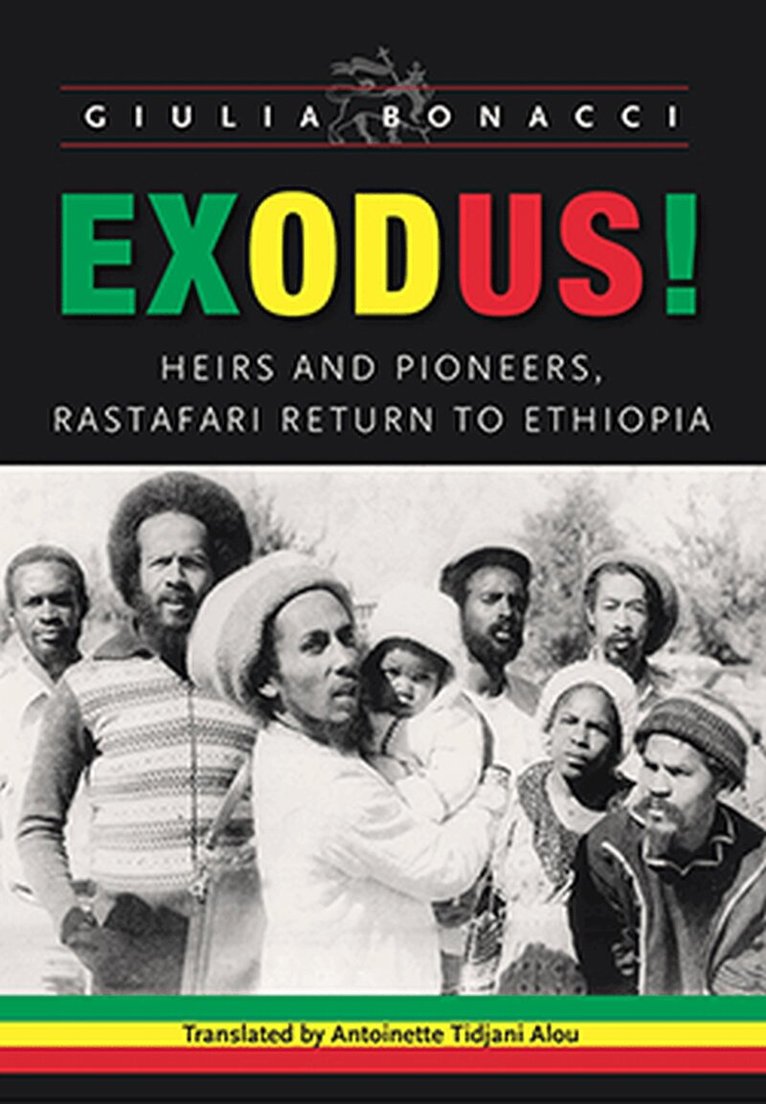
In 1977, Bob Marley composed Exodus, a reggae masterpiece that evokes the return of Rastafari to Africa. Over the past 50 years, Rastafari have made the journey to Ethiopia, settling in the country as “repatriates”. This little-known history is told in Exodus! Heirs and Pioneers, Rastafari Return to Ethiopia. Giulia Bonacci recounts, with sharpness and rigor, this amazing journey of Rastafari who left the Caribbean, the United States of America and the United Kingdom. Exiting from the Babylon of the West and entering the Zion that is Ethiopia, the exodus has a Pan-African dimension that is significant to the present day. Despite facing complex challenges in their relations with the Ethiopian state and its people, mystical and determined Rastafari keep arriving to Shashemene, their Promised Land.Revealing personal trajectories, Giulia Bonacci shows that Rastafari were not the first black settlers in Ethiopia. She tracks the history of return over the decades, demonstrating that the utopian idea of return is also a reality. Exodus! is based on in-depth archival and print research, as well as on a wide range of oral histories collected in Ethiopia, Jamaica, Ghana and the USA. Previously unseen photographs illustrate the book.