Giuliana Laschi – författare
Visar alla böcker från författaren Giuliana Laschi. Handla med fri frakt och snabb leverans.
7 produkter
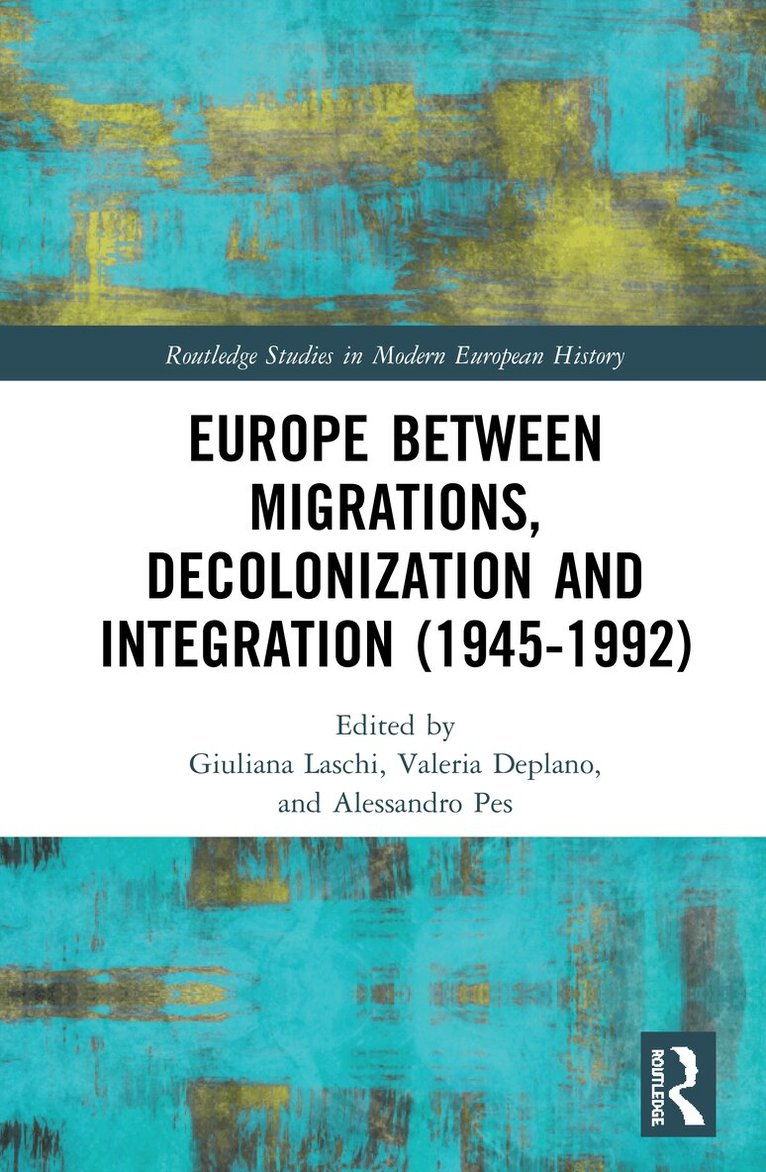
Europe between Migrations, Decolonization and Integration (1945-1992)
Av Giuliana Laschi, Valeria Deplano m. fl.
Inbunden, 2020
2586 kr
Lägg i varukorg
This monograph addresses mobility and migrations as contributing phenomena in shaping contemporary Europe after 1945, in connection with decolonisation and the creation of the European Community. The disappearing of the colonial empires caused a large movement of people (former colonizers as well …
Europe between Migrations, Decolonization and Integration (1945-1992)
Av Alessandro Pes, Valeria Deplano m. fl.
E-bok, 2020
829 kr
Lägg i varukorg
This monograph addresses mobility and migrations as contributing phenomena in shaping contemporary Europe after 1945, in connection with decolonisation and the creation of the European Community. The disappearing of the colonial empires caused a large movement of people (former colonizers as well …
Europe between Migrations, Decolonization and Integration (1945-1992)
Av Alessandro Pes, Valeria Deplano m. fl.
E-bok, 2020
856 kr
Lägg i varukorg
This monograph addresses mobility and migrations as contributing phenomena in shaping contemporary Europe after 1945, in connection with decolonisation and the creation of the European Community. The disappearing of the colonial empires caused a large movement of people (former colonizers as well …
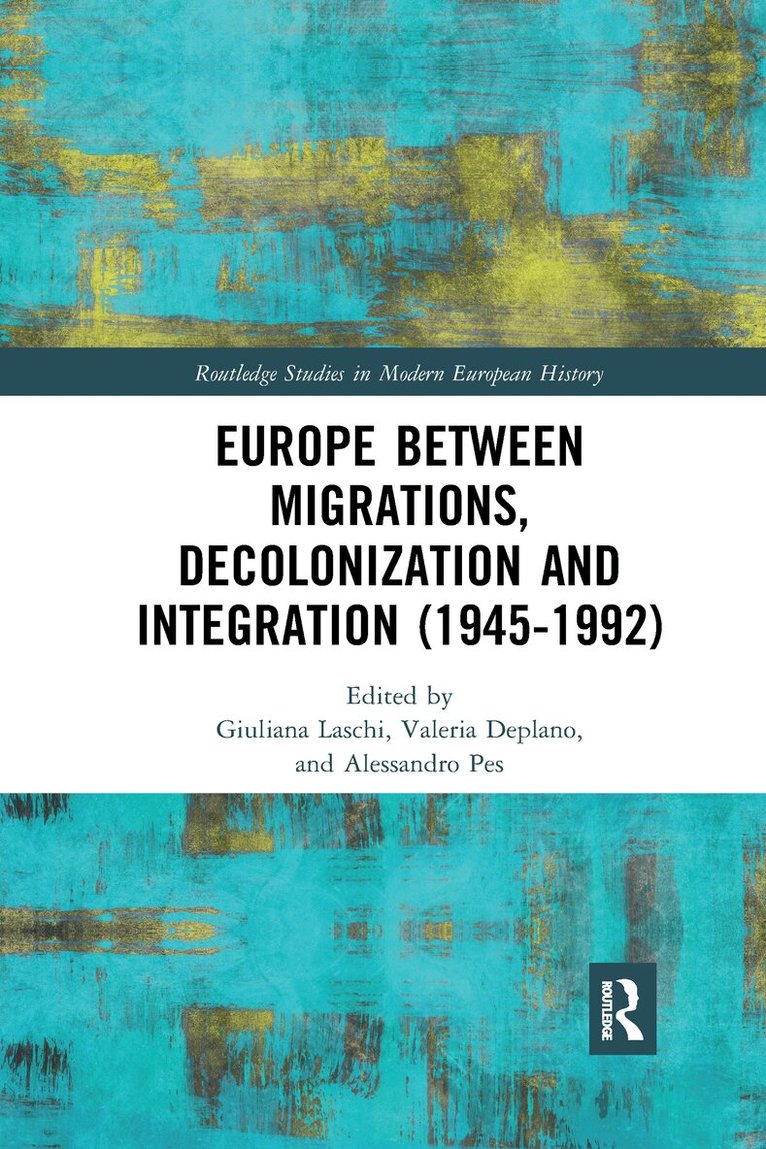
Europe between Migrations, Decolonization and Integration (1945-1992)
Av Giuliana Laschi, Valeria Deplano m. fl.
Häftad, 2021
727 kr
Lägg i varukorg
This monograph addresses mobility and migrations as contributing phenomena in shaping contemporary Europe after 1945, in connection with decolonisation and the creation of the European Community. The disappearing of the colonial empires caused a large movement of people (former colonizers as well …
European Union Approach Towards Western Sahara
Av Giuliana Laschi, Marco Balboni
Häftad, 2016
1101 kr
Lägg i varukorg
In the framework of the so-called Barcelona process, the European Union concluded several bilateral agreements with Morocco aimed to deepen their economic integration. The 2000 Association agreement European Union–Morocco is the general legal framework for the development of relationships among the …
European Community and the World
A Historical Perspective
Häftad, 2014
996 kr
Lägg i varukorg
The European Community (EC) has taken on an outward-looking dimension over the years since its first establishment, developing structures and tools which are unprecedented in the history of international relations.The original signatories of the Treaty of Rome accepted the idea of a «little» Europe …
Over the Atlantic
Diplomacy and Paradiplomacy in EU and Latin America
Av Paulina Astroza Suarez, Giuliana Laschi m. fl.
Häftad, 2023
503 kr
Lägg i varukorg
The book is the result of a collective research work between the members of the team of the project "Over the Atlantic" (co-founded by the Erasmus + programme). A critical introduction presents the work, the content and the scope of the research, carried out with an interdisciplinary approach.This …