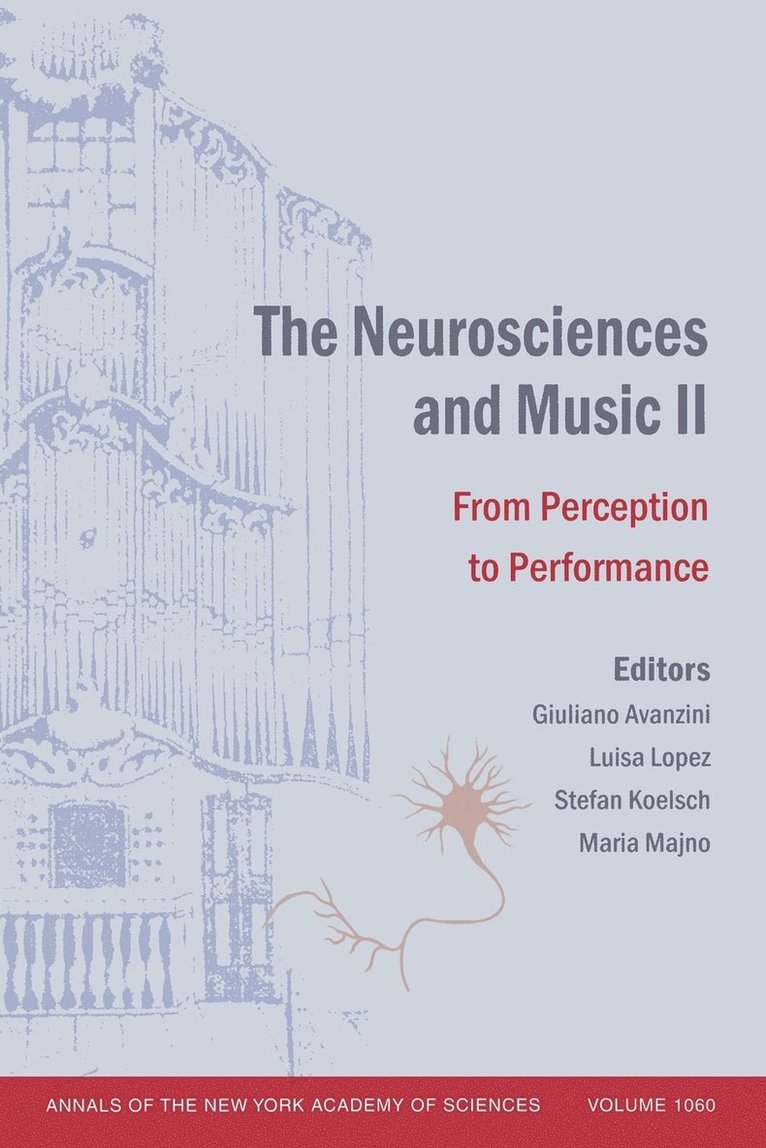
The intricate relationships between music and human neurological makeup, as well as the ways in which music can influence neurological development, are explored in this volume, which is a continuation and expansion of two symposia that have preceded it, both of which have been published as Annals volumes.Researchers in the fields of neurophysiology, neuroimaging, mind-brain studies, and psychology present findings on the evaluation of neurological disorders and music, the relationship of music to development and language, and musical perception. The use and impact of music therapy is discussed in a roundtable format. Do animals have music? How is music similar to language? How is music represented mentally? This volume addresses these questions and others surrounding this exciting and growing field—a field that generates interest far beyond the boundaries of the neuroscientific world, encompassing education, performance, and the appreciation of music by all peoples. The book also offers articles written from the perspective of the fields of ethology and evolution, as well as papers on vocal learning, auditory perception, performance, and emotional response to music. NOTE: Annals volumes are available for sale as individual books or as a journal. For information on institutional journal subscriptions, please visit www.blackwellpublishing.com/nyas.ACADEMY MEMBERS: Please contact the New York Academy of Sciences directly to place your order (www.nyas.org). Members of the New York Academy of Science receive full-text access to the Annals online and discounts on print volumes. Please visit http://www.nyas.org/MemberCenter/Join.aspx for more information about becoming a member.
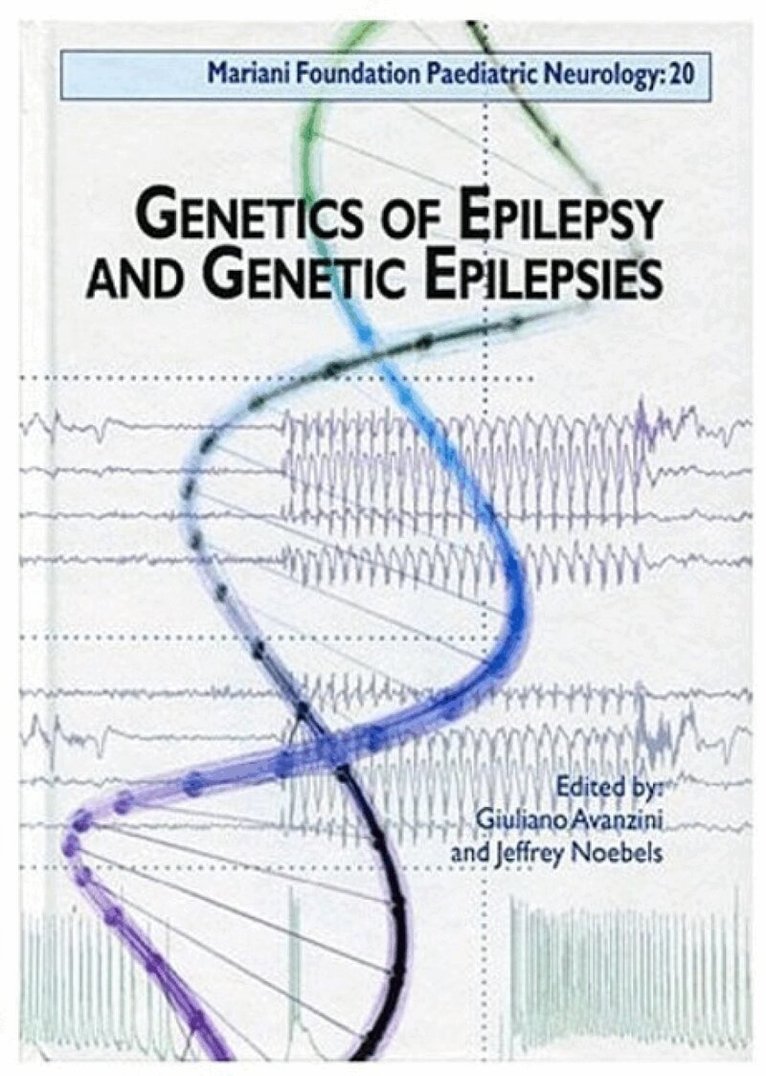
This volume provides updated information on epilepsy genes, on the clinical picture of genetic epilepsies discovered so far, and on conceptual advances in the complicated area of genotype-phenotype correlations. Recent studies on monogenic epilepsies present new insights into mechanisms whereby a mutation of a single gene, coding for an ion channel, can result in a complex epileptic phenotype. The analysis of genetically-determined epileptogenic dysplasia is advancing our understanding of the role of genes in controlling normal and pathological brain development. The pathogenic mechanisms by which gene mutations determine progressive myoclonus epilepsies offer critical opportunities to understand the role of genetic factors in neurodegenerative phenome-na associated with an even broader range of progressive epilepsy types. The specialists who have contributed to this book are outstanding international experts in their respective fields, ensuring first and foremost that the reviews are of relevance to clinicians dealing with epilepsy in their daily practice, as well as providing the highest quality scientific information for biomedical research.
Progressive myoclonus epilepsies are a group of rare genetic diseases. The onset generally occurs around puberty in otherwise healthy children. They all involve myoclonus and epilepsy but then differ depending on the different symptoms that are related. The outlook of these diseases is nearly always unfavourable and treatment only focuses on symptoms. Much planning will be needed to improve the quality of life for these children who will gradually become over time more and more severely disabled. Among these diseases, the most notable is Unverricht-Lundborg disease and Lafora disease, among others. However, the genetic mechanism of these diseases is simple and has been perfectly identified over time thanks to advancements in scientific discoveries. Hope lies in gene therapy, which in the near future will most likely be able to optimise treatment and even cure these children. This book addresses the situation by relying on clinicians descriptions, studies led by biologists on genetic variations and mutations and the work carried out daily by numerous scientists researching into treatment. By retracing the history of these diseases, from discovery and identification of mutated genes to the review of syndromes they encompass, this book marks the path we have travelled but also the distance we have yet to go.
The intricate relationships between music and human neurological makeup, as well as the ways in which music can influence neurological development, are explored in this volume, which is a continuation and expansion of two symposia that have preceded it, both of which have been published as Annals volumes.Researchers in the fields of neurophysiology, neuroimaging, mind-brain studies, and psychology present findings on the evaluation of neurological disorders and music, the relationship of music to development and language, and musical perception. The use and impact of music therapy is discussed in a roundtable format. Do animals have music? How is music similar to language? How is music represented mentally? This volume addresses these questions and others surrounding this exciting and growing field—a field that generates interest far beyond the boundaries of the neuroscientific world, encompassing education, performance, and the appreciation of music by all peoples. The book also offers articles written from the perspective of the fields of ethology and evolution, as well as papers on vocal learning, auditory perception, performance, and emotional response to music. NOTE: Annals volumes are available for sale as individual books or as a journal. For information on institutional journal subscriptions, please visit www.blackwellpublishing.com/nyas.ACADEMY MEMBERS: Please contact the New York Academy of Sciences directly to place your order (www.nyas.org). Members of the New York Academy of Science receive full-text access to the Annals online and discounts on print volumes. Please visit http://www.nyas.org/MemberCenter/Join.aspx for more information about becoming a member.
This volume provides updated information on epilepsy genes, on the clinical picture of genetic epilepsies discovered so far, and on conceptual advances in the complicated area of genotype-phenotype correlations. Recent studies on monogenic epilepsies present new insights into mechanisms whereby a mutation of a single gene, coding for an ion channel, can result in a complex epileptic phenotype. The analysis of genetically-determined epileptogenic dysplasia is advancing our understanding of the role of genes in controlling normal and pathological brain development. The pathogenic mechanisms by which gene mutations determine progressive myoclonus epilepsies offer critical opportunities to understand the role of genetic factors in neurodegenerative phenome-na associated with an even broader range of progressive epilepsy types. The specialists who have contributed to this book are outstanding international experts in their respective fields, ensuring first and foremost that the reviews are of relevance to clinicians dealing with epilepsy in their daily practice, as well as providing the highest quality scientific information for biomedical research.
Progressive myoclonus epilepsies are a group of rare genetic diseases. The onset generally occurs around puberty in otherwise healthy children. They all involve myoclonus and epilepsy but then differ depending on the different symptoms that are related. The outlook of these diseases is nearly always unfavourable and treatment only focuses on symptoms. Much planning will be needed to improve the quality of life for these children who will gradually become over time more and more severely disabled. Among these diseases, the most notable is Unverricht-Lundborg disease and Lafora disease, among others. However, the genetic mechanism of these diseases is simple and has been perfectly identified over time thanks to advancements in scientific discoveries. Hope lies in gene therapy, which in the near future will most likely be able to optimise treatment and even cure these children. This book addresses the situation by relying on clinicians descriptions, studies led by biologists on genetic variations and mutations and the work carried out daily by numerous scientists researching into treatment. By retracing the history of these diseases, from discovery and identification of mutated genes to the review of syndromes they encompass, this book marks the path we have travelled but also the distance we have yet to go.