Giuliano F. Panza – författare
Visar alla böcker från författaren Giuliano F. Panza. Handla med fri frakt och snabb leverans.
6 produkter
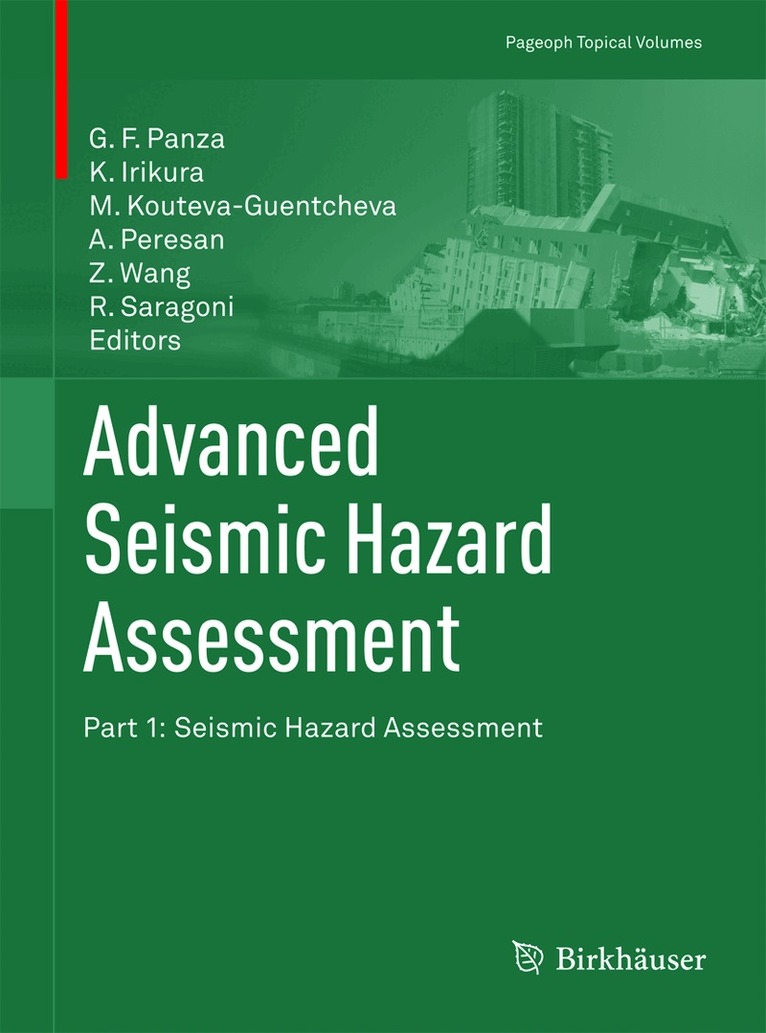
Advanced Seismic Hazard Assessment
Part I: Seismic Hazard Assessment
Av Giuliano F. Panza, Kojiro Irikura m. fl.
Häftad, 2011
1098 kr
Lägg i varukorg
Issues pertaining to urban risks are a pressing concern for those involved in disasters mitigation. Development of effective mitigation strategies requires sound seismic hazard information that is commonly derived through a seismic hazard assessment (SHA). The purpose of SHA is to provide a …
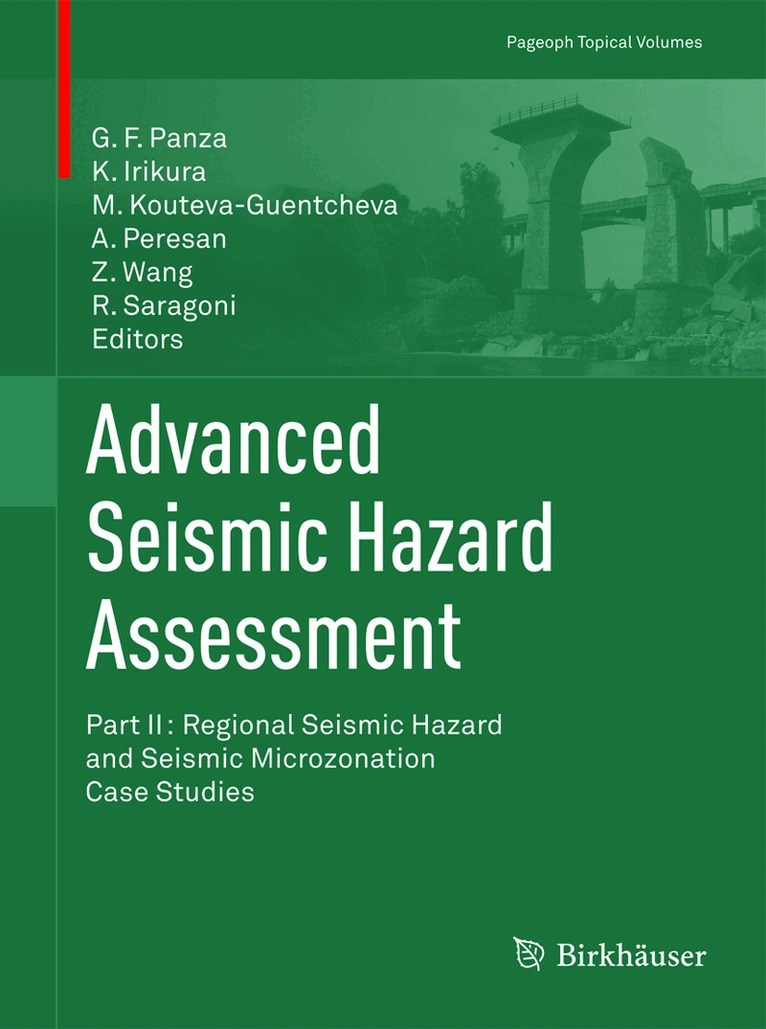
Advanced Seismic Hazard Assessment
Part II: Regional Seismic Hazard and Seismic Microzonation Case Studies
Av Giuliano F. Panza, Kojiro Irikura m. fl.
Häftad, 2011
1098 kr
Lägg i varukorg
Issues pertaining to urban risks are a pressing concern for those involved in disasters mitigation. Development of effective mitigation strategies requires sound seismic hazard information that is commonly derived through a seismic hazard assessment (SHA). The purpose of SHA is to provide a …
Seismic Ground Motion in Large Urban Areas
Av Concettina Nunziata, Ivanka Pakaleva m. fl.
E-bok, 2012
1459 kr
Lägg i varukorg
The accelerated, and often uncontrolled, growth of the cities has contributed to the ecological transformation of their immediate surroundings. Factors contributing to the urban vulnerability include: lowering or rising of the water table, subsidence, loss of bearing capacity of soil foundations …
Seismic Hazard of the Circum-Pannonian Region
Av Czear-I. Trifu, Mircea Radulian m. fl.
E-bok, 2013
734 kr
Lägg i varukorg
requiring the adaptation of probabilistic maps to design ground motions; and (d) the generalization of design parameters to locations where there is little seismic history. Maximum displacements, velocities, and, based on the European Build ing Code EC8, design ground acceleration maps have thus …
Seismic Hazard of the Circum-Pannonian Region
Av Giuliano F. Panza, Mircea Radulian m. fl.
Häftad, 2000
551 kr
Lägg i varukorg
requiring the adaptation of probabilistic maps to design ground motions; and (d) the generalization of design parameters to locations where there is little seismic history. Maximum displacements, velocities, and, based on the European Build ing Code EC8, design ground acceleration maps have thus …
Seismic Ground Motion in Large Urban Areas
Av Giuliano F. Panza, Ivanka Pakaleva m. fl.
Häftad, 2004
1098 kr
Lägg i varukorg
The accelerated, and often uncontrolled, growth of the cities has contributed to the ecological transformation of their immediate surroundings. Factors contributing to the urban vulnerability include: lowering or rising of the water table, subsidence, loss of bearing capacity of soil foundations …