Giuseppe Bonaccorso – författare
Visar alla böcker från författaren Giuseppe Bonaccorso. Handla med fri frakt och snabb leverans.
11 produkter
11 produkter
Häftad, Italienska, 2012
161 kr
Skickas inom 5-8 vardagar
Häftad, Italienska, 2013
189 kr
Skickas inom 5-8 vardagar
Häftad, Italienska, 2013
144 kr
Skickas inom 5-8 vardagar
Häftad, Italienska, 2014
184 kr
Skickas inom 5-8 vardagar
Häftad, Italienska, 2011
85 kr
Skickas inom 5-8 vardagar
Häftad, Engelska, 2017
707 kr
Skickas inom 5-8 vardagar
Häftad, Engelska, 2018
628 kr
Skickas inom 5-8 vardagar
Häftad, Engelska, 2018
713 kr
Skickas inom 5-8 vardagar
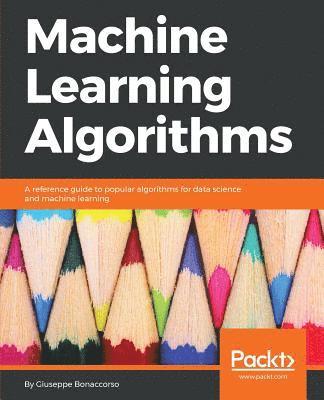
An easy-to-follow, step-by-step guide for getting to grips with the real-world application of machine learning algorithmsKey FeaturesExplore statistics and complex mathematics for data-intensive applicationsDiscover new developments in EM algorithm, PCA, and bayesian regressionStudy patterns and make predictions across various datasetsBook DescriptionMachine learning has gained tremendous popularity for its powerful and fast predictions with large datasets. However, the true forces behind its powerful output are the complex algorithms involving substantial statistical analysis that churn large datasets and generate substantial insight.This second edition of Machine Learning Algorithms walks you through prominent development outcomes that have taken place relating to machine learning algorithms, which constitute major contributions to the machine learning process and help you to strengthen and master statistical interpretation across the areas of supervised, semi-supervised, and reinforcement learning. Once the core concepts of an algorithm have been covered, you’ll explore real-world examples based on the most diffused libraries, such as scikit-learn, NLTK, TensorFlow, and Keras. You will discover new topics such as principal component analysis (PCA), independent component analysis (ICA), Bayesian regression, discriminant analysis, advanced clustering, and gaussian mixture.By the end of this book, you will have studied machine learning algorithms and be able to put them into production to make your machine learning applications more innovative.What you will learnStudy feature selection and the feature engineering processAssess performance and error trade-offs for linear regressionBuild a data model and understand how it works by using different types of algorithmLearn to tune the parameters of Support Vector Machines (SVM)Explore the concept of natural language processing (NLP) and recommendation systemsCreate a machine learning architecture from scratchWho this book is forMachine Learning Algorithms is for you if you are a machine learning engineer, data engineer, or junior data scientist who wants to advance in the field of predictive analytics and machine learning. Familiarity with R and Python will be an added advantage for getting the best from this book.
Häftad, Engelska, 2019
675 kr
Skickas inom 5-8 vardagar
Discover the skill-sets required to implement various approaches to Machine Learning with PythonKey FeaturesExplore unsupervised learning with clustering, autoencoders, restricted Boltzmann machines, and moreBuild your own neural network models using modern Python librariesPractical examples show you how to implement different machine learning and deep learning techniquesBook DescriptionUnsupervised learning is about making use of raw, untagged data and applying learning algorithms to it to help a machine predict its outcome. With this book, you will explore the concept of unsupervised learning to cluster large sets of data and analyze them repeatedly until the desired outcome is found using Python.This book starts with the key differences between supervised, unsupervised, and semi-supervised learning. You will be introduced to the best-used libraries and frameworks from the Python ecosystem and address unsupervised learning in both the machine learning and deep learning domains. You will explore various algorithms, techniques that are used to implement unsupervised learning in real-world use cases. You will learn a variety of unsupervised learning approaches, including randomized optimization, clustering, feature selection and transformation, and information theory. You will get hands-on experience with how neural networks can be employed in unsupervised scenarios. You will also explore the steps involved in building and training a GAN in order to process images.By the end of this book, you will have learned the art of unsupervised learning for different real-world challenges.What you will learnUse cluster algorithms to identify and optimize natural groups of dataExplore advanced non-linear and hierarchical clustering in actionSoft label assignments for fuzzy c-means and Gaussian mixture modelsDetect anomalies through density estimationPerform principal component analysis using neural network modelsCreate unsupervised models using GANsWho this book is forThis book is intended for statisticians, data scientists, machine learning developers, and deep learning practitioners who want to build smart applications by implementing key building block unsupervised learning, and master all the new techniques and algorithms offered in machine learning and deep learning using real-world examples. Some prior knowledge of machine learning concepts and statistics is desirable.
Häftad, Engelska, 2018
613 kr
Skickas inom 5-8 vardagar
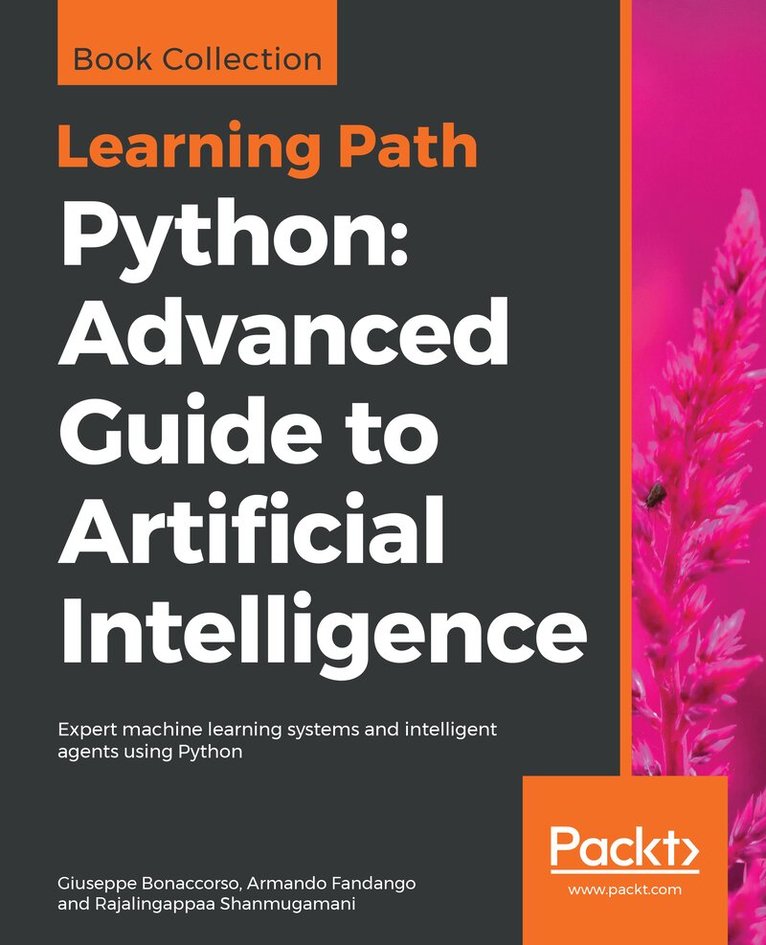
Demystify the complexity of machine learning techniques and create evolving, clever solutions to solve your problemsKey FeaturesMaster supervised, unsupervised, and semi-supervised ML algorithms and their implementation Build deep learning models for object detection, image classification, similarity learning, and moreBuild, deploy, and scale end-to-end deep neural network models in a production environmentBook DescriptionThis Learning Path is your complete guide to quickly getting to grips with popular machine learning algorithms. You'll be introduced to the most widely used algorithms in supervised, unsupervised, and semi-supervised machine learning, and learn how to use them in the best possible manner. Ranging from Bayesian models to the MCMC algorithm to Hidden Markov models, this Learning Path will teach you how to extract features from your dataset and perform dimensionality reduction by making use of Python-based libraries. You'll bring the use of TensorFlow and Keras to build deep learning models, using concepts such as transfer learning, generative adversarial networks, and deep reinforcement learning. Next, you'll learn the advanced features of TensorFlow1.x, such as distributed TensorFlow with TF clusters, deploy production models with TensorFlow Serving. You'll implement different techniques related to object classification, object detection, image segmentation, and more. By the end of this Learning Path, you'll have obtained in-depth knowledge of TensorFlow, making you the go-to person for solving artificial intelligence problemsThis Learning Path includes content from the following Packt products:Mastering Machine Learning Algorithms by Giuseppe BonaccorsoMastering TensorFlow 1.x by Armando FandangoDeep Learning for Computer Vision by Rajalingappaa ShanmugamaniWhat you will learnExplore how an ML model can be trained, optimized, and evaluatedWork with Autoencoders and Generative Adversarial NetworksExplore the most important Reinforcement Learning techniquesBuild end-to-end deep learning (CNN, RNN, and Autoencoders) modelsWho this book is forThis Learning Path is for data scientists, machine learning engineers, artificial intelligence engineers who want to delve into complex machine learning algorithms, calibrate models, and improve the predictions of the trained model. You will encounter the advanced intricacies and complex use cases of deep learning and AI. A basic knowledge of programming in Python and some understanding of machine learning concepts are required to get the best out of this Learning Path.
Häftad, Engelska, 2020
628 kr
Skickas inom 5-8 vardagar
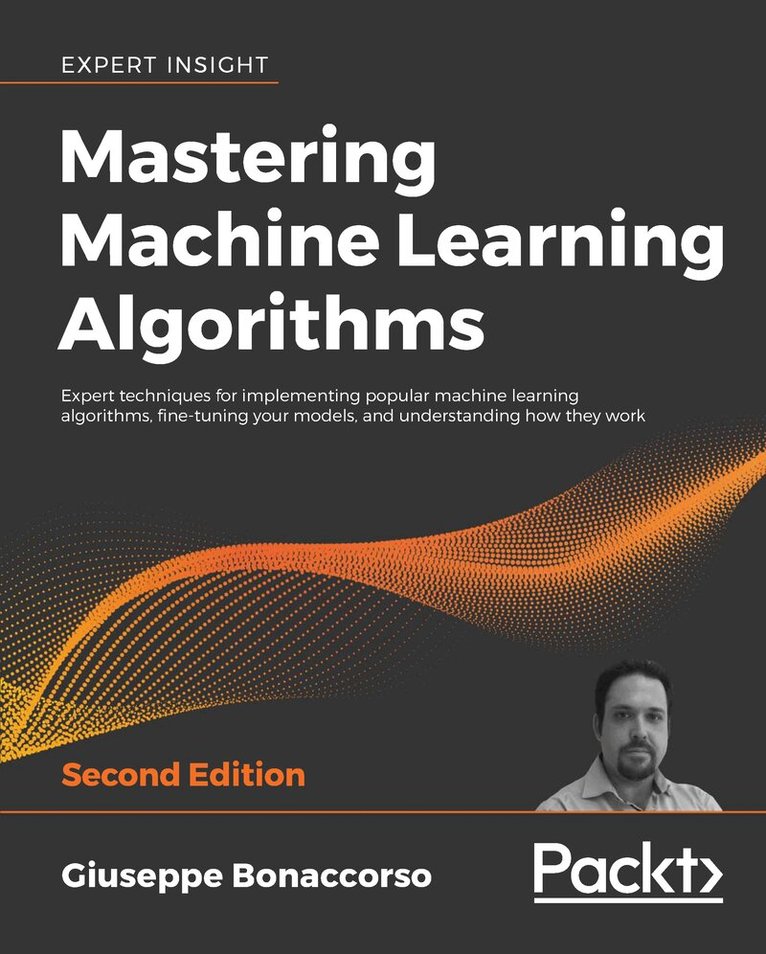
Updated and revised second edition of the bestselling guide to exploring and mastering the most important algorithms for solving complex machine learning problemsKey FeaturesUpdated to include new algorithms and techniquesCode updated to Python 3.8 & TensorFlow 2.xNew coverage of regression analysis, time series analysis, deep learning models, and cutting-edge applicationsBook DescriptionMastering Machine Learning Algorithms, Second Edition helps you harness the real power of machine learning algorithms in order to implement smarter ways of meeting today's overwhelming data needs. This newly updated and revised guide will help you master algorithms used widely in semi-supervised learning, reinforcement learning, supervised learning, and unsupervised learning domains.You will use all the modern libraries from the Python ecosystem – including NumPy and Keras – to extract features from varied complexities of data. Ranging from Bayesian models to the Markov chain Monte Carlo algorithm to Hidden Markov models, this machine learning book teaches you how to extract features from your dataset, perform complex dimensionality reduction, and train supervised and semi-supervised models by making use of Python-based libraries such as scikit-learn. You will also discover practical applications for complex techniques such as maximum likelihood estimation, Hebbian learning, and ensemble learning, and how to use TensorFlow 2.x to train effective deep neural networks.By the end of this book, you will be ready to implement and solve end-to-end machine learning problems and use case scenarios.What you will learnUnderstand the characteristics of a machine learning algorithmImplement algorithms from supervised, semi-supervised, unsupervised, and RL domainsLearn how regression works in time-series analysis and risk predictionCreate, model, and train complex probabilistic modelsCluster high-dimensional data and evaluate model accuracyDiscover how artificial neural networks work – train, optimize, and validate themWork with autoencoders, Hebbian networks, and GANsWho this book is forThis book is for data science professionals who want to delve into complex ML algorithms to understand how various machine learning models can be built. Knowledge of Python programming is required.