Giuseppe Mascolo – författare
Visar alla böcker från författaren Giuseppe Mascolo. Handla med fri frakt och snabb leverans.
3 produkter
3 produkter
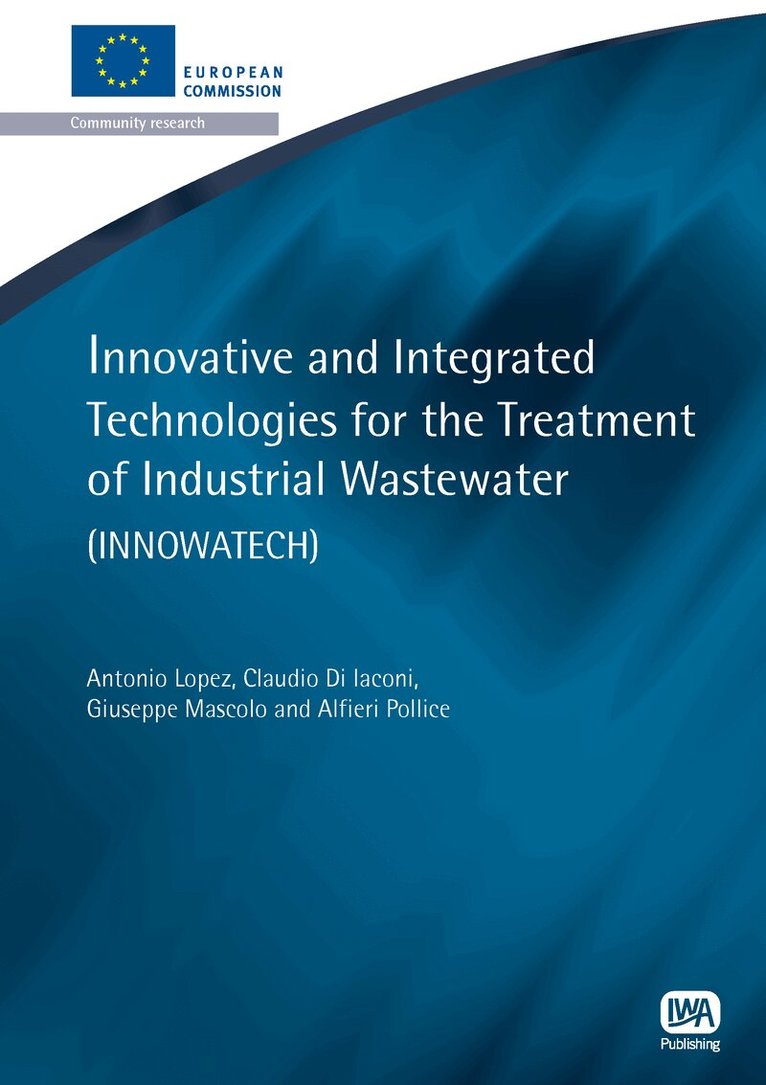
Innovative and Integrated Technologies for the Treatment of Industrial Wastewater
Häftad, Engelska, 2011
1 822 kr
Tillfälligt slut
Innovative and Integrated Technologies for the Treatment of Industrial Wastewater deals with advanced technological solutions for the treatment of industrial wastewater such as aerobic granular biomass based systems, advanced oxidation processes integrated with biological treatments, membrane contactors and membrane chemical reactors. Wastewater from pharmaceutical, chemical and food industries as well as landfill leachates are specifically considered as representative of major problems encountered when treating industrial streams. The economic and environmental sustainability of the above solutions are also reported in the book and compared with the alternatives currently available in the market by life cycle assessment (LCA) and life cycle costing (LCC) methodologies. The implementation of the considered solutions at large scale could support and enhance the competitiveness of different industrial sectors, including the water technology sector, in the global market. Innovative and Integrated Technologies for the Treatment of Industrial Wastewater also makes a contribution towards defining: new concepts, processes and technologies in wastewater treatment with potential benefits for the stable quality of effluents, energy and operational costs saving, and the protection of the environment new sets of advanced standards for wastewater treatment new methodologies for the definition of wastewater treatment needs and framework conditions new information supporting development and implementation of water legislation.
1 822 kr
Tillfälligt slut
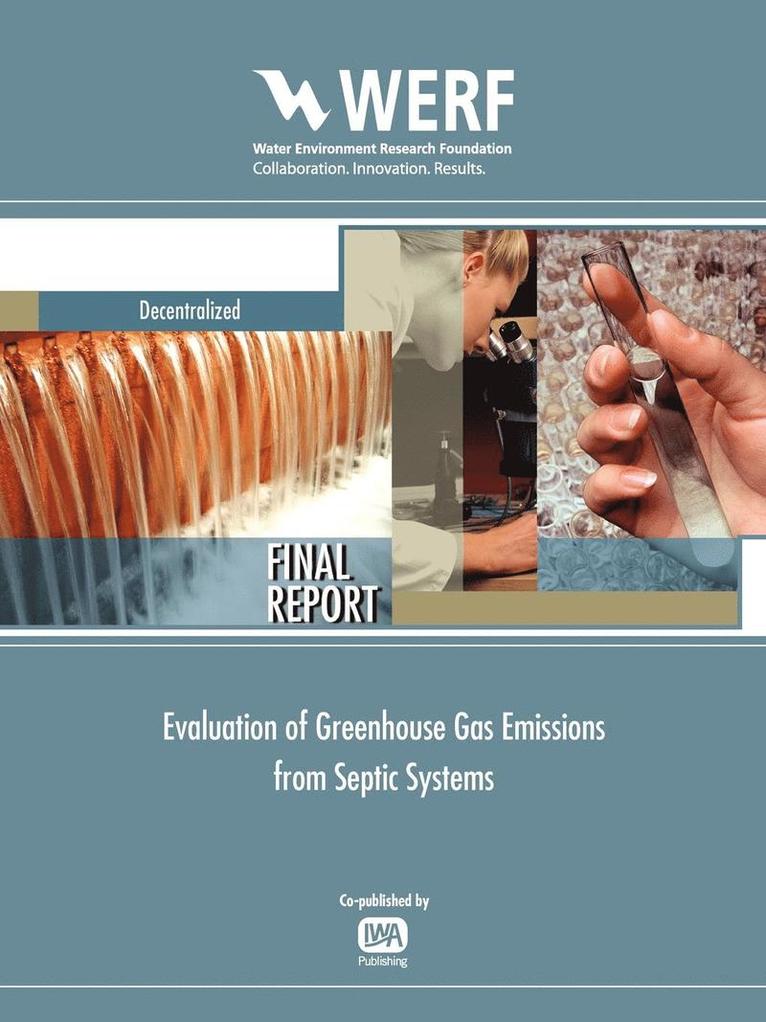
The emission rates of greenhouse gases (GHGs) from individual onsite septic systems used for the management of domestic wastewater were determined in this study. A static flux chamber method was used to determine the emission rates of methane, carbon dioxide, and nitrous oxide gases from eight septic tanks and two soil dispersal systems. A technique developed for the measurement of gas flow and concentration at clean-out ports was used to determine the mass flow of gases moving through the household drainage and vent system. There was general agreement in the methane emission rates for the flux chamber and vent system methods. Several sources of variability in the emission rates were also identified. The septic tank was the primary source of methane, whereas the soil dispersal system was the principal source of carbon dioxide and nitrous oxide emissions. Methane concentrations from the soil dispersal system were found to be near ambient concentrations, similarly negligible amounts of nitrous oxide were found in the septic tank. All emissions originating in the soil dispersal system were discharged through the building vent as a result of natural, wind-induced flow. The gaseous emission rate data were determined to be geometrically distributed. The geometric mean and standard deviation (sg) of the total atmospheric emission rates for methane, carbon dioxide, and nitrous oxide based on samples from the vent system were estimated to be 10.7 (sg = 1.65), 335 (sg = 2.13), and 0.20 (sg = 3.62) g/capita•d, respectively. The corresponding total anthropogenic CO2 equivalence (CO2e) of the GHG emissions to the atmosphere, is about 0.1 tonne CO2e/capita•yr.
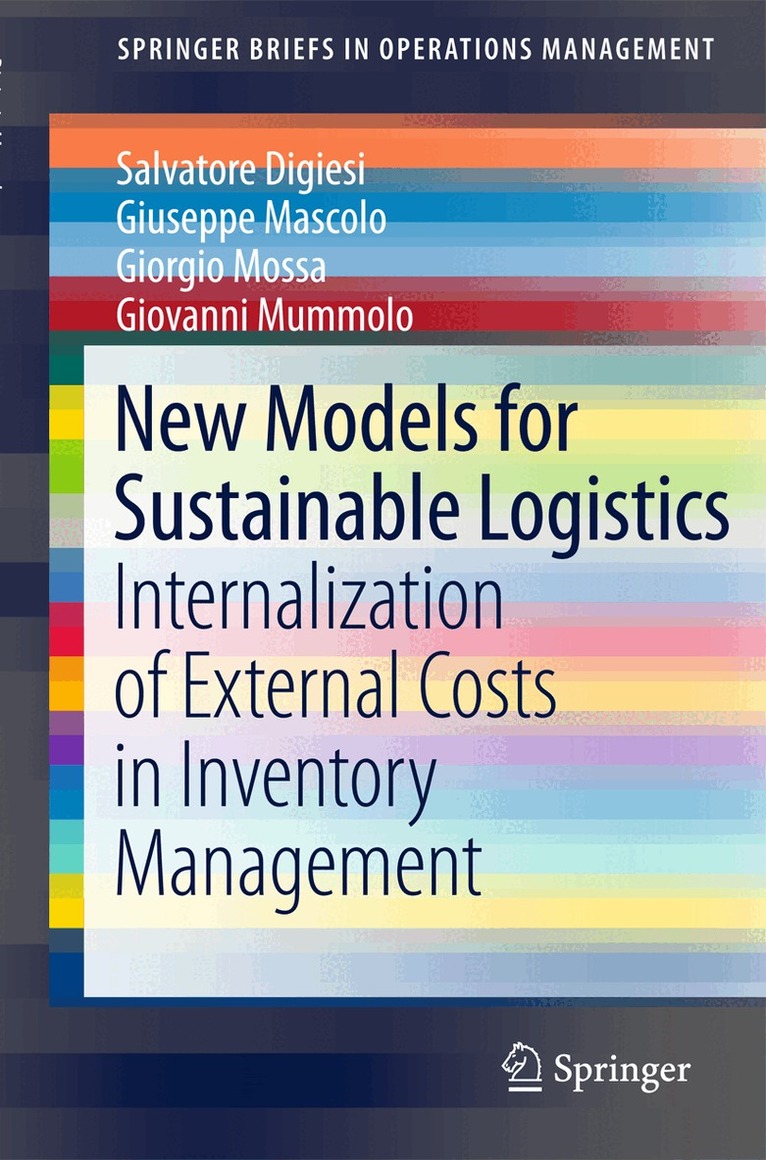
New Models for Sustainable Logistics
Internalization of External Costs in Inventory Management
Häftad, Engelska, 2015
557 kr
Skickas inom 10-15 vardagar
This book introduces new inventory models to support decision-making when cost of externalities are jointly considered along with costs of logistics. Internalization of cost of externalities gives rise to new logistics costs estimates and functions which managers, researchers, lecturers and students should refer in facing with logistics issues. This book focuses on freight transports of industrial production systems. Logistics play a key role for industries since it reveals a critical function designed and managed to pursue economic goals. A large amount of literature is available providing models, which can be used to minimize logistic costs. However, these models usually neglect externalities.New Models for Sustainable Logistics: Internalization of External Costs in Inventory Management is comprised of three chapters. Chapter 1 provides a taxonomy of external costs figures as well as data set enabling the reader to perform reliable estimates of freight transport external costs. To this purpose, a full scale case study is developed. Chapter 2 describes a new sustainable inventory management model whose cost functions include externalities. The classical ‘Economic Order Quantity’ model is re-formulated and the new concept of Sustainable Order Quantity (SOQ) is defined. Finally, in Chapter 3 the SOQ model is formulated for different inventory management applications referred to both deterministic and stochastic production environments. Numerical examples are also provided.