Giuseppe Telesca – författare
Visar alla böcker från författaren Giuseppe Telesca. Handla med fri frakt och snabb leverans.
4 produkter
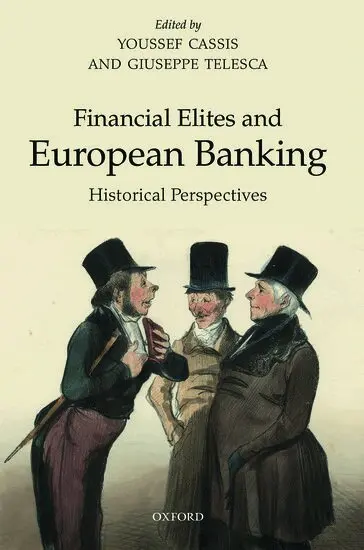
Financial Elites and European Banking
Historical Perspectives
Av Giuseppe Telesca, Youssef Cassis
E-bok, 2018
1190 kr
Lägg i varukorg
What role have the financial elites in European societies and markets played over time? What was their contribution to the recent financial collapse, and how does this compare to previous crises? How have financial elites adjusted to, or influenced, the evolution of the financial system''s …
Financial Elites and European Banking
Historical Perspectives
Av Giuseppe Telesca, Youssef Cassis
E-bok, 2018
1190 kr
Lägg i varukorg
What role have the financial elites in European societies and markets played over time? What was their contribution to the recent financial collapse, and how does this compare to previous crises? How have financial elites adjusted to, or influenced, the evolution of the financial system''s …
Financial Elites and European Banking
Historical Perspectives
Av Youssef Cassis, Giuseppe Telesca
Inbunden, 2018
1828 kr
Lägg i varukorg
What role have the financial elites in European societies and markets played over time? What was their contribution to the recent financial collapse, and how does this compare to previous crises? How have financial elites adjusted to, or influenced, the evolution of the financial system's …
History, Memory, and the Return of Financial Crises after Bretton Woods
Av Youssef Cassis, Giuseppe Telesca
Inbunden, 2026
1300 kr
Lägg i varukorg
Despite the 'return of financial crises' since the end of the Bretton Woods era, a new generation of bankers hardly had any experience or any memory of a previous systemic financial crisis. The events of summer 2007 prompted investors, CEOs, and regulators to investigate the past to understand the …