G.J. Boer – författare
Visar alla böcker från författaren . Handla med fri frakt och snabb leverans.
3 produkter
3 produkter
E-bok
PDF, Engelska, 20023 015 kr
Läs direkt efter köp
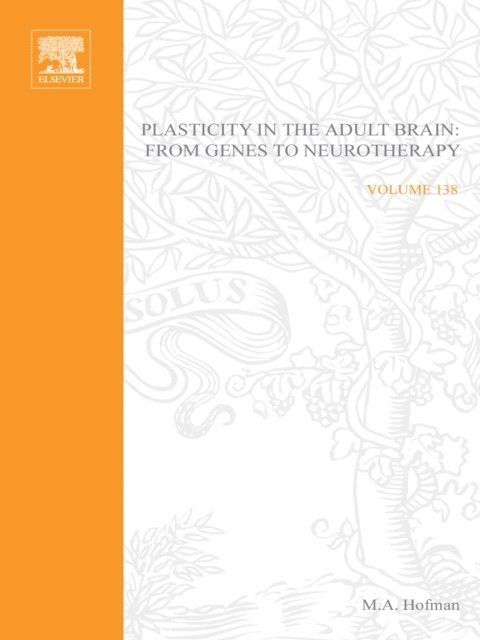
In the past decade neuronal plasticity has become a major theme of modern neurobiology, from cellular and molecular mechanisms of synapse formation in worms and insects to behavioural recovery from strokes in elderly humans. For this reason the focus of interest in the present volume of Progress in Brain Research is on the topic of neuroplasticity in mature organisms, including humans. Contributions range from neurogenesis and synaptic plasticity in the adult primate brain, to neural mechanisms of learning and memory, and the influence of environmental factors and aging on the functional potential of the central nervous system. Several contributions focus on recent developments in neural regeneration and brain repair, providing challenging evidence that the use of stem cell neurotherapy may be beneficial to humans suffering from various neurological and psychiatric diseases. This volume integrates new information on the cellular and molecular mechanisms of neuroplasticity and highlights challenging future questions in this exciting and topical area of neuroscience.
E-bok
PDF, Engelska, 20121 416 kr
Läs direkt efter köp
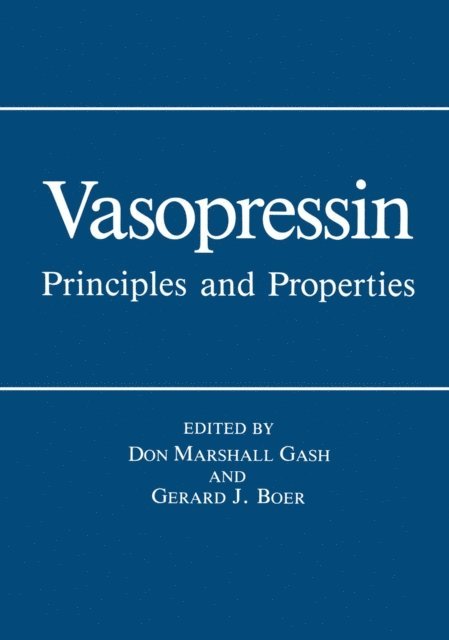
The concept for Vasopressin: Principles and Properties originated during the sum mer of 1983. From reviewing the rich and diverse literature on vasopressin, it became evident that the rapid advancements in this field made it difficult to syn thesize the information gathered from divergent scientific disciplines into a coherent view of the biological role of vasopressin. We perceived the need for a series of critical reviews delineating this recent progress. Over the past decade, major advances have been made in studies of the anatomy, physiology, phar macology, molecular biology, and behavioral activities of vasopressin. This is, in no small measure, due to the finding that vasopressin can no longer be regarded solely as a neurohypophysial hormone. Our present knowledge is that vasopressin is synthesized in also has an axonal messenger role in the nervous system and of the brain, although the functions of vasopressin in these periph sites outside of vasopressin eral sites are not well understood. In order to prepare an overview concentrating on recent studies in vertebrates, authors were selected based on their expertise and asked to review their research area, including the work from other laboratories. It was our intent to provide an updated definitive reference which would complement and extend such past texts as Neurohypophysial Hor mones and Similar Polypeptides (Handbook of Experimental Pharmacology, Vol ume XXIII, 1968) and The Pituitary Gland and Its Neuroendocrine Control (Handbook of Physiology, Section 7: Volume IV, 1974).
Häftad, Engelska, 2012
1 083 kr
Skickas inom 10-15 vardagar
The concept for Vasopressin: Principles and Properties originated during the sum mer of 1983. From reviewing the rich and diverse literature on vasopressin, it became evident that the rapid advancements in this field made it difficult to syn thesize the information gathered from divergent scientific disciplines into a coherent view of the biological role of vasopressin. We perceived the need for a series of critical reviews delineating this recent progress. Over the past decade, major advances have been made in studies of the anatomy, physiology, phar macology, molecular biology, and behavioral activities of vasopressin. This is, in no small measure, due to the finding that vasopressin can no longer be regarded solely as a neurohypophysial hormone. Our present knowledge is that vasopressin is synthesized in also has an axonal messenger role in the nervous system and of the brain, although the functions of vasopressin in these periph sites outside of vasopressin eral sites are not well understood. In order to prepare an overview concentrating on recent studies in vertebrates, authors were selected based on their expertise and asked to review their research area, including the work from other laboratories. It was our intent to provide an updated definitive reference which would complement and extend such past texts as Neurohypophysial Hor mones and Similar Polypeptides (Handbook of Experimental Pharmacology, Vol ume XXIII, 1968) and The Pituitary Gland and Its Neuroendocrine Control (Handbook of Physiology, Section 7: Volume IV, 1974).