Glen Sussman - Böcker
Visar alla böcker från författaren Glen Sussman. Handla med fri frakt och snabb leverans.
3 produkter
3 produkter
351 kr
Tillfälligt slut
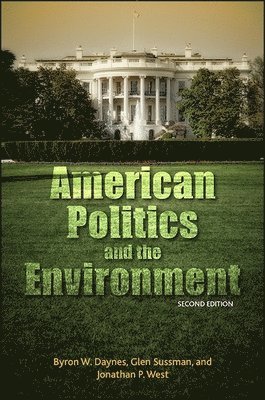
Examines the role of politics in the environmental policy making process.Changing our environmental policy has been at the forefront of many political discussions. But how can we make this change come about? In American Politics and the Environment, Second Edition, Byron W. Daynes, Glen Sussman and Jonathan P. West argue it is critical that we must understand the politics of environmental decision making and how political actors operate within political institutions. Blending behavioral and institutional approaches, each chapter combines discussion of an institution along with sidebars focusing on a particular environmental topic as well as a personal profile of a key decision maker. A central focus of this second edition is the emergence of global climate change as a key issue. Although the scientific community can provide research findings to policy makers, politics can create conflicts, tensions, and delays in the crafting of effective and necessary environmental policy responses. Daynes, Sussman, and West help us understand the role of politics in the policy making process and why institutional players such as the president, Congress, and interest groups succeed or fail in responding to important environmental challenges.This book is freely available in an open access edition thanks to Knowledge Unlatched-an initiative that provides libraries and institutions with a centralized platform to support OA collections and from leading publishing houses and OA initiatives. Learn more at the Knowledge Unlatched website at: https://www.knowledgeunlatched.org/, and access the book online at the SUNY Open Access Repository at http://hdl.handle.net/20.500.12648/7128.
1 019 kr
Skickas
Examines the role of politics in the environmental policy making process.Changing our environmental policy has been at the forefront of many political discussions. But how can we make this change come about? In American Politics and the Environment, Second Edition, Byron W. Daynes, Glen Sussman and Jonathan P. West argue it is critical that we must understand the politics of environmental decision making and how political actors operate within political institutions. Blending behavioral and institutional approaches, each chapter combines discussion of an institution along with sidebars focusing on a particular environmental topic as well as a personal profile of a key decision maker. A central focus of this second edition is the emergence of global climate change as a key issue. Although the scientific community can provide research findings to policy makers, politics can create conflicts, tensions, and delays in the crafting of effective and necessary environmental policy responses. Daynes, Sussman, and West help us understand the role of politics in the policy making process and why institutional players such as the president, Congress, and interest groups succeed or fail in responding to important environmental challenges.This book is freely available in an open access edition thanks to Knowledge Unlatched-an initiative that provides libraries and institutions with a centralized platform to support OA collections and from leading publishing houses and OA initiatives. Learn more at the Knowledge Unlatched website at: https://www.knowledgeunlatched.org/, and access the book online at the SUNY Open Access Repository at http://hdl.handle.net/20.500.12648/7128.
White House Politics and the Environment
Franklin D. Roosevelt to George W. Bush
Häftad, Engelska, 2010
257 kr
Skickas inom 7-10 vardagar
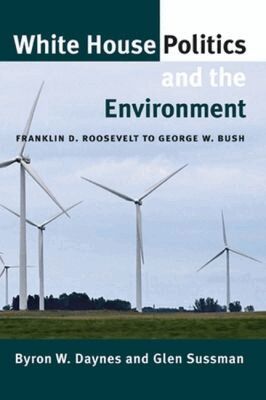
Presidents and their administrations since the 1960s have become increasingly active in environmental politics, despite their touted lack of expertise and their apparent frequent discomfort with the issue. In White House Politics and the Environment: Franklin D. Roosevelt to George W. Bush, Byron W. Daynes and Glen Sussman study the multitude of resources presidents can use in their attempts to set the public agenda. They also provide a framework for considering the environmental direction and impact of U.S. presidents during the last seven decades, permitting an assessment of each president in terms of how his administration either aided or hindered the advancement of environmental issues. Employing four factors—political communication, legislative leadership, administrative actions, and environmental diplomacy—as a matrix for examining the environmental records of the presidents, Daynes and Sussman’s analysis and discussion allow them to sort each of the twelve occupants of the White House included in this study into one of three categories, ranging from less to more environmentally friendly. Environmental leaders and public policy professionals will appreciate White House Politics and the Environment for its thorough and wide-ranging examination of how presidential resources have been brought to bear on environmental issues.