Gloria Frolek Clark – författare
Visar alla böcker från författaren Gloria Frolek Clark. Handla med fri frakt och snabb leverans.
3 produkter
3 produkter
Häftad, Engelska, 2017
1 015 kr
Skickas inom 5-8 vardagar
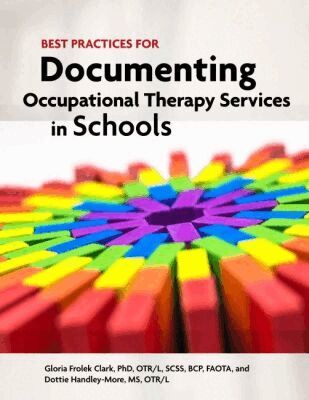
This timely resource provides practical, how-to information on how to document occupational therapy services while meeting federal, state, and district requirements for screening and evaluation, intervention, outcomes and program evaluation, and OTA supervision. A flash drive includes forms for all aspects of documenting occupational therapy in schools, along with documentation samples and case examples.
Häftad, Engelska, 2019
1 645 kr
Skickas inom 5-8 vardagar
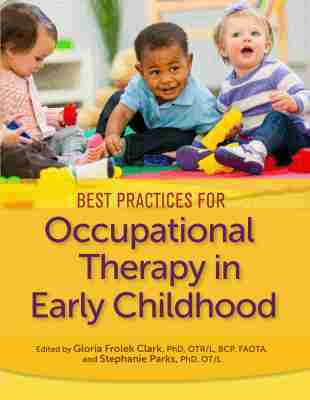
Nearly 20% of occupational therapy practitioners work in school settings, requiring current, effective, and evidence-based best practices for students. Reflecting the extensiveness of occupational therapy practice in schools, the second edition of this bestseller contains best practices from preschool to postsecondary transitions, from ADLs to driving.The latest edition of Best Practices for Occupational Therapy in Schools promotes best school practices, education, research, and policy and provides school occupational therapy practitioners with current, effective information to use in their daily practices. This comprehensive text details working with multiple student populations, transition planning, assistive technology, enhancing student participation, and work readiness. Appendixes provide resources for educators using the text in the classroom, documentation, assessment tools, liability issues, and templates for the occupational profile and occupational therapy intervention plan.Highlights:Section I. Foundations of Occupational Therapy in Schools. History, OTPF, laws, ethics, preparing students to practice, fieldwork, occupational therapy assistants, administrators.Section II. Evidence-Guided Practices: System-Level Considerations to Support Participation. Leadership and advocacy, supporting student access, family engagement, collaboration, resolving conflicts, determining workload, evaluation, Medicaid cost recovery, literacy and STEM skills, health and wellness, mental health, UDL, AT, transportation, transition planning.Section III. Evidence-Guided Practices: Population-Level Considerations to Support Participation. MTSSs, 504 plans, ADHD, autism, childhood trauma, emotional disturbance, hearing impairments or deafness, intellectual disability, low-incidence disabilities, physical disabilities, specific learning disabilities, TBI, visual impairment.Section IV. Evidence-Guided Practices: Service-Level Considerations to Support Participation. Evaluation and planning, intervention, group intervention, telehealth, nonpublic schools and homeschooling, documentation and data collection.Section V. Evidence-Guided Practices: Supporting Occupations to Enhance Student Participation. ADLs, mealtimes, IADLs, handwriting, reading, play and leisure, driver’s education, enhancing social participation.Section VI. Evidence-Guided Practices: Addressing Performance Skills to Enhance Student Participation. Executive function, fine motor skills, motor skills, sensory processing, visual perception and visual–motor skills.Appendixes. Future of school occupational therapy, assessments tools, evidence-based practice, liability insurance, guidelines for early intervention, occupational profile template, intervention plan, documentation, incorporating the text into a curriculum.With a focus on student participation, Best Practices for Occupational Therapy in Schools, 2nd Edition, provides practical applications of evidence-based research to daily practice.
E-bok
PDF, Tyska, 2020335 kr
Läs direkt efter köp
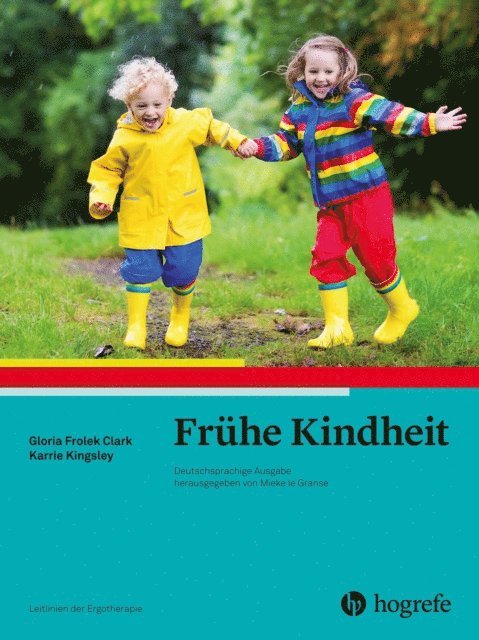
Alltägliches Handeln ermöglichen: die Leitlinien der Ergotherapie als Instrumente für Praxis, Lehre und Wissenschaft Praxis verbessern, Versorgungsqualität steigern, Kosten sparen und Zufriedenheit der Klienten erhöhen: Die Anforderungen an die therapeutischen Gesundheitsfachberufe sind hoch. Praxisleitlinien stellen Informationen und Interventionen bereit - systematisch und evidenzbasiert. Band 11: Frühe Kindheit Von der Geburt bis zum 5. Lebensjahr - eine vulnerable Zeitspanne im Leben jedes Menschen. Es ist die vorschulische Zeit, die Zeit, die noch nicht durch Institutionen geprägt ist. Ergotherapie geht es nicht alleine um frühe Interventionen im Lebenslauf. Vielmehr gilt es, in dieser kritischen Phase, die Fähigkeiten der Kinder so zu kräftigen, dass sie am späteren Leben aktiv und selbstbewusst teilnehmen können. Die Leitlinie umfasst: Gegenstandsbereich und Prozess der Ergotherapie Überblick zur frühen Kindheit Ergotherapeutischer Prozess Best Practice und Zusammenfassung der Evidenz Schlussfolgerungen für Praxis, Ausbildung, Forschung Evidenzbasierte Praxis und Übersicht zur Evidenz Glossar aus dem Occupational Therapy Practice Framework (OTPF, 2014) des AOTA in deutscher Sprache