Godfrey C. Onwubolu - Böcker
Visar alla böcker från författaren Godfrey C. Onwubolu. Handla med fri frakt och snabb leverans.
12 produkter
12 produkter
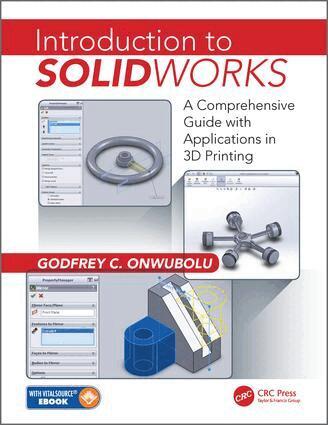
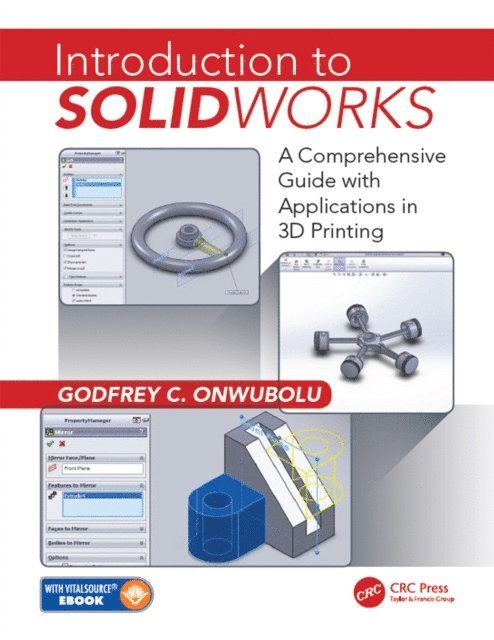
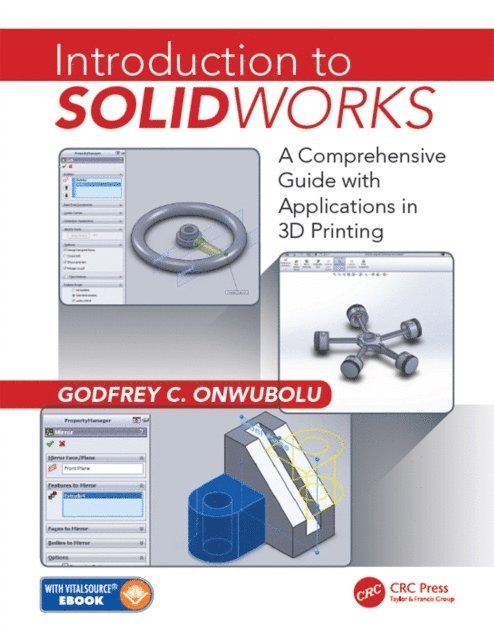
Introduction to SolidWorks
A Comprehensive Guide with Applications in 3D Printing
Inbunden, Engelska, 2016
1 735 kr
Skickas inom 7-10 vardagar
This senior undergraduate level textbook is written for Advanced Manufacturing, Additive Manufacturing, as well as CAD/CAM courses. Its goal is to assist students in colleges and universities, designers, engineers, and professionals interested in using SolidWorks as the design and 3D printing tool for emerging manufacturing technology for practical applications. This textbook will bring a new dimension to SolidWorks by introducing readers to the role of SolidWorks in the relatively new manufacturing paradigm shift, known as 3D-Printing which is based on Additive Manufacturing (AM) technology.This new textbook:Features modeling of complex parts and surfacesProvides a step-by-step tutorial type approach with pictures showing how to model using SolidWorksOffers a user-Friendly approach for the design of parts, assemblies, and drawings, motion-analysis, and FEA topicsIncludes clarification of connections between SolidWorks and 3D-Printing based on Additive ManufacturingDiscusses a clear presentation of Additive Manufacturing for Designers using SolidWorks CAD software "Introduction to SolidWorks: A Comprehensive Guide with Applications in 3D Printing" is written using a hands-on approach which includes a significant number of pictorial descriptions of the steps that a student should follow to model parts, assemble parts, and produce drawings.
1 146 kr
Skickas inom 5-8 vardagar
Applied Mechanics with SolidWorks aims to assist students, designers, engineers, and professionals interested in using SolidWorks to solve practical engineering mechanics problems. It utilizes CAD software, SolidWorks-based, to teach applied mechanics. SolidWorks here is presented as an alternative tool for solving statics and dynamics problems in applied mechanics courses.Readers can follow the steps described in each chapter to model parts and analyze them. A significant number of pictorial descriptions have been included to guide users through each stage, making it easy for readers to work through the text on their own.Instructional support videos showing the motions and results of the dynamical systems being analyzed and SolidWorks files for all problems solved are available to lecturers and instructors for free download.
1 451 kr
Skickas inom 5-8 vardagar
Group method of data handling (GMDH) is a typical inductive modeling method built on the principles of self-organization. Since its introduction, inductive modelling has been developed to support complex systems in prediction, clusterization, system identification, as well as data mining and knowledge extraction technologies in social science, science, engineering, and medicine.This is the first book to explore GMDH using MATLAB (matrix laboratory) language. Readers will learn how to implement GMDH in MATLAB as a method of dealing with big data analytics. Error-free source codes in MATLAB have been included in supplementary material (accessible online) to assist users in their understanding in GMDH and to make it easy for users to further develop variations of GMDH algorithms.
1 288 kr
Tillfälligt slut
Group Method of Data Handling (GMDH) is a typical inductive modeling method built on the principles of self-organization. Since its introduction, inductive modeling has been developed and applied to complex systems in areas like prediction, modeling, clusterization, system identification, as well as data mining and knowledge extraction technologies, to several fields including social science, science, engineering, and medicine.This book makes error-free codes available to end-users so that these codes can be used to understand the implementation of GMDH, and then create opportunities to further develop the variants of GMDH algorithms. C-language has been chosen because it is a basic language commonly taught in the first year in computer programming courses in most universities and colleges, and the compiled versions could be used for more meaningful practical applications where security is necessary.
1 269 kr
Skickas inom 5-8 vardagar
Computer-Aided Engineering Design with SolidWorks is designed for students taking SolidWorks courses at college and university, and also for engineering designers involved or interested in using SolidWorks for real-life applications in manufacturing processes, mechanical systems, and engineering analysis. The course material is divided into two parts. Part I covers the principles of SolidWorks, simple and advanced part modeling approaches, assembly modeling, drawing, configurations/design tables, and surface modeling. Part II covers the applications of SolidWorks in manufacturing processes, mechanical systems, and engineering analysis. The manufacturing processes applications include mold design, sheet metal parts design, die design, and weldments. The mechanical systems applications include: routing, piping and tubing, gears, pulleys and chains, cams and springs, mechanism design and analysis, threads and fasteners, hinges, and universal joints. The sections on engineering analysis also include finite element analysis.This textbook is unique because it is one of the very few to thoroughly cover the applications of SolidWorks in manufacturing processes, mechanical systems, and engineering analysis, as presented in Part II.It is written using a hands-on approach in which students can follow the steps described in each chapter to: model and assemble parts, produce drawings, and create applications on their own with little assistance from their instructors during each teaching session or in the computer laboratory. There are pictorial descriptions of the steps involved in every stage of part modeling, assembly modeling, drawing details, and applications presented in this textbook.Supplementary Material(s)For Users (2 MB)
1 633 kr
Tillfälligt slut
This book proposes a concept of adaptive memory programming (AMP) for grouping a number of generic optimization techniques used in combinatorial problems. The same common features seen in the use of memory and a local search procedure drive these emerging optimization techniques, which include artificial neural networks, genetic algorithms, tabu search and ant systems. The primary motivation for AMP, therefore, is to group and unify all these techniques so as to enhance the computational capabilities that they offer for combinatorial problems encountered in real life in the area of production planning and control.The text describes the theoretical aspects of AMP together with relevant production planning and control applications. It covers the techniques, applications and algorithms. The book has been written in such a way that it can serve as an instructional text for students and those who are taking tuition on their own. The numerical examples given are first solved manually to enhance the reader's understanding of the material, and that is followed by a description of the algorithms and computer results. This way, the student can fully follow the material. The algorithms described for each application are useful to both students and practitioners in grasping how to implement similar applications in computer code using emerging optimization techniques.
2 121 kr
Skickas inom 10-15 vardagar
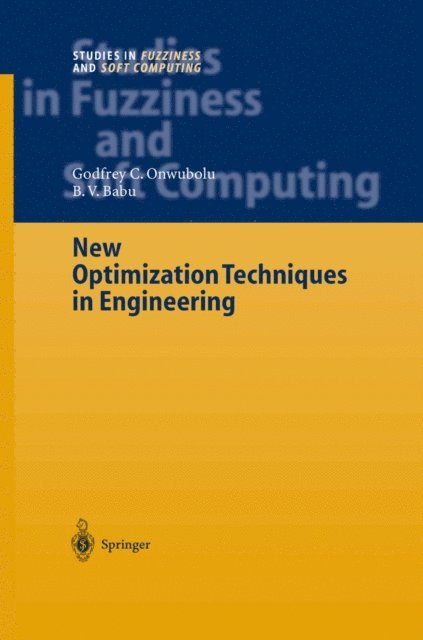
Presently, general-purpose optimization techniques such as Simulated Annealing, and Genetic Algorithms, have become standard optimization techniques. Concerted research efforts have been made recently in order to invent novel optimization techniques for solving real life problems, which have the attributes of memory update and population-based search solutions. The book describes a variety of these novel optimization techniques which in most cases outperform the standard optimization techniques in many application areas. New Optimization Techniques in Engineering reports applications and results of the novel optimization techniques considering a multitude of practical problems in the different engineering disciplines presenting both the background of the subject area and the techniques for solving the problems.
1 255 kr
Skickas inom 10-15 vardagar
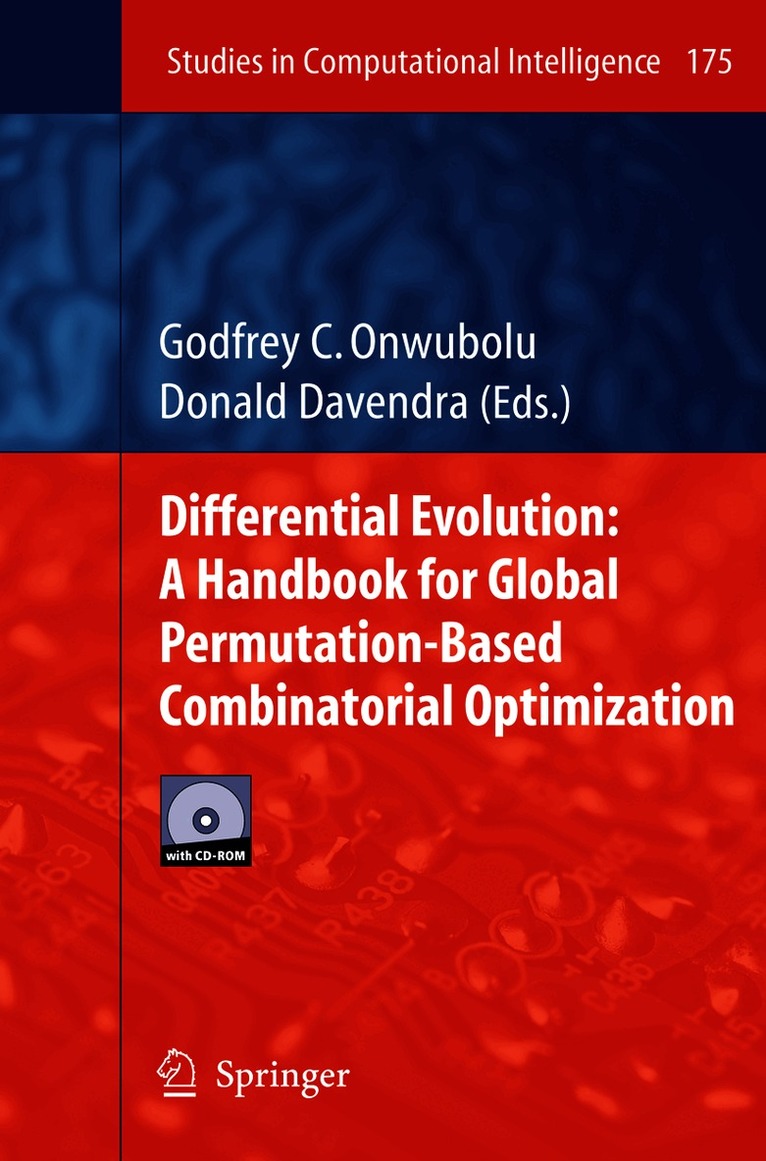
What is combinatorial optimization? Traditionally, a problem is considered to be c- binatorial if its set of feasible solutions is both ?nite and discrete, i. e. , enumerable. For example, the traveling salesman problem asks in what order a salesman should visit the cities in his territory if he wants to minimize his total mileage (see Sect. 2. 2. 2). The traveling salesman problem’s feasible solutions - permutations of city labels - c- prise a ?nite, discrete set. By contrast, Differential Evolution was originally designed to optimize functions de?ned on real spaces. Unlike combinatorial problems, the set of feasible solutions for real parameter optimization is continuous. Although Differential Evolution operates internally with ?oating-point precision, it has been applied with success to many numerical optimization problems that have t- ditionally been classi?ed as combinatorial because their feasible sets are discrete. For example, the knapsack problem’s goal is to pack objects of differing weight and value so that the knapsack’s total weight is less than a given maximum and the value of the items inside is maximized (see Sect. 2. 2. 1). The set of feasible solutions - vectors whose components are nonnegative integers - is both numerical and discrete. To handle such problems while retaining full precision, Differential Evolution copies ?oating-point - lutions to a temporary vector that, prior to being evaluated, is truncated to the nearest feasible solution, e. g. , by rounding the temporary parameters to the nearest nonnegative integer.
1 593 kr
Skickas inom 10-15 vardagar
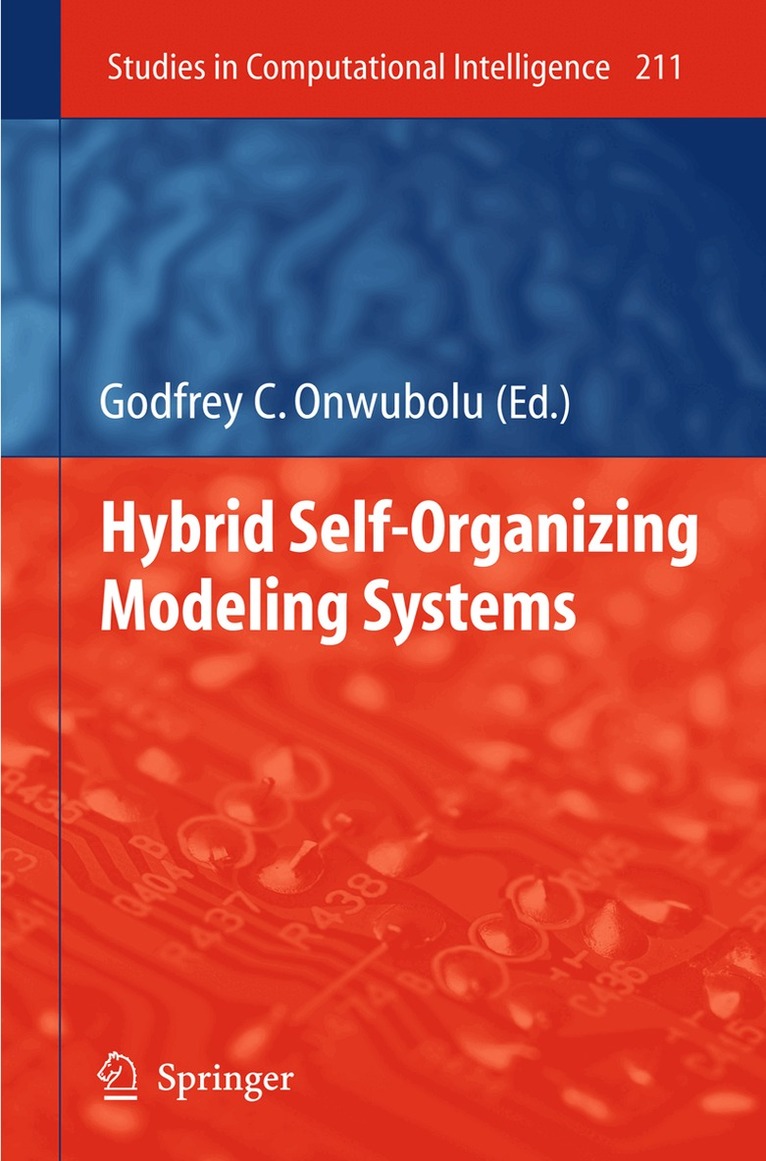
Models form the basis of any decision. They are used in di?erent context and for di?erent purposes: for identi?cation, prediction, classi?cation, or control of complex systems. Modeling is done theory-driven by logical-mathematical methods or data-driven based on observational data of the system and some algorithm or software for analyzing this data. Today, this approach is s- marized as Data Mining. There are many Data Mining algorithms known like Arti?cial Neural N- works, Bayesian Networks, Decision Trees, Support Vector Machines. This book focuses on another method: the Group Method of Data Handling. - thoughthismethodologyhasnotyetbeenwellrecognizedintheinternational science community asa verypowerfulmathematicalmodeling andknowledge extraction technology, it has a long history. Developed in 1968bythe Ukrainianscientist A.G. Ivakhnenko it combines the black-box approach and the connectionism of Arti?cial Neural Networks with well-proven Statistical Learning methods and with more behavior- justi?ed elements of inductive self-organization.Over the past 40 years it has been improving and evolving, ?rst by works in the ?eld of what was known in the U.S.A. as Adaptive Learning Networks in the 1970s and 1980s and later by signi?cantcontributions from scientists from Japan,China, Ukraine, Germany. Many papers and books have been published on this modeling technology, the vast majority of them in Ukrainian and Russian language.
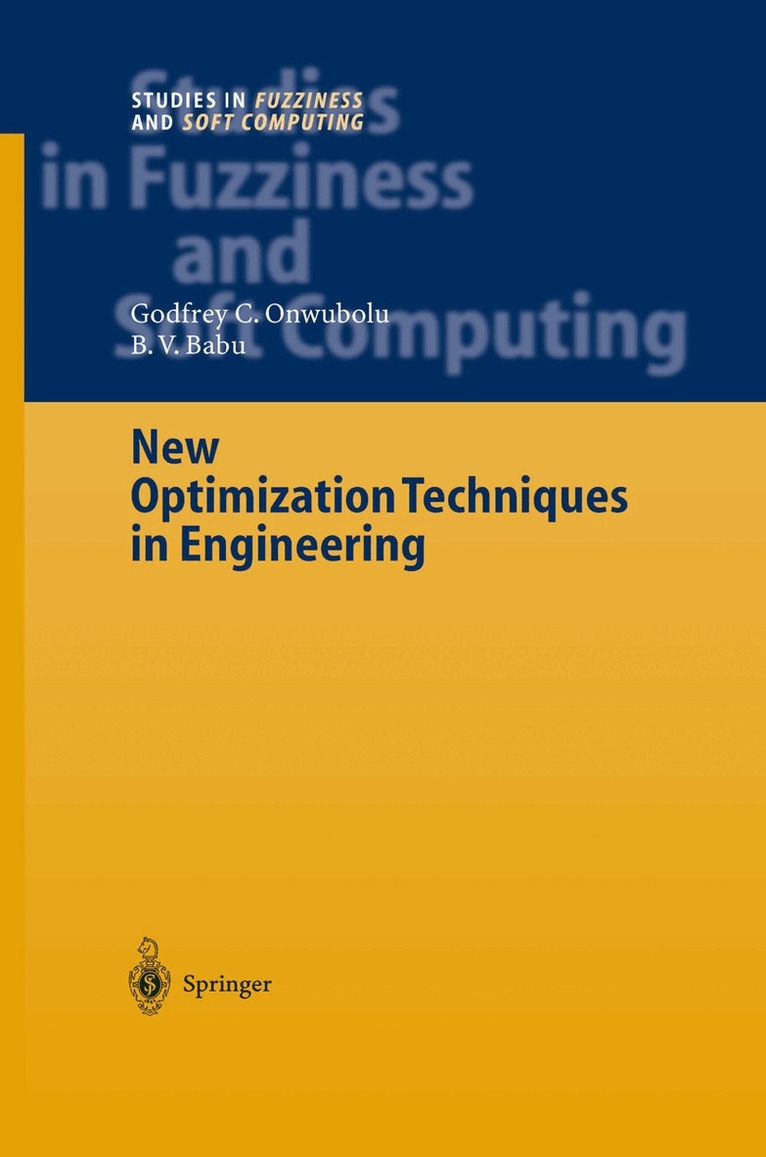
Del 141 - Studies in Fuzziness and Soft Computing
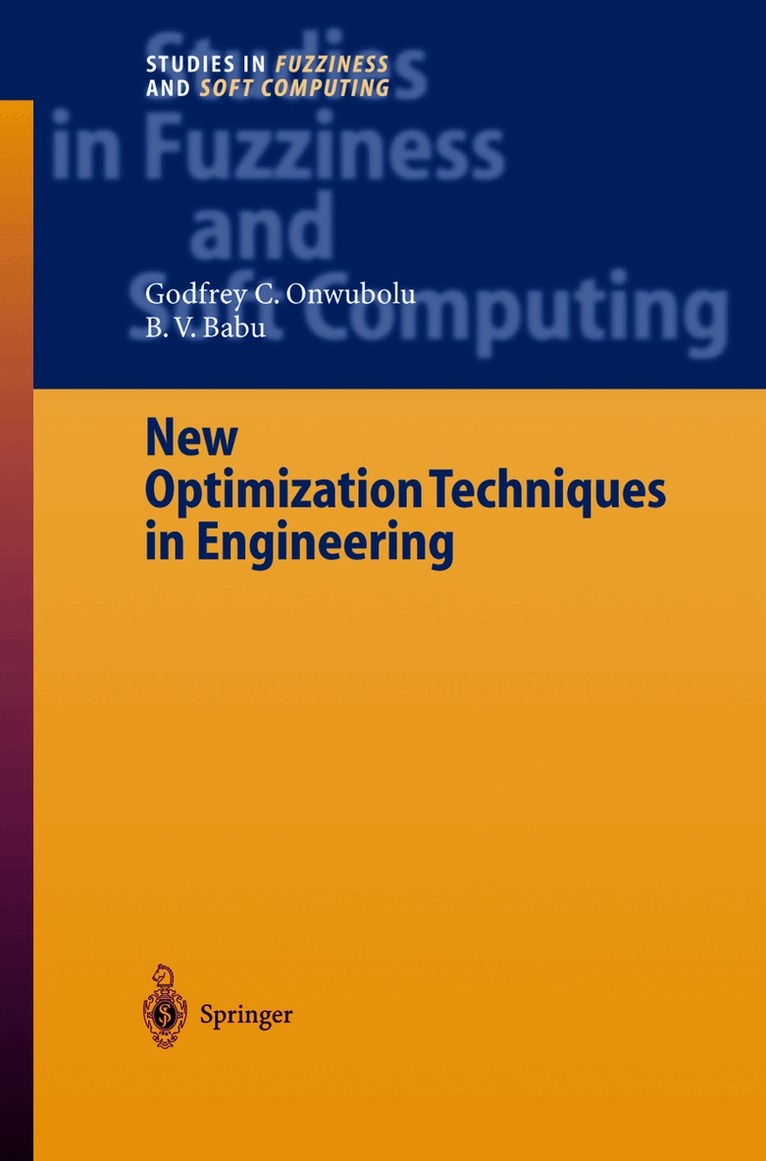
New Optimization Techniques in Engineering
Häftad, Engelska, 2010
2 121 kr
Skickas inom 10-15 vardagar
Presently, general-purpose optimization techniques such as Simulated Annealing, and Genetic Algorithms, have become standard optimization techniques. Concerted research efforts have been made recently in order to invent novel optimization techniques for solving real life problems, which have the attributes of memory update and population-based search solutions. The book describes a variety of these novel optimization techniques which in most cases outperform the standard optimization techniques in many application areas. New Optimization Techniques in Engineering reports applications and results of the novel optimization techniques considering a multitude of practical problems in the different engineering disciplines – presenting both the background of the subject area and the techniques for solving the problems.
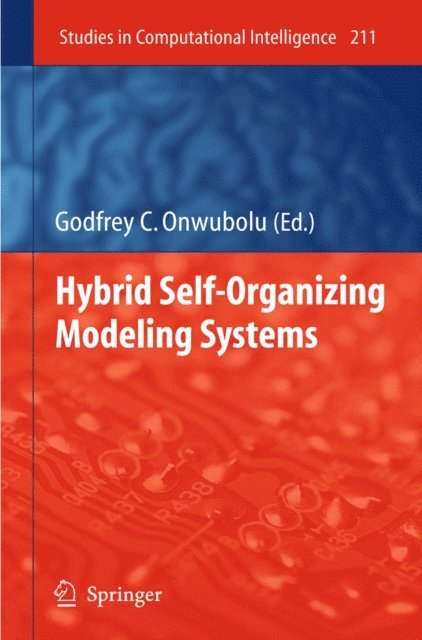
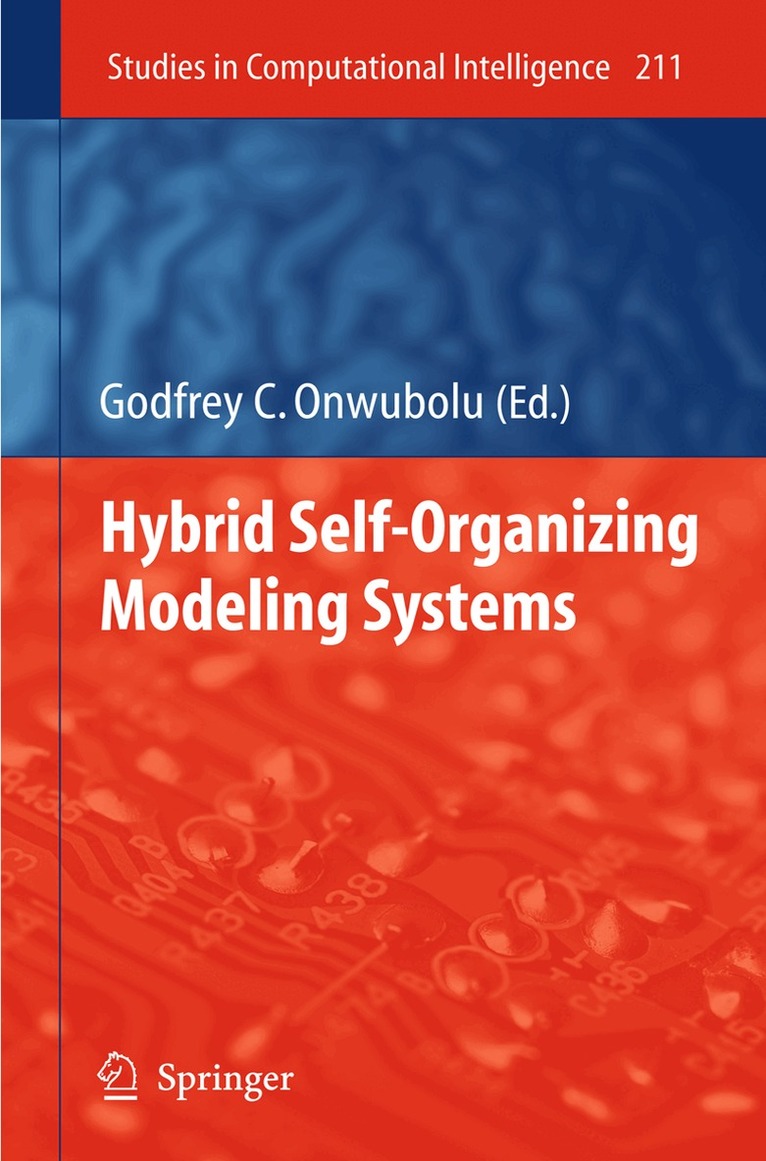
Del 211 - Studies in Computational Intelligence
Hybrid Self-Organizing Modeling Systems
Häftad, Engelska, 2010
1 593 kr
Skickas inom 10-15 vardagar
Models form the basis of any decision. They are used in di?erent context and for di?erent purposes: for identi?cation, prediction, classi?cation, or control of complex systems. Modeling is done theory-driven by logical-mathematical methods or data-driven based on observational data of the system and some algorithm or software for analyzing this data. Today, this approach is s- marized as Data Mining. There are many Data Mining algorithms known like Arti?cial Neural N- works, Bayesian Networks, Decision Trees, Support Vector Machines. This book focuses on another method: the Group Method of Data Handling. - thoughthismethodologyhasnotyetbeenwellrecognizedintheinternational science community asa verypowerfulmathematicalmodeling andknowledge extraction technology, it has a long history. Developed in 1968bythe Ukrainianscientist A.G. Ivakhnenko it combines the black-box approach and the connectionism of Arti?cial Neural Networks with well-proven Statistical Learning methods and with more behavior- justi?ed elements of inductive self-organization.Over the past 40 years it has been improving and evolving, ?rst by works in the ?eld of what was known in the U.S.A. as Adaptive Learning Networks in the 1970s and 1980s and later by signi?cantcontributions from scientists from Japan,China, Ukraine, Germany. Many papers and books have been published on this modeling technology, the vast majority of them in Ukrainian and Russian language.
634 kr
Skickas inom 5-8 vardagar