Gonzalo Rodriguez-Pereyra - Böcker
Visar alla böcker från författaren Gonzalo Rodriguez-Pereyra. Handla med fri frakt och snabb leverans.
9 produkter
9 produkter
784 kr
Skickas
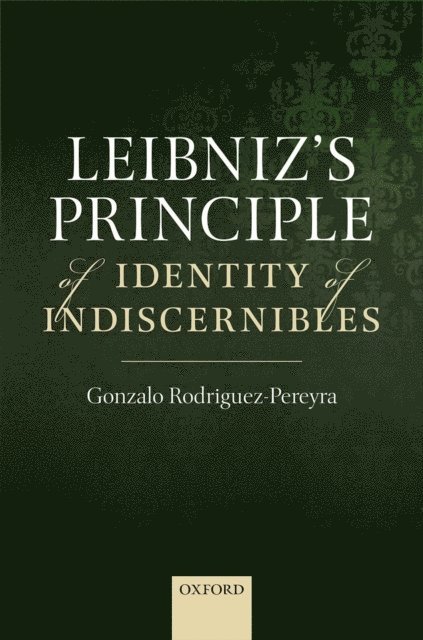
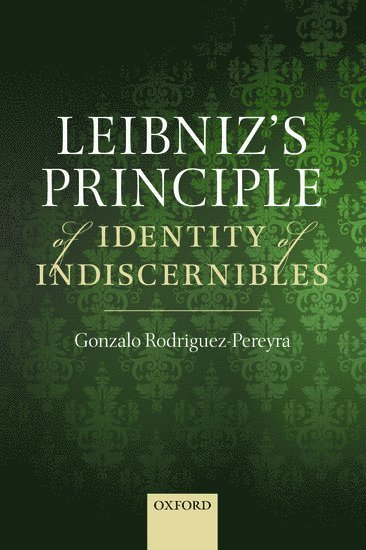
The Principle of Identity of Indiscernibles is the thesis that, necessarily, no two (concrete) objects differ only numerically. This is the weakest version of the Principle of Identity of Indiscernibles. Gonzalo Rodriguez-Pereyra argues that there is no trivial version of the Principle of Identity of Indiscernibles, since what is usually known as the trivial version of the principle is consistent with objects differing only numerically. He provides two positive arguments for the Principle: one based on broadly Humean considerations excluding a certain kind of necessary connection between distinct objects, and the other based on ideas about what grounds the having of certain properties by objects. This book also presents two new arguments against restricted versions of the principle according to which, necessarily, no two objects can be purely qualitatively indiscernible or intrinsically purely qualitatively indiscernible. It is further argued that one of the arguments for the weakest version of the principle can be extended to abstract objects. The conclusion is drawn that, necessarily, there are no objects, whether abstract or concrete, that differ only numerically.
1 608 kr
Skickas inom 3-6 vardagar
Gonzalo Rodriguez-Pereyra presents an original study of the place and role of the Identity of Indiscernibles in Leibniz's philosophy. The Principle of the Identity of Indiscernibles rules out numerically distinct but perfectly similar things; Leibniz derived it from more basic principles and used it to establish important philosophical theses. Rodriguez-Pereyra aims to establish what Leibniz meant by the Principle of Identity of Indiscernibles, what his arguments for and from it were, and to assess those arguments and Leibniz's claims about the Principle of Identity of Indiscernibles. He argues that Leibniz had a very strong version of the principle, according to which no possibilia (whether or not they belong to the same possible world) are intrinsically perfectly similar, where this excludes things that differ in magnitude alone. The book discusses Leibniz's arguments for the Identity of Indiscernibles in the Meditation on the Principle of the Individual, the Discourse on Metaphysics, Notationes Generales, Primary Truths, the letter to Casati of 1689, the correspondence with Clarke, as well as the use of the Identity of Indiscernibles in Leibniz's arguments against the Cartesian conception of the material world, atoms, absolute space and time, the Lockean conception of the mind as a tabula rasa, and freedom of indifference. Rodriguez-Pereyra argues that the Identity of Indiscernibles was a central but inessential principle of Leibniz's philosophy.
407 kr
Skickas inom 7-10 vardagar
Gonzalo Rodriguez-Pereyra presents an original study of the place and role of the Identity of Indiscernibles in Leibniz's philosophy. The Principle of the Identity of Indiscernibles rules out numerically distinct but perfectly similar things; Leibniz derived it from more basic principles and used it to establish important philosophical theses. Rodriguez-Pereyra aims to establish what Leibniz meant by the Principle of Identity of Indiscernibles, what his arguments for and from it were, and to assess those arguments and Leibniz's claims about the Principle of Identity of Indiscernibles. He argues that Leibniz had a very strong version of the principle, according to which no possibilia (whether or not they belong to the same possible world) are intrinsically perfectly similar, where this excludes things that differ in magnitude alone. The book discusses Leibniz's arguments for the Identity of Indiscernibles in the Meditation on the Principle of the Individual, the Discourse on Metaphysics, Notationes Generales, Primary Truths, the letter to Casati of 1689, the correspondence with Clarke, as well as the use of the Identity of Indiscernibles in Leibniz's arguments against the Cartesian conception of the material world, atoms, absolute space and time, the Lockean conception of the mind as a tabula rasa, and freedom of indifference. Rodriguez-Pereyra argues that the Identity of Indiscernibles was a central but inessential principle of Leibniz's philosophy.
886 kr
Skickas inom 5-8 vardagar
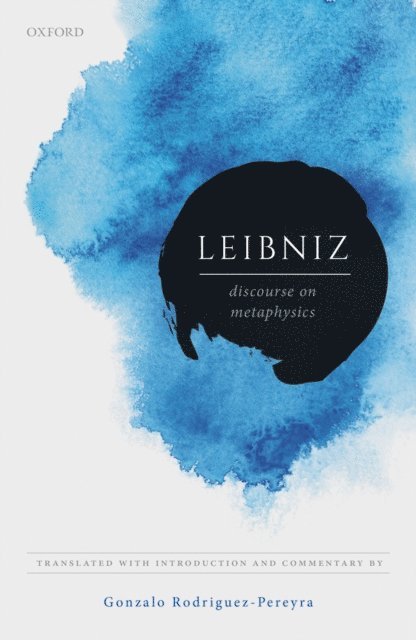
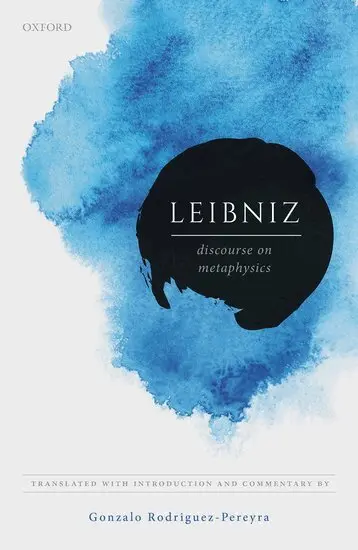
The Discourse on Metaphysics is one of Leibniz´s fundamental works. Written around January 1686, it is the most accomplished systematic expression of Leibniz's philosophy in the 1680s, the period in which Leibniz's philosophy reached maturity. Leibniz's goal in the Discourse is to give a metaphysics for Christianity; that is, to provide the answers that he believes Christians should give to the basic metaphysical questions. Why does the world exist? What is the world like? What kinds of things exist? And what is the place of human beings in the world? To this purpose Leibniz discusses some of the most traditional topics of metaphysics, such as the nature of God, the purpose of God in creating the world, the nature of substance, the possibility of miracles, the nature of our knowledge, free will, and the justice behind salvation and damnation. This volume provides a new translation of the Discourse, complete with a critical introduction and a comprehensive philosophical commentary.
1 740 kr
Skickas inom 5-8 vardagar
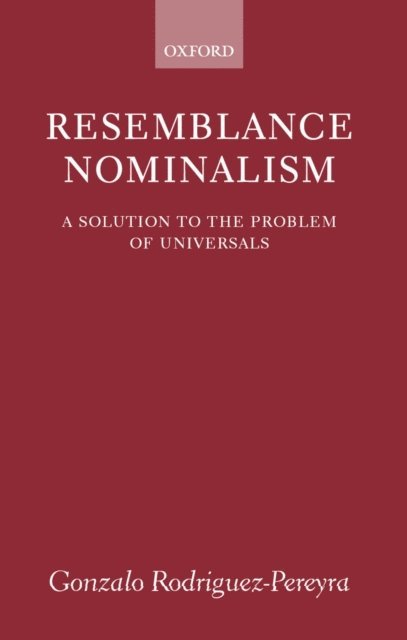
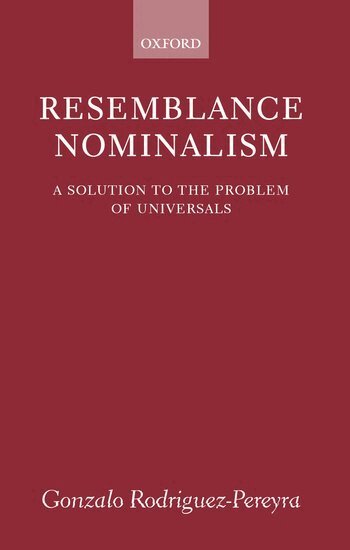
Gardeners, poets, lovers, and philosophers are all interested in the redness of roses; but only philosophers wonder how it is that two different roses can share the same property. Are red things red because they resemble each other? Or do they resemble each other because they are red? Since the 1970s philosophers have tended to favour the latter view, and held that a satisfactory account of properties must involve the postulation of either universals or tropes. But Gonzalo Rodriguez-Pereyra revives the dormant alternative theory of resemblance nominalism, showing first that it can withstand the attacks of such eminent opponents as Goodman and Armstrong, and then that there are reasons to prefer it to its rival theories. The clarity and rigour of his arguments will challenge metaphysicians to rethink their views on properties.
681 kr
Skickas inom 10-15 vardagar
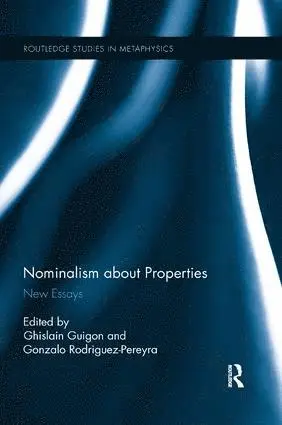
Nominalism, which has its origins in the Middle Ages and continues into the Twenty-First Century, is the doctrine that there are no universals. This book is unique in bringing together essays on the history of nominalism and essays that present a systematic discussion of nominalism. It introduces the reader to the distinction between particulars and universals, to the difficulties posed by this distinction, and to the main motivations for the rejection of universals. It also describes the main varieties of nominalism about properties and provides tools to understand how they developed in the history of Western Philosophy. All essays are new and are written by experts on the topic, and they advance the discussion about nominalism to a new level.
2 096 kr
Skickas inom 10-15 vardagar
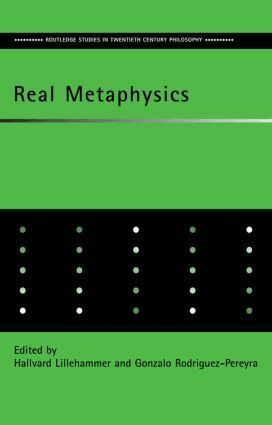
Real Metaphysics brings together new articles by leading metaphysicians to honour Hugh Mellor's outstanding contribution to metaphysics. Some of the most outstanding minds of current times shed new light on all the main topics in metaphysics: truth, causation, dispositions and properties, explanation, and time. At the end of the book, Hugh Mellor responds to the issues raised by each of the thirteen contributors and gives us new insight into his own highly influential work on metaphysics.
802 kr
Skickas inom 10-15 vardagar
Real Metaphysics brings together new articles by leading metaphysicians to honour Hugh Mellor's outstanding contribution to metaphysics. Some of the most outstanding minds of current times shed new light on all the main topics in metaphysics: truth, causation, dispositions and properties, explanation, and time. At the end of the book, Hugh Mellor responds to the issues raised by each of the thirteen contributors and gives us new insight into his own highly influential work on metaphysics.
2 231 kr
Skickas inom 10-15 vardagar
Nominalism, which has its origins in the Middle Ages and continues into the Twenty-First Century, is the doctrine that there are no universals. This book is unique in bringing together essays on the history of nominalism and essays that present a systematic discussion of nominalism. It introduces the reader to the distinction between particulars and universals, to the difficulties posed by this distinction, and to the main motivations for the rejection of universals. It also describes the main varieties of nominalism about properties and provides tools to understand how they developed in the history of Western Philosophy. All essays are new and are written by experts on the topic, and they advance the discussion about nominalism to a new level.