Gorana Grgić – författare
Visar alla böcker från författaren Gorana Grgić. Handla med fri frakt och snabb leverans.
5 produkter
Ethnic Conflict in Asymmetric Federations
Comparative Experience of the Former Soviet and Yugoslav Regions
Av Gorana Grgić
Häftad, 2019
772 kr
Lägg i varukorg
In the last years of their existence, the Union of Soviet Socialist Republics (USSR) and the Socialist Federal Republic of Yugoslavia (SFRY) found themselves facing a similar and very grim state of affairs. After their disintegration, the former Yugoslav republics spiralled into a set of ethnic …
Ethnic Conflict in Asymmetric Federations
Comparative Experience of the Former Soviet and Yugoslav Regions
Av Gorana Grgic
E-bok, 2016
883 kr
Lägg i varukorg
In the last years of their existence, the Union of Soviet Socialist Republics (USSR) and the Socialist Federal Republic of Yugoslavia (SFRY) found themselves facing a similar and very grim state of affairs. After their disintegration, the former Yugoslav republics spiralled into a set of ethnic …
Ethnic Conflict in Asymmetric Federations
Comparative Experience of the Former Soviet and Yugoslav Regions
Av Gorana Grgic
E-bok, 2016
883 kr
Lägg i varukorg
In the last years of their existence, the Union of Soviet Socialist Republics (USSR) and the Socialist Federal Republic of Yugoslavia (SFRY) found themselves facing a similar and very grim state of affairs. After their disintegration, the former Yugoslav republics spiralled into a set of ethnic …
Ethnic Conflict in Asymmetric Federations
Comparative Experience of the Former Soviet and Yugoslav Regions
Av Gorana Grgić
Inbunden, 2016
2586 kr
Lägg i varukorg
In the last years of their existence, the Union of Soviet Socialist Republics (USSR) and the Socialist Federal Republic of Yugoslavia (SFRY) found themselves facing a similar and very grim state of affairs. After their disintegration, the former Yugoslav republics spiralled into a set of ethnic …
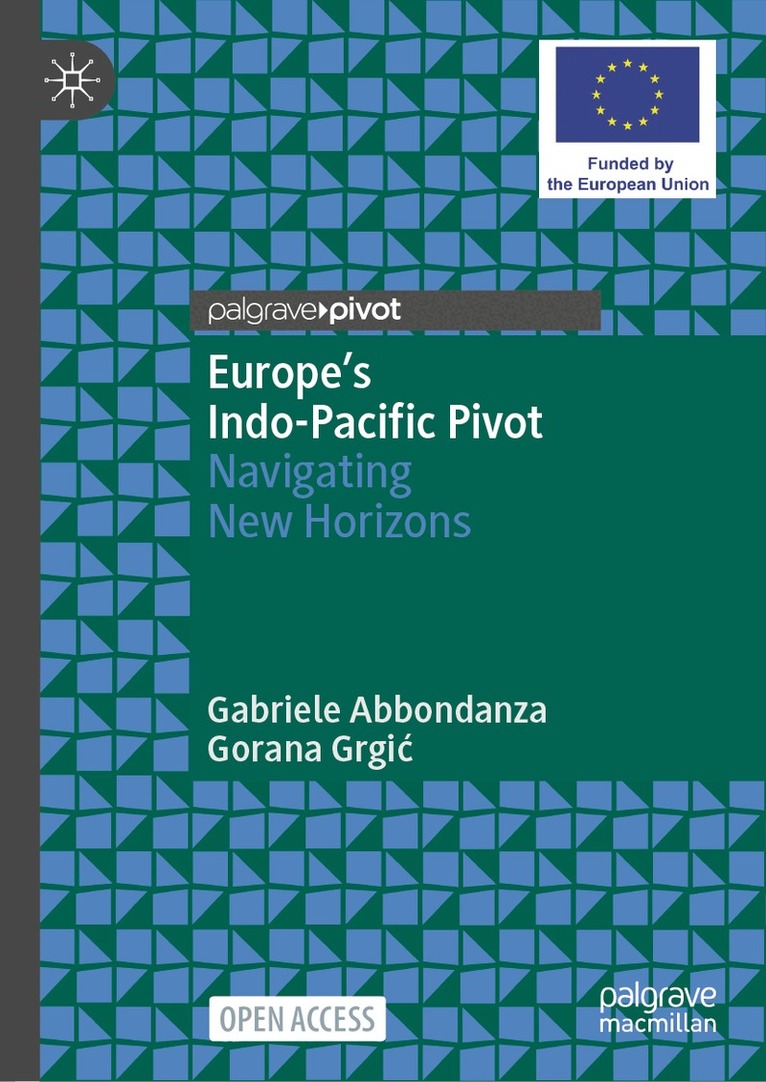
Europe's Indo-Pacific Pivot
Navigating New Horizons
Av Gabriele Abbondanza, Gorana Grgić
Inbunden, 2025
334 kr
Lägg i varukorg
This is the first book exploring Europe’s engagement with the Indo-Pacific region. Its novel comparative perspective favours a “bird’s eye view” of Europe’s unfolding Indo-Pacific pivot and nuances the many priorities and mechanisms that are involved in this process.The volume provides a …