Gordon Brook-Shepherd – författare
Visar alla böcker från författaren Gordon Brook-Shepherd. Handla med fri frakt och snabb leverans.
4 produkter
Austrians
A Thousand-Year Odyssey
Häftad, 2003
408 kr
Lägg i varukorg
This is a masterful survey of Austria's controversial place at the heart of European history. From the Reformation through the Napoleonic and Cold Wars to European Union, a superb history of Austria's central role in uniting Western civilization is covered. 24 pages of photographs and maps are …
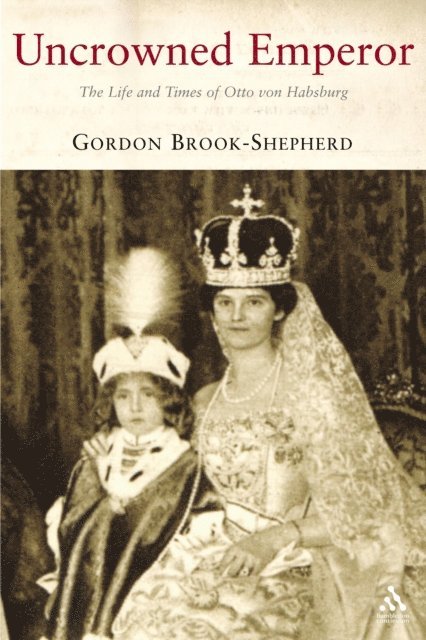
Uncrowned Emperor
The Life and Times of Otto Von Habsburg
E-bok, 2007
497 kr
Lägg i varukorg
A biography, by a leading expert on Austria and the Hapsburgs, of the longest-serving public figure in the world: head of the Hapsburgs since 1922 and still alive!
November 1918
Triumph and Tragedy in the Final Days of WW1
E-bok, 2018
141 kr
Lägg i varukorg
The account of the Great War portrayed in this book spans the last hundred days of the conflict; from the surprise blow struck by the British at Amiens on 8 August, down to the signing of the Armistice which ended the war three months later. For the first time all of the sub-plots in the story are …
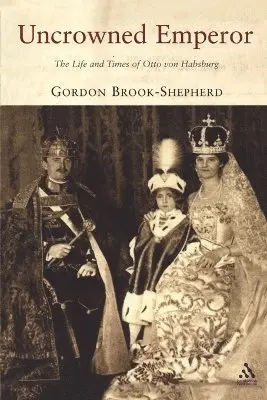
Uncrowned Emperor
The Life and Times of Otto von Habsburg
Häftad, 2007
458 kr
Lägg i varukorg
The Austro-Hungarian Empire dominated central Europe until 1918, when the last Habsburg Emperor, Karl, fled into exile. Karl's death in 1921 made his nine-year-old son Otto head of the Hapsburg family, a position he has now held for over eighty years. Born heir presumptive to an empire that …