Gordon D. Rubenfeld – författare
Visar alla böcker från författaren Gordon D. Rubenfeld. Handla med fri frakt och snabb leverans.
5 produkter
5 produkter
Inbunden, Engelska, 2001
1 229 kr
Skickas inom 5-8 vardagar
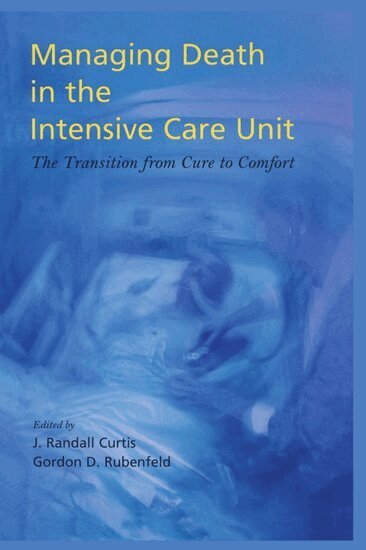
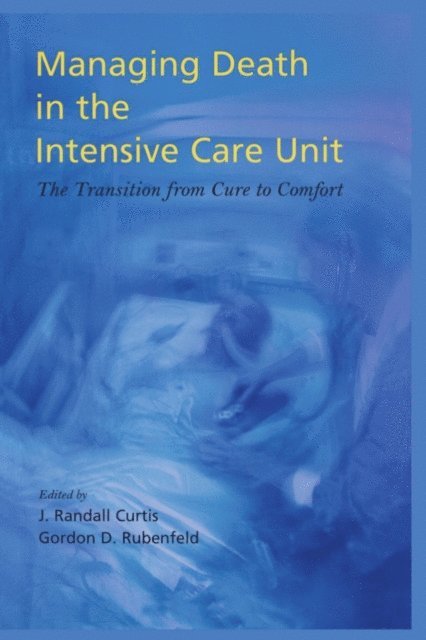
This volume reviews the state of the art in caring for patients dying in the ICU, focusing on both clinical aspects of managing pain and other symptoms, as well as ethical and societal issues that affect the standards of care recieved, The book also addresses the changing epidemiology of death in this setting related to managed care, practical skills needed to provide the highest quality of care to terminal patients, communicating with patients and families, the mechanics of withdrawing life supporting therapies, and the essential role of palliative care specialists in the ICU. The book briefly describes unique issues that arise when caring for patients with some of the more common diseases that preciptate death in the ICU. Contributors for the book were chosed because they have experience caring for patients in the ICU, and are also doing current research to find ways to improve care for terminal patients in this setting.
E-bok
PDF, Engelska, 2000938 kr
Läs direkt efter köp
This volume reviews the state of the art in caring for patients dying in the ICU, focusing on both clinical aspects of managing pain and other symptoms, as well as ethical and societal issues that affect the standards of care received. The book also addresses the changing epidemiology of death in this setting related to managed care, practical skills needed to provide the highest quality of care to terminal patients, communicating with patients and families, the mechanics of withdrawing life-supporting therapies, and the essential role of palliative care specialists in the ICU. The book briefly describes unique issues that arise when caring for patients with some of the more common diseases that precipitate death in the ICU. Contributors for the book were chosen because they have experience caring for patients in the ICU and are also conducting current research to find ways of improving care for terminal patients in this setting.
Inbunden, Engelska, 2014
1 122 kr
Skickas inom 10-15 vardagar
The origin of modern intensive care units (ICUs) has frequently been attributed to the widespread provision of mechanical ventilation within dedicated hospital areas during the 1952 Copenhagen polio epidemic.
E-bok
PDF, Engelska, 20141 420 kr
Läs direkt efter köp
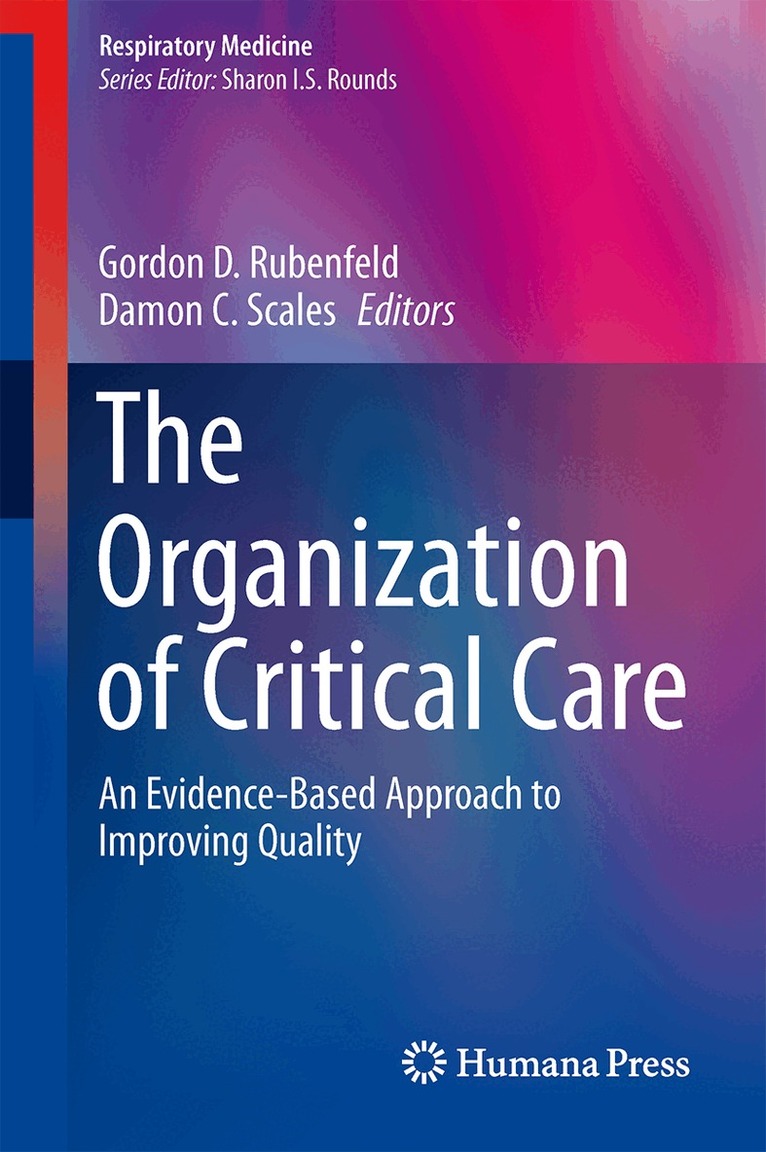
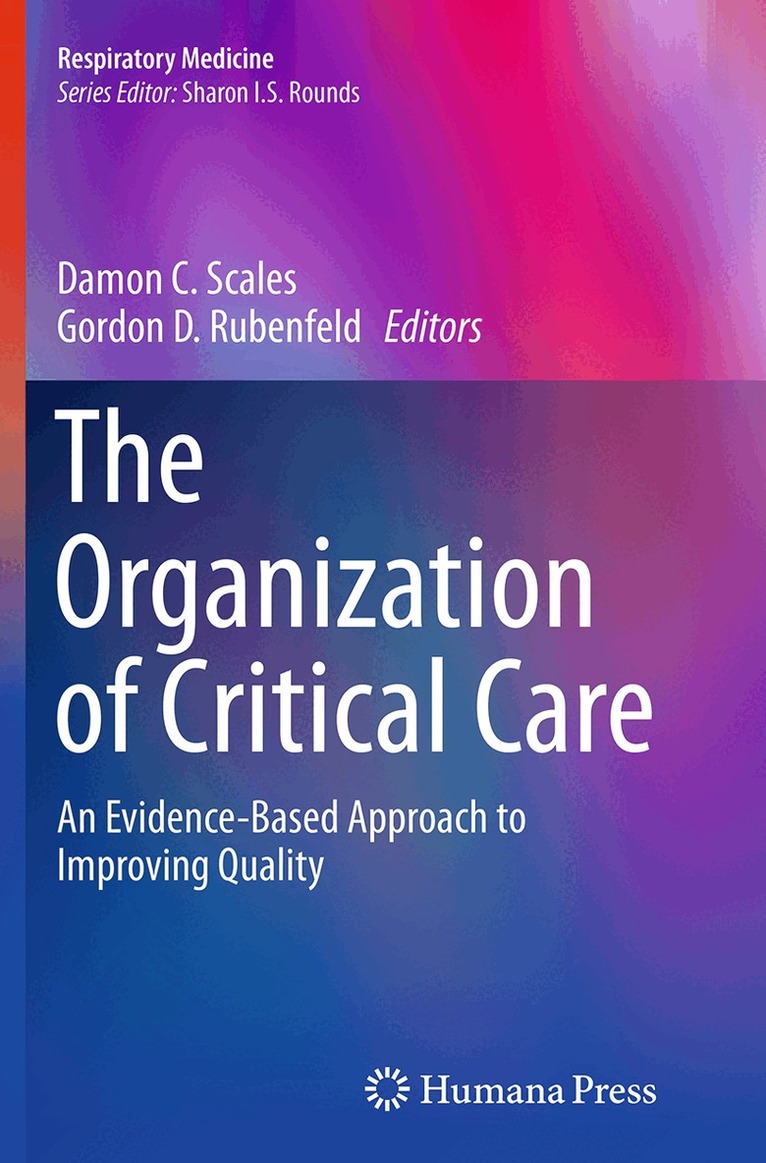
The origin of modern intensive care units (ICUs) has frequently been attributed to the widespread provision of mechanical ventilation within dedicated hospital areas during the 1952 Copenhagen polio epidemic. However, modern ICUs have developed to treat or monitor patients who have any severe, life-threatening disease or injury. These patients receive specialized care and vital organ assistance such as mechanical ventilation, cardiovascular support, or hemodialysis. ICU patients now typically occupy approximately 10% of inpatient acute care beds, yet the structure and organization of these ICUs can be quite different across hospitals. In The Organization of Critical Care: An Evidence-Based Approach to Improving Quality, leaders provide a concise, evidence-based review of ICU organizational factors that have been associated with improved patient (or other) outcomes. The topics covered are grouped according to four broad domains: (1) the organization, structure, and staffing of an ICU; (2) organizational approaches to improving quality of care in an ICU; (3) integrating ICU care with other healthcare provided within the hospital and across the broader healthcare system; and (4) international perspectives on critical care delivery. Each chapter summarizes a different aspect of ICU organization and targets individual clinicians and healthcare decision makers. A long overdue contribution to the field, The Organization of Critical Care: An Evidence-Based Approach to Improving Quality is an indispensable guide for all clinicians and health administrators concerned with achieving state-of-the-art outcomes for intensive care.
Häftad, Engelska, 2016
1 234 kr
Skickas inom 10-15 vardagar
The origin of modern intensive care units (ICUs) has frequently been attributed to the widespread provision of mechanical ventilation within dedicated hospital areas during the 1952 Copenhagen polio epidemic. However, modern ICUs have developed to treat or monitor patients who have any severe, life-threatening disease or injury. These patients receive specialized care and vital organ assistance such as mechanical ventilation, cardiovascular support, or hemodialysis. ICU patients now typically occupy approximately 10% of inpatient acute care beds, yet the structure and organization of these ICUs can be quite different across hospitals. In The Organization of Critical Care: An Evidence-Based Approach to Improving Quality, leaders provide a concise, evidence-based review of ICU organizational factors that have been associated with improved patient (or other) outcomes. The topics covered are grouped according to four broad domains: (1) the organization, structure, and staffing of an ICU; (2) organizational approaches to improving quality of care in an ICU; (3) integrating ICU care with other healthcare provided within the hospital and across the broader healthcare system; and (4) international perspectives on critical care delivery. Each chapter summarizes a different aspect of ICU organization and targets individual clinicians and healthcare decision makers. A long overdue contribution to the field, The Organization of Critical Care: An Evidence-Based Approach to Improving Quality is an indispensable guide for all clinicians and health administrators concerned with achieving state-of-the-art outcomes for intensive care.