Gordon G. Wallace – författare
Visar alla böcker från författaren Gordon G. Wallace. Handla med fri frakt och snabb leverans.
5 produkter
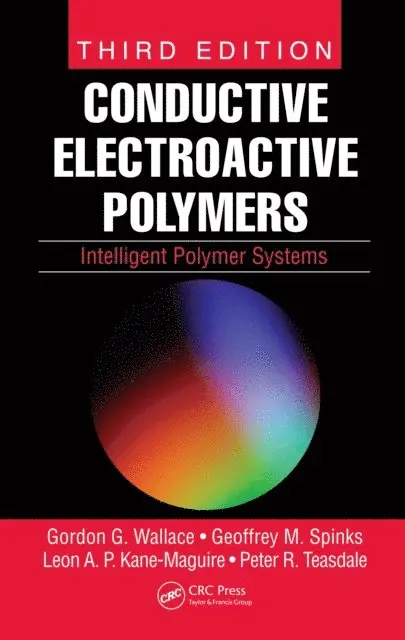
Conductive Electroactive Polymers
Intelligent Polymer Systems, Third Edition
Av Leon A. P. Kane-Maguire, Geoffrey M. Spinks m. fl.
E-bok, 2008
3636 kr
Lägg i varukorg
Rapid advances in synthetic polymer science and nanotechnology have revealed new avenues of development in conductive electroactive polymers that take greater advantage of this versatile class of materials'' unique properties. This third edition of Conductive Electroactive Polymers: Intelligent …
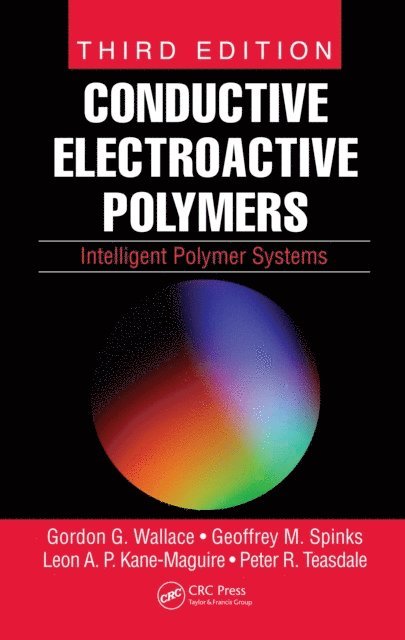
Conductive Electroactive Polymers
Intelligent Polymer Systems, Third Edition
Av Gordon G. Wallace, Peter R. Teasdale m. fl.
Inbunden, 2008
3070 kr
Lägg i varukorg
Rapid advances in synthetic polymer science and nanotechnology have revealed new avenues of development in conductive electroactive polymers that take greater advantage of this versatile class of materials’ unique properties. This third edition of Conductive Electroactive Polymers: Intelligent …
Conductive Electroactive Polymers
Intelligent Polymer Systems, Third Edition
Av Leon A. P. Kane-Maguire, Geoffrey M. Spinks m. fl.
E-bok, 2008
3530 kr
Lägg i varukorg
Rapid advances in synthetic polymer science and nanotechnology have revealed new avenues of development in conductive electroactive polymers that take greater advantage of this versatile class of materials'' unique properties. This third edition of Conductive Electroactive Polymers: Intelligent …
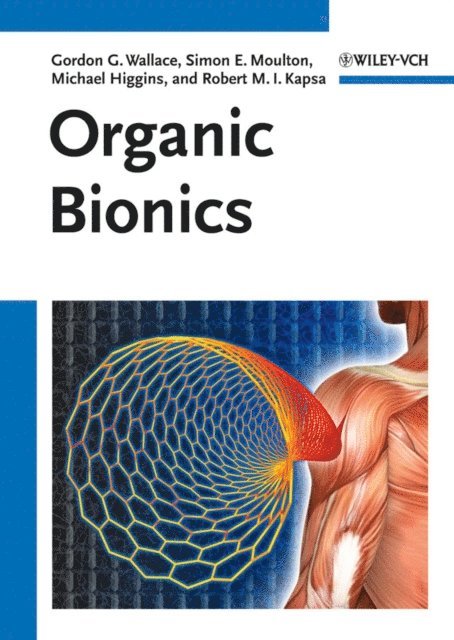
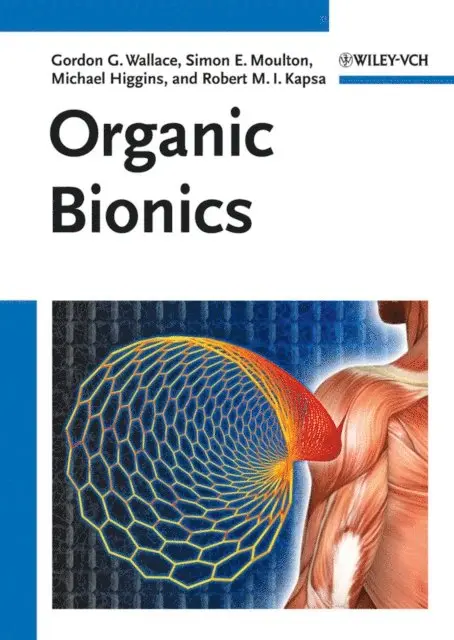
Organic Bionics
Av Michael Higgins, Robert M.I. Kapsa m. fl.
E-bok, 2012
1930 kr
Lägg i varukorg
The first reference on this emerging interdisciplinary research area at the interface between materials science and biomedicine is written by pioneers in the field, who address the requirements, current status and future challenges. Focusing on inherently conducting polymers, carbon nanotubes and …
Organic Bionics
Av Michael Higgins, Robert M.I. Kapsa m. fl.
E-bok, 2012
1930 kr
Lägg i varukorg
The first reference on this emerging interdisciplinary research area at the interface between materials science and biomedicine is written by pioneers in the field, who address the requirements, current status and future challenges. Focusing on inherently conducting polymers, carbon nanotubes and …