Gordon M. Burghardt – författare
Visar alla böcker från författaren Gordon M. Burghardt. Handla med fri frakt och snabb leverans.
5 produkter
5 produkter
874 kr
Skickas inom 5-8 vardagar
838 kr
Skickas inom 5-8 vardagar
845 kr
Skickas
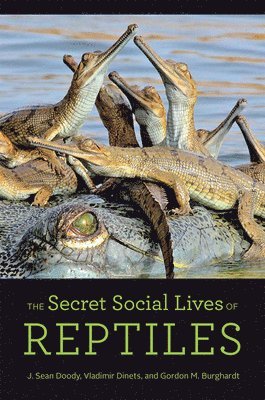
Covering diverse species from garter snakes to Komodo dragons, this book delves into the evolutionary origins and fascinating details of the mysterious social lives of reptiles.Reptiles have been too often dismissed as dull animals with tiny brains and simple, "asocial" lives. In reality, reptiles engage in a remarkable diversity of complex social behavior. They can live in families; communicate with one another while still in the egg; and hunt, feed, migrate, court, mate, nest, and hatch in groups. In The Secret Social Lives of Reptiles, J. Sean Doody, Vladimir Dinets, and Gordon M. Burghardt—three of the world's leading experts on reptiles—bring together a wave of new research with a synthesis of classic studies to produce the only authoritative look at the social behaviors of the most provocative animals on the planet. The book covers turtles, lizards, snakes, crocodilians, and the enigmatic tuatara. Enhanced with dozens of images, it takes readers through a myriad of social interactions, tendencies, and intimacies ranging from fierce territorial battles to delicate paternal care and from promiscuous pairings to monogamous partnerships. This unique text• explains why reptiles have been neglected as subjects of social behavior studies;• provides numerous examples across all major reptilian groups that overturn the false paradigm of "solitary" reptiles; • explores the sensory, genetic, physiological, life history, and other factors underlying social behavior in reptiles; • presents the case that evolutionary "experiments" found among reptiles offer unparalleled opportunities for understanding how and why social behavior evolves in animals; and• identifies new and developing areas of research helping to reshape our view of reptiles.Revealing the secrets of reptilian social relationships through original quantitative research, field studies, laboratory experiments, and careful analysis of the literature, The Secret Social Lives of Reptiles elevates these fascinating animals to key players in the science of behavioral ecology.
3 035 kr
Skickas inom 7-10 vardagar
This extensively revised and expanded new edition offers concepts, principles and applied information that relates to the wellbeing of reptiles. As a manual on health and welfare in a similar vein to volumes addressing the sciences of anatomy, behaviour or psychology, this book thoroughly examines the biology of reptile welfare and is about meeting biological needs. The editors, acknowledged experts in their own right, have once again drawn together an extremely impressive international group of contributors. Positive and negative implications of general husbandry and research programs are discussed. In addition to greatly revised original content are nine new chapters offering readers novel insight into:• sensory systems• social behaviour• brain and cognition• controlled deprivation and enrichment•effects of captivity-imposed noise and light disturbance on welfare•spatial and thermal factors•evidential thresholds for species suitability in captivity• record keeping as an aid to captive care•arbitrary husbandry practices and misconceptionsThe authors have adopted a user-friendly writing style to accommodate a broad readership. Although primarily aimed at academic professionals, this comprehensive volume is fundamentally a biology book that will also inform all involved in captive reptile husbandry. Among others, zoo personnel, herpetologists, veterinarians, lab animal scientists, and expert readers in animal welfare and behavioural studies will benefit from this updated work.
2 180 kr
Skickas inom 10-15 vardagar
This extensively revised and expanded new edition offers concepts, principles and applied information that relates to the wellbeing of reptiles. As a manual on health and welfare in a similar vein to volumes addressing the sciences of anatomy, behaviour or psychology, this book thoroughly examines the biology of reptile welfare and is about meeting biological needs. The editors, acknowledged experts in their own right, have once again drawn together an extremely impressive international group of contributors. Positive and negative implications of general husbandry and research programs are discussed. In addition to greatly revised original content are nine new chapters offering readers novel insight into:• sensory systems• social behaviour• brain and cognition• controlled deprivation and enrichment•effects of captivity-imposed noise and light disturbance on welfare•spatial and thermal factors•evidential thresholds for species suitability in captivity• record keeping as an aid to captive care•arbitrary husbandry practices and misconceptionsThe authors have adopted a user-friendly writing style to accommodate a broad readership. Although primarily aimed at academic professionals, this comprehensive volume is fundamentally a biology book that will also inform all involved in captive reptile husbandry. Among others, zoo personnel, herpetologists, veterinarians, lab animal scientists, and expert readers in animal welfare and behavioural studies will benefit from this updated work.