Gordon McGranahan - Böcker
Visar alla böcker från författaren Gordon McGranahan. Handla med fri frakt och snabb leverans.
9 produkter
9 produkter
2 151 kr
Skickas inom 10-15 vardagar
Along with globalization, urban transitions have been central in the southward shift in economic power towards the newly emerging economies. As this book shows, however, these transitions have not been painless, and it is important for the rest of the urbanizing world to learn from the mistakes. It examines the role of urbanization and urban growth in the emerging economies, taking the BRICS countries (Brazil, Russia, India, China and South Africa) as case studies. Their different approaches towards urbanization have shaped their historical development paths and assisted or constrained their futures. Several of the BRICS bear heavy burdens from past failures to accommodate urban growth inclusively and efficiently, and many other urbanizing countries in Asia and Africa are in danger of replicating their mistakes. The overriding lesson of the book is that cities and nations must anticipate urbanization, and accommodate urban growth pro-actively, so as not to be left with an enduring legacy of inequalities and lost opportunities. This book is aimed at students and researchers in urban studies and development studies. It will also be of interest to policy advisors concerned with urbanization and the role of cities in a country’s development
747 kr
Skickas inom 10-15 vardagar
Along with globalization, urban transitions have been central in the southward shift in economic power towards the newly emerging economies. As this book shows, however, these transitions have not been painless, and it is important for the rest of the urbanizing world to learn from the mistakes. It examines the role of urbanization and urban growth in the emerging economies, taking the BRICS countries (Brazil, Russia, India, China and South Africa) as case studies. Their different approaches towards urbanization have shaped their historical development paths and assisted or constrained their futures. Several of the BRICS bear heavy burdens from past failures to accommodate urban growth inclusively and efficiently, and many other urbanizing countries in Asia and Africa are in danger of replicating their mistakes. The overriding lesson of the book is that cities and nations must anticipate urbanization, and accommodate urban growth pro-actively, so as not to be left with an enduring legacy of inequalities and lost opportunities. This book is aimed at students and researchers in urban studies and development studies. It will also be of interest to policy advisors concerned with urbanization and the role of cities in a country’s development
269 kr
Tillfälligt slut
2 558 kr
Skickas inom 7-10 vardagar
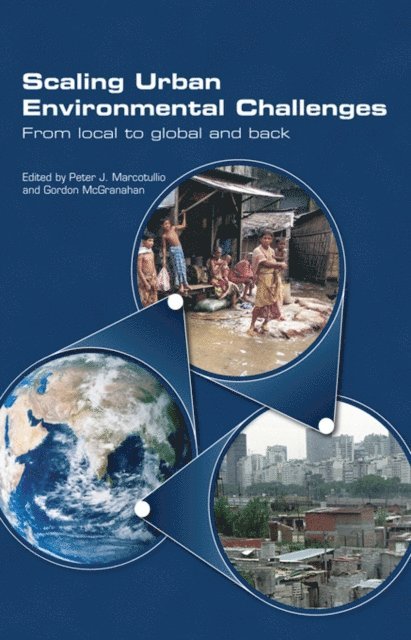
�Think globally, act locally� emphasizes the importance of scale in dealing with environmental challenges, but not how to factor it in. This major new book focuses on the spatial dimensions of urban environmental burdens, showing how important it is to take these into account when pursuing environmental justice and good governance - whether in the context of the sanitary risks of slum living, the pollution of uncontrolled industrialization and motorization, or the enormous ecological footprints of affluent urban lifestyles.Written by leading experts in the fields of urban development and environmental planning, the book reviews the urban environmental shifts that have shaped today�s challenges, and examines conditions and problems in the urban centres of low-, middle- and high-income countries. Case studies address such economically diverse cities as Accra, New Delhi, Mexico City and Manchester, while thematic chapters explore issues including water, sanitation and transportation. The book concludes by exploring and analysing different scales of governance. The editors argue that we should not rely solely on local governance to address local burdens like poor sanitation, nor depend only on global governance for global challenges such as greenhouse gas emissions, but that scale is crucial in both understanding the problems and devising successful responses.Published with UNU-IAS and IIED.
New Global Frontier
Urbanization, Poverty and Environment in the 21st Century
Inbunden, Engelska, 2008
3 500 kr
Skickas inom 5-8 vardagar
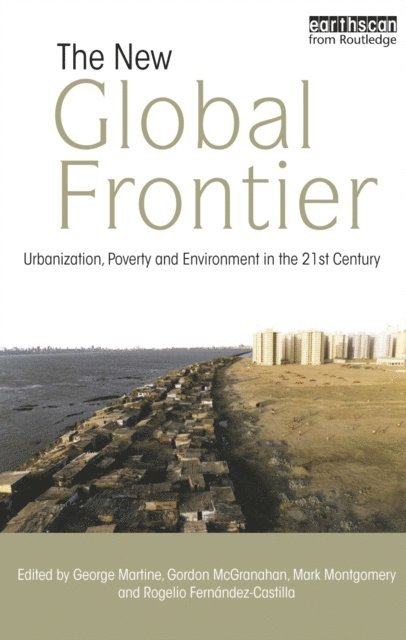
The worlds developing countries will be experiencing massive increases in their urban populations over the 21st century. If managed intelligently and humanely, this growth can pave the way to sustainable development; otherwise, it will favour higher levels of poverty and environmental stress. The outcome depends on decisions being made now.The principal theme that runs through this volume is the need to transform urbanization into a positive force for development. Part I of this book reviews the demography of the urban transition, stressing the importance of benefi cial rural-urban connections and challenging commonly held misconceptions. Part II asks how urban housing, land and service provision can be improved in the face of rapid urban expansion, drawing lessons from experiences around the world. Part III analyses the challenges and opportunities that urbanization presents for improving living environments and reducing pressures on local and global ecosystems. These social and environmental challenges must be met in the context of fast-changing demographic circumstances; Part IV explores the range of opportunities that these transformations represent. These challenges and opportunities vary greatly across Africa, Asia and Latin America, as detailed in Part V.Published with IIED and UNFPA
807 kr
Skickas inom 10-15 vardagar
The worlds developing countries will be experiencing massive increases in their urban populations over the 21st century. If managed intelligently and humanely, this growth can pave the way to sustainable development; otherwise, it will favour higher levels of poverty and environmental stress. The outcome depends on decisions being made now.The principal theme that runs through this volume is the need to transform urbanization into a positive force for development. Part I of this book reviews the demography of the urban transition, stressing the importance of benefi cial rural-urban connections and challenging commonly held misconceptions. Part II asks how urban housing, land and service provision can be improved in the face of rapid urban expansion, drawing lessons from experiences around the world. Part III analyses the challenges and opportunities that urbanization presents for improving living environments and reducing pressures on local and global ecosystems. These social and environmental challenges must be met in the context of fast-changing demographic circumstances; Part IV explores the range of opportunities that these transformations represent. These challenges and opportunities vary greatly across Africa, Asia and Latin America, as detailed in Part V.Published with IIED and UNFPA
663 kr
Skickas inom 10-15 vardagar
Local environments such as cities and neighbourhoods are becoming a focal point for those concerned with environmental justice and sustainability. The Citizens at Risk takes up this emerging agenda and analyses the key issues in a refreshingly simple yet sophisticated style. Taking a comparative look at cities in Africa, Asia and Latin America, the book examines: the changing nature of urban environmental risks, the rules governing the distribution of such risks and their differential impact, how the risks arise and who is responsible The authors clearly describe the most pressing urban environmental challenges, such as improving health conditions in deprived urban settlements, ensuring sustainable urban development in a globalizing world, and achieving environmental justice along with the greening of development. They argue that current debates on sustainable development fail to come to terms with these challenges, and call for a more politically and ethically explicit approach. For policy makers, students, academics, activists or concerned general readers, this book applies a wealth of empirical analysis and theoretical insight to the interaction of citizens, their cities and their environment.
1 434 kr
Tillfälligt slut
Local environments such as cities and neighbourhoods are becoming a focal point for those concerned with environmental justice and sustainability. The Citizens at Risk takes up this emerging agenda and analyses the key issues in a refreshingly simple yet sophisticated style. Taking a comparative look at cities in Africa, Asia and Latin America, the book examines: the changing nature of urban environmental risks, the rules governing the distribution of such risks and their differential impact, how the risks arise and who is responsible The authors clearly describe the most pressing urban environmental challenges, such as improving health conditions in deprived urban settlements, ensuring sustainable urban development in a globalizing world, and achieving environmental justice along with the greening of development. They argue that current debates on sustainable development fail to come to terms with these challenges, and call for a more politically and ethically explicit approach. For policy makers, students, academics, activists or concerned general readers, this book applies a wealth of empirical analysis and theoretical insight to the interaction of citizens, their cities and their environment.
509 kr
Skickas inom 10-15 vardagar
In developing countries the price of rapid growth is all too often noxious airborne pollution, which annually contributes to a disturbing number of avoidable deaths. In recent decades, however, there has been considerable progress in the epidemiology of air pollution, significant changes in international air pollution guidelines, and the emergence of more systematic approaches to air pollution control. While many of these advances have originated in affluent countries, there have been major developments in other parts of the world.In this book, a distinguished cast of leading researchers in both the scientific and policy dimensions of air pollution and health have synthesized the recent developments in the field and their relevance for public health in developing countries. The authors review studies from a wide range of Asian, African and Latin American countries and contrast the findings with those from Europe and North America. They also describe various tools and systems for air pollution management and emphasize approaches that can be used when data is scarce. With a clear focus on the scientific and technical aspects of air pollution and health, this book is essential reading for pollution and health policy-makers, researchers and others concerned with air pollution and health in developing countries.