Goutte Stephane - Böcker
Visar alla böcker från författaren Goutte Stephane. Handla med fri frakt och snabb leverans.
3 produkter
3 produkter
1 729 kr
Skickas inom 3-6 vardagar
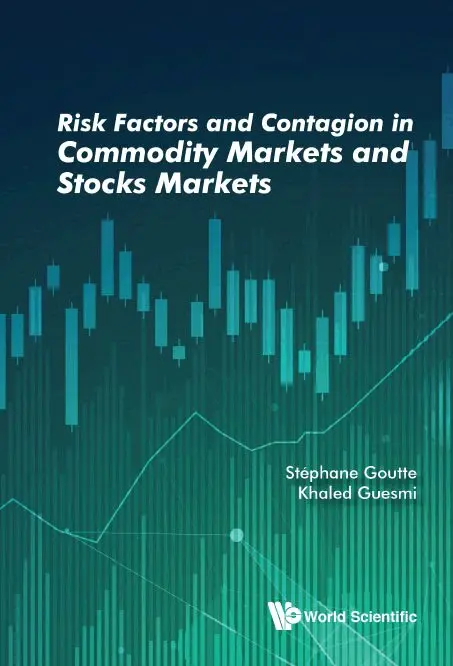
The link between commodities prices and the business cycle, including variables such as real GDP, industrial production, unemployment, inflation, and market uncertainty, has often been debated in the macroeconomic literature. To quantify the impact of commodities on the economy, one can distinguish different modeling approaches. First, commodities can be represented as the pinnacle of cross-sectional financial asset prices. Second, price fluctuations due to seasonal variations, dramatic market changes, political and regulatory decisions, or technological shocks may adversely impact producers who use commodities as input. This latter effect creates the so-called "commodities risk". Additionally, commodities price fluctuations may spread to other sectors in the economy, via contagion effects. Besides, stronger investor interest in commodities may create closer integration with conventional asset markets; as a result, the financialization process also enhances the correlation between commodity markets and financial markets.Our objective in this book, Risk Factors and Contagion in Commodity Markets and Stocks Markets, lies in answering the following research questions: What are the interactions between commodities and stock market sentiment? Do some of these markets move together overtime? Did the financialization in energy commodities occur after the 2008 Global Financial Crisis? These questions are essential to understand whether commodities are driven only by their fundamentals, or whether there is also a systemic component influenced by the volatility present within the stock markets.
1 275 kr
Skickas inom 3-6 vardagar
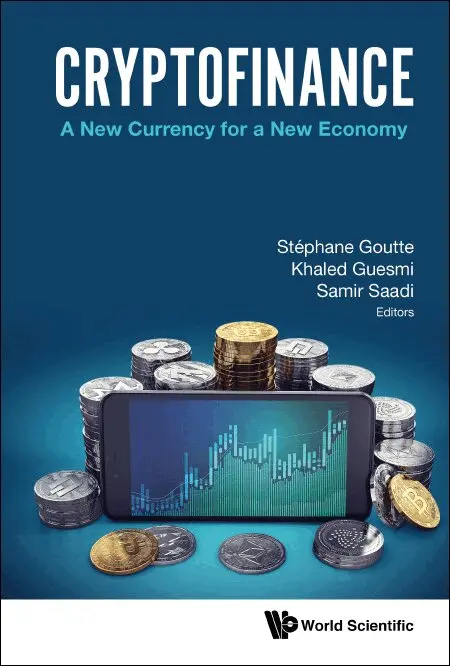
The rapid advancement in encryption and network computing gave birth to new tools and products that have influenced the local and global economy alike. One recent and notable example is the emergence of virtual currencies, also known as cryptocurrencies or digital currencies. Virtual currencies, such as Bitcoin, introduced a fundamental transformation that affected the way goods, services, and assets are exchanged. Virtual currencies are experiencing an increasing popularity in the financial markets and in portfolio management as can be classified as financial asset or commodities on a scale from pure medium of exchange advantages to pure store of value advantages. As a result of its distributed ledgers based on blockchain, cryptocurrencies offer some unique advantages to the economy, investors, and consumers, but also pose considerable risks to users and challenges for regulators when fitting the new technology into the old legal framework. Bitcoin for example may be useful in risk management and ideal for risk-averse investors in anticipation of negative shocks to the market. The core objective of this proposed book is to provide a comprehensive discussion on the important issues related to cryptocurrencies ranging from pricing, financial, legal to technological aspects.
3 173 kr
Skickas inom 3-6 vardagar
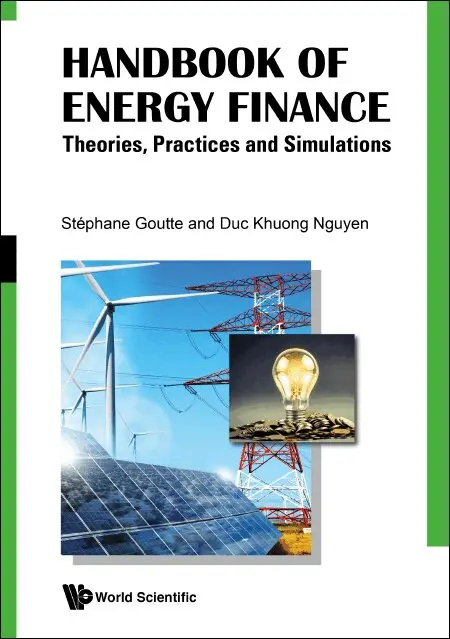
Modeling the dynamics of energy markets has become a challenging task. The intensification of their financialization since 2004 had made them more complex but also more integrated with other tradable asset classes. More importantly, their large and frequent fluctuations in terms of both prices and volatility, particularly in the aftermath of the global financial crisis 2008-2009, posit difficulties for modeling and forecasting energy price behavior and are primary sources of concerns for macroeconomic stability and general economic performance.This handbook aims to advance the debate on the theories and practices of quantitative energy finance while shedding light on innovative results and technical methods applied to energy markets. Its primary focus is on the recent development and applications of mathematical and quantitative approaches for a better understanding of the stochastic processes that drive energy market movements. The handbook is designed for not only graduate students and researchers but also practitioners and policymakers.