G.P. Rao – författare
Visar alla böcker från författaren G.P. Rao. Handla med fri frakt och snabb leverans.
8 produkter
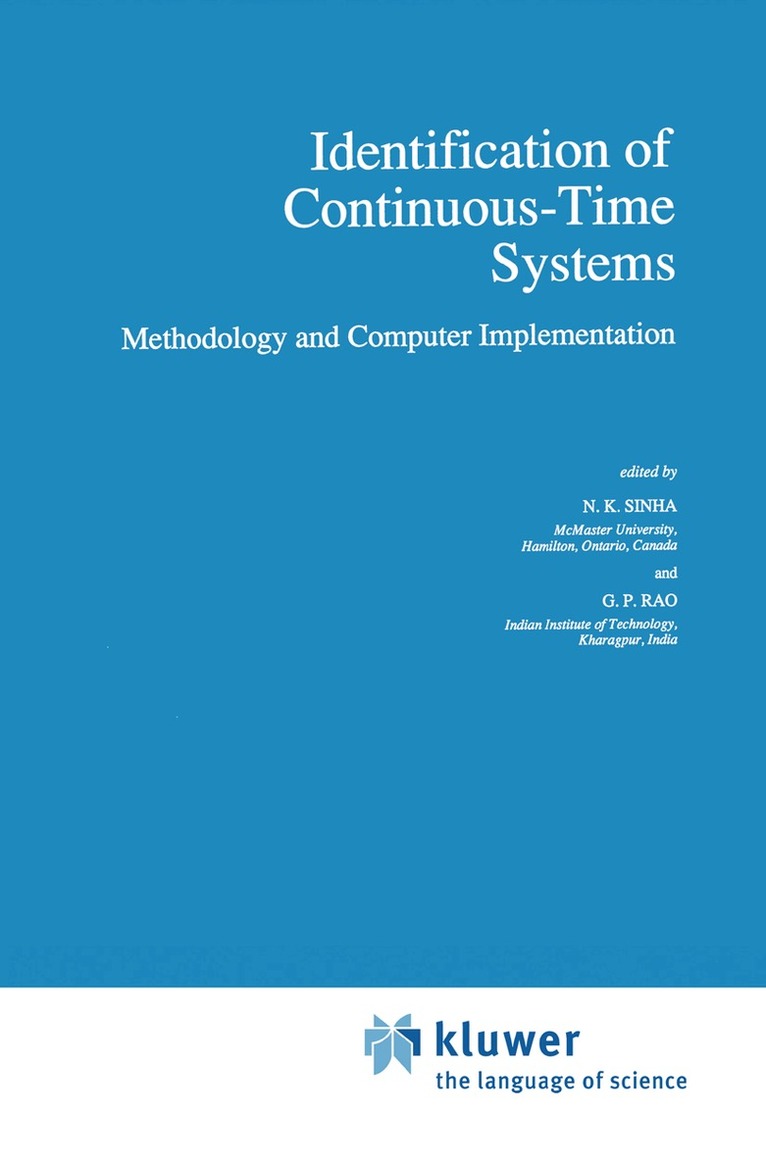
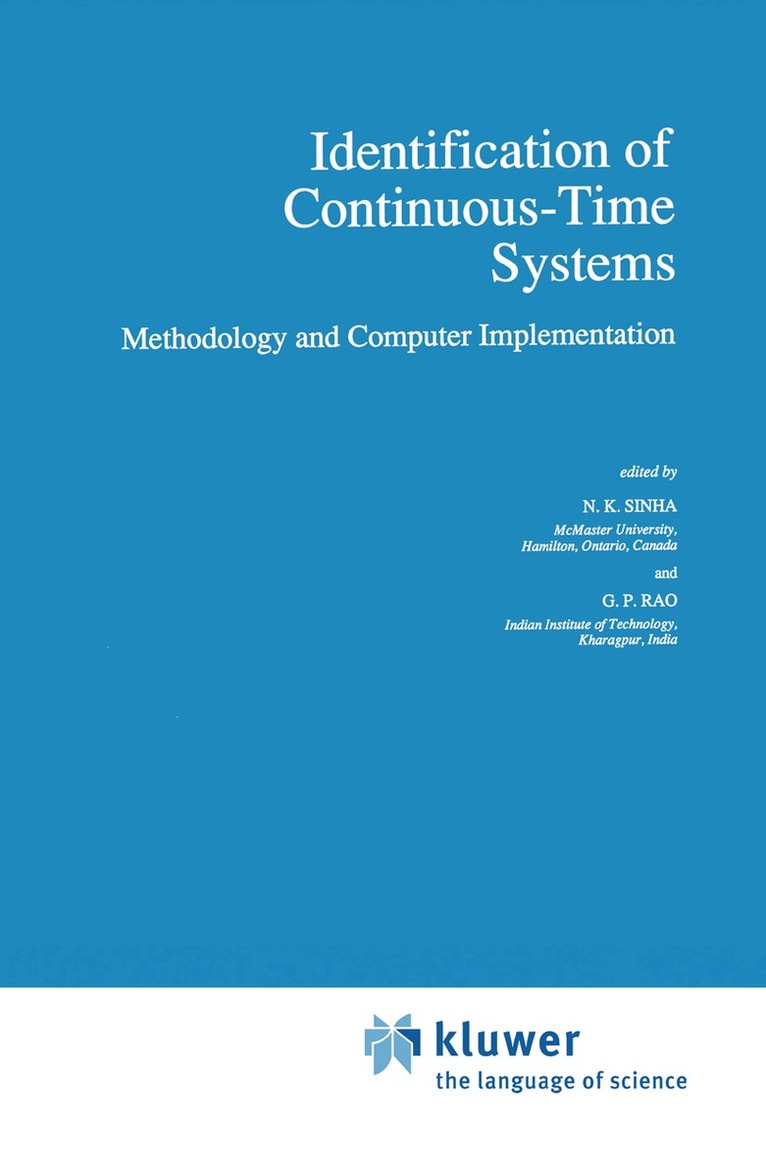
Identification of Continuous-Time Systems
Methodology and Computer Implementation
Av N.K. Sinha, G.P. Rao
Inbunden, 1991
3277 kr
Lägg i varukorg
In view of the importance of system identification, the International Federation of Automatic Control (IFAC) and the International Federation of Operational Research Societies (IFORS) hold symposia on this topic every three years. Interest in continuous time approaches to system identification has …
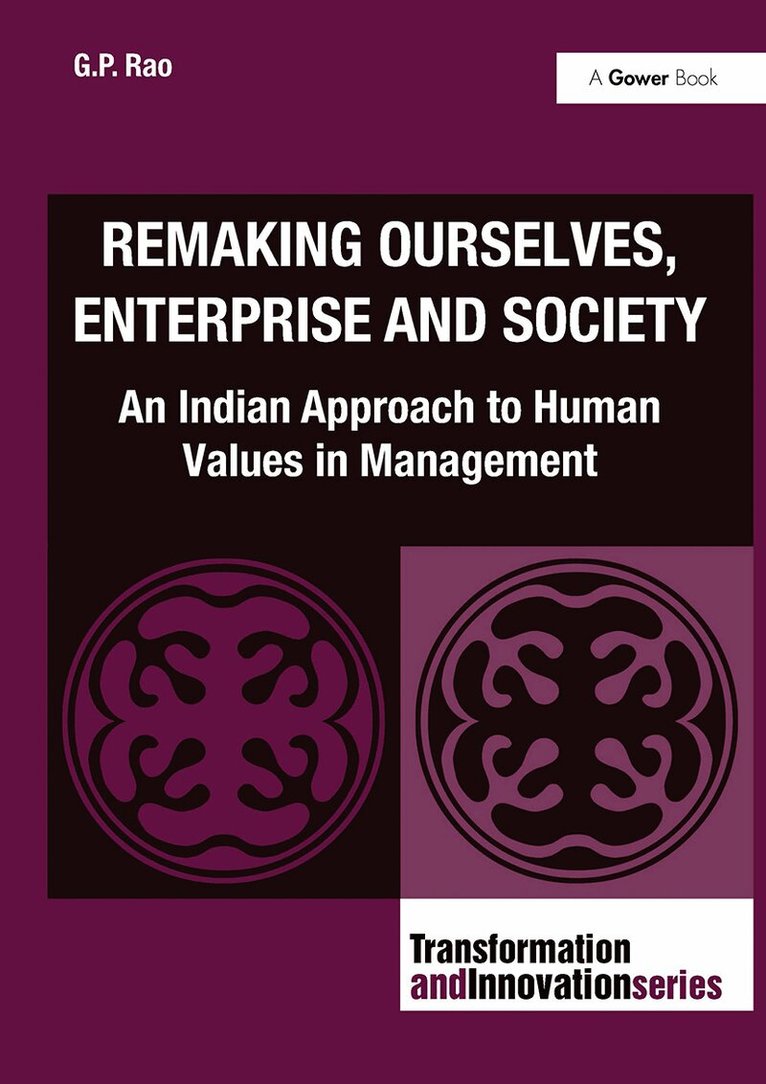
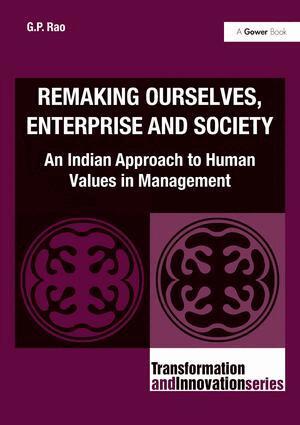
Remaking Ourselves, Enterprise and Society
An Indian Approach to Human Values in Management
Av G.P. Rao
Häftad, 2024
656 kr
Lägg i varukorg
Decision makers interested in going beyond their own personal and professional interests and involving themselves in humanising their organization, community and society should read Remaking Ourselves, Enterprise and Society. This book is about adherence to human values at an institutional level, …
Remaking Ourselves, Enterprise and Society
An Indian Approach to Human Values in Management
Av G.P. Rao
E-bok, 2016
745 kr
Lägg i varukorg
Decision makers interested in going beyond their own personal and professional interests and involving themselves in humanising their organization, community and society should read Remaking Ourselves, Enterprise and Society. This book is about adherence to human values at an institutional level, …
Remaking Ourselves, Enterprise and Society
An Indian Approach to Human Values in Management
Av G.P. Rao
E-bok, 2016
767 kr
Lägg i varukorg
Decision makers interested in going beyond their own personal and professional interests and involving themselves in humanising their organization, community and society should read Remaking Ourselves, Enterprise and Society. This book is about adherence to human values at an institutional level, …
Remaking Ourselves, Enterprise and Society
An Indian Approach to Human Values in Management
Av G.P. Rao
Inbunden, 2013
2601 kr
Lägg i varukorg
Decision makers interested in going beyond their own personal and professional interests and involving themselves in humanising their organization, community and society should read Remaking Ourselves, Enterprise and Society. This book is about adherence to human values at an institutional level, …
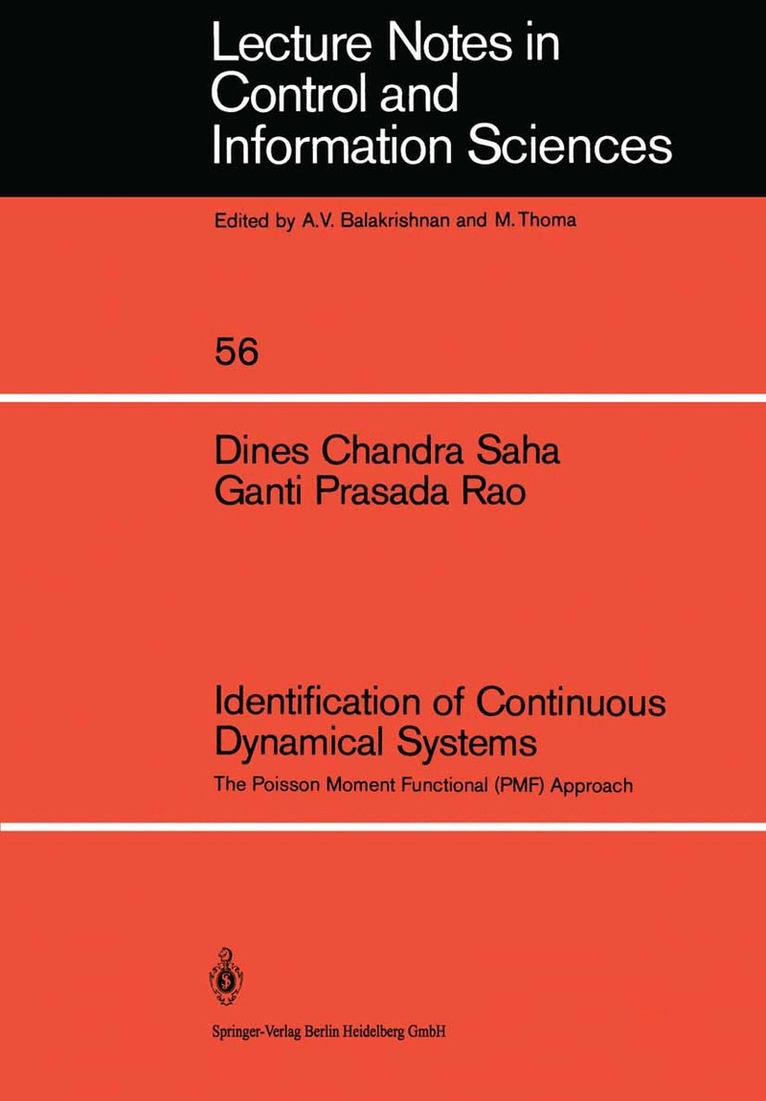
Identification of Continuous Dynamical Systems
The Poisson Moment Functional (PMF) Approach
Häftad, 1983
569 kr
Lägg i varukorg
Identification of Continuous-Time Systems
Methodology and Computer Implementation
Av N.K. Sinha, G.P. Rao
Häftad, 2012
3279 kr
Lägg i varukorg
In view of the importance of system identification, the International Federation of Automatic Control (IFAC) and the International Federation of Operational Research Societies (IFORS) hold symposia on this topic every three years. Interest in continuous time approaches to system identification has …
Identification of Continuous-Time Systems
Methodology and Computer Implementation
Av G.P. Rao, N.K. Sinha
E-bok, 2012
4066 kr
Lägg i varukorg
In view of the importance of system identification, the International Federation of Automatic Control (IFAC) and the International Federation of Operational Research Societies (IFORS) hold symposia on this topic every three years. Interest in continuous time approaches to system identification has …