Grady Venville - Böcker
Visar alla böcker från författaren Grady Venville. Handla med fri frakt och snabb leverans.
8 produkter
8 produkter
Knowledge that Counts in a Global Community
Exploring the Contribution of Integrated Curriculum
Inbunden, Engelska, 2011
2 044 kr
Skickas inom 10-15 vardagar
As the third millennium progresses, we are faced with increasing pressures relating to climate change and the sustainability of life on Earth. Concerned citizens are realizing that the responsibility to respond is both local and global. There is an increasing sense of urgency about the need to reform the processes of schooling and curriculum to better prepare students for global citizenship. Educators, policy makers and the wider community are seeking information about how to proceed with this reform effort, particularly how alternative and integrated approaches to curriculum can be used to engage students with the important issues of our time. Knowledge that Counts in a Global Community explores the potential contribution of curriculum integration in a context where school curricula are typically segregated by discipline. It offers curriculum integration as a powerful tool for educating young citizens so that they can understand and respond to global concerns. It argues for an informed citizenry who can think broadly across disciplines, and contribute sensibly and pragmatically to local problems with an eye on how this translates to making a global difference. In its examination of the twin themes of global knowledge and curriculum integration, the book explores: the nature of curriculum integration the nature of knowledge the nature of learningThe authors reflect on these issues from perspectives gained by more than a decade of research in the area. Their in-depth, scholarly exploration and critical analysis of current approaches to curriculum, introduces educators and academics to contemporary ways of conceptualizing the complexities of, and relationships among curriculum integration, knowledge and learning. Throughout the book, the authors emphasize the central curriculum question, what kinds of outcomes do we want for students of the twenty-first century? This book will provide a valuable resource for academic educators, researchers, teachers and others interested in educational policy reform.
Knowledge that Counts in a Global Community
Exploring the Contribution of Integrated Curriculum
Häftad, Engelska, 2017
644 kr
Skickas inom 10-15 vardagar
As the third millennium progresses, we are faced with increasing pressures relating to climate change and the sustainability of life on Earth. Concerned citizens are realizing that the responsibility to respond is both local and global. There is an increasing sense of urgency about the need to reform the processes of schooling and curriculum to better prepare students for global citizenship. Educators, policy makers and the wider community are seeking information about how to proceed with this reform effort, particularly how alternative and integrated approaches to curriculum can be used to engage students with the important issues of our time. Knowledge that Counts in a Global Community explores the potential contribution of curriculum integration in a context where school curricula are typically segregated by discipline. It offers curriculum integration as a powerful tool for educating young citizens so that they can understand and respond to global concerns. It argues for an informed citizenry who can think broadly across disciplines, and contribute sensibly and pragmatically to local problems with an eye on how this translates to making a global difference. In its examination of the twin themes of global knowledge and curriculum integration, the book explores: the nature of curriculum integration the nature of knowledge the nature of learningThe authors reflect on these issues from perspectives gained by more than a decade of research in the area. Their in-depth, scholarly exploration and critical analysis of current approaches to curriculum, introduces educators and academics to contemporary ways of conceptualizing the complexities of, and relationships among curriculum integration, knowledge and learning. Throughout the book, the authors emphasize the central curriculum question, what kinds of outcomes do we want for students of the twenty-first century? This book will provide a valuable resource for academic educators, researchers, teachers and others interested in educational policy reform.
Integrating Science, Technology, Engineering, and Mathematics
Issues, Reflections, and Ways Forward
Inbunden, Engelska, 2012
2 241 kr
Skickas inom 10-15 vardagar
How can curriculum integration of school science with the related disciplines of technology, engineering and mathematics (STEM) enhance students’ skills and their ability to link what they learn in school with the world outside the classroom? Featuring actual case studies of teachers’ attempts to integrate their curriculum, their reasons for doing so, how they did it, and their reflections on the outcomes, this book encourages science educators to consider the purposes and potential outcomes of this approach and raises important questions about the place of science in the school curriculum. It takes an honest approach to real issues that arise in curriculum integration in a range of education contexts at the elementary and middle school levels. The clear documentation and critical analysis of the contribution of science in curriculum integration—its implementation and its strengths and weaknesses—will assist teachers, science educators, and researchers to understand how this approach can work to engage students and improve their learning, as well as how it does not happen easily, and how various factors can facilitate or hinder successful integration.
Integrating Science, Technology, Engineering, and Mathematics
Issues, Reflections, and Ways Forward
Häftad, Engelska, 2012
604 kr
Skickas inom 10-15 vardagar
How can curriculum integration of school science with the related disciplines of technology, engineering and mathematics (STEM) enhance students’ skills and their ability to link what they learn in school with the world outside the classroom? Featuring actual case studies of teachers’ attempts to integrate their curriculum, their reasons for doing so, how they did it, and their reflections on the outcomes, this book encourages science educators to consider the purposes and potential outcomes of this approach and raises important questions about the place of science in the school curriculum. It takes an honest approach to real issues that arise in curriculum integration in a range of education contexts at the elementary and middle school levels. The clear documentation and critical analysis of the contribution of science in curriculum integration—its implementation and its strengths and weaknesses—will assist teachers, science educators, and researchers to understand how this approach can work to engage students and improve their learning, as well as how it does not happen easily, and how various factors can facilitate or hinder successful integration.
2 044 kr
Skickas inom 10-15 vardagar
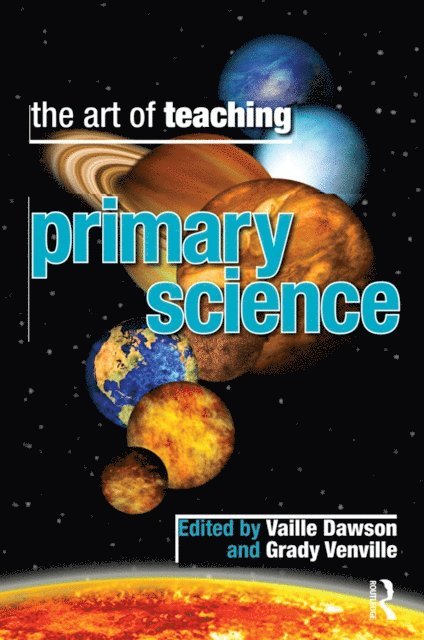
The long-awaited second edition of The Art of Teaching Primary School Science has evolved to meet the demands of schools in our rapidly changing society. Recognising that children have an innate curiosity about the natural world means that teaching primary school science is both rewarding and critical to their futures. The focus of the chapters reflects the deep expertise in curriculum and pedagogy of the chapter authors. Included are chapters on the nature (wonder) of science and how children learn as well as the nuts and bolts of teaching: planning, pedagogy and assessment. In addressing the teacher education AITSL professional standards for teaching, there are chapters on digital pedagogies, differentiation and advanced pedagogies such as problem-based learning. Finally, there is a section on STEM education that explains how an integrated approach can be planned, taught and assessed.This book is both accessible to all preservice and practising teachers and up-to-date in providing the right mix of theoretical and practical knowledge expected of this generation of primary school teachers. Teacher educators worldwide will find this an essential resource.
458 kr
Skickas inom 10-15 vardagar
354 kr
Tillfälligt slut
471 kr
Skickas inom 10-15 vardagar
The long-awaited second edition of The Art of Teaching Primary School Science has evolved to meet the demands of schools in our rapidly changing society. Recognising that children have an innate curiosity about the natural world means that teaching primary school science is both rewarding and critical to their futures. The focus of the chapters reflects the deep expertise in curriculum and pedagogy of the chapter authors. Included are chapters on the nature (wonder) of science and how children learn as well as the nuts and bolts of teaching: planning, pedagogy and assessment. In addressing the teacher education AITSL professional standards for teaching, there are chapters on digital pedagogies, differentiation and advanced pedagogies such as problem-based learning. Finally, there is a section on STEM education that explains how an integrated approach can be planned, taught and assessed.This book is both accessible to all preservice and practising teachers and up-to-date in providing the right mix of theoretical and practical knowledge expected of this generation of primary school teachers. Teacher educators worldwide will find this an essential resource.