Graham Livesey - Böcker
Visar alla böcker från författaren Graham Livesey. Handla med fri frakt och snabb leverans.
7 produkter
7 produkter
285 kr
Skickas inom 10-15 vardagar
Modern Architecture: The Basics examines technological, stylistic, socio-political, and cultural changes that have transformed the history of architecture since the late 18th century. Broad definitions of modernity and postmodernity introduce the book, which comprises 24 short thematic chapters looking at the concepts behind the development of modern and postmodern architecture. These include major historical movements, key figures, and evolving building typologies. There is also an emphasis on the changing city during the 19th and 20th centuries. Approaches to representation and its impacts on architecture are studied, along with the changing global role of architecture as cultural expression. The book introduces new topics, including gender, race, postcolonialism, and indigeneity. An undaunting, contemporary, and inclusive account of modern architectural history, this is a must-read for all students of architecture as well as those outside the discipline approaching the subject for the first time.
2 020 kr
Skickas inom 10-15 vardagar
Modern Architecture: The Basics examines technological, stylistic, socio-political, and cultural changes that have transformed the history of architecture since the late 18th century. Broad definitions of modernity and postmodernity introduce the book, which comprises 24 short thematic chapters looking at the concepts behind the development of modern and postmodern architecture. These include major historical movements, key figures, and evolving building typologies. There is also an emphasis on the changing city during the 19th and 20th centuries. Approaches to representation and its impacts on architecture are studied, along with the changing global role of architecture as cultural expression. The book introduces new topics, including gender, race, postcolonialism, and indigeneity. An undaunting, contemporary, and inclusive account of modern architectural history, this is a must-read for all students of architecture as well as those outside the discipline approaching the subject for the first time.
16 458 kr
Skickas inom 10-15 vardagar
The writings of Gilles Deleuze and Félix Guattari have had an immense impact on architectural discourse during the last two decades, particularly in the realm of digital design and fabrication. Well-known concepts such as rhizomatics, striated and smooth space, and folding have become part of architectural jargon. While Deleuze and Guattari do not devote much text directly to permanent forms of architecture, they are intrigued by structures like tents, shantytowns, and burrows. This 3 volume set of writings on architecture and urbanism presents a range of previously published pieces by Deleuze and Guattari and by many architectural and cultural theorists that explore the implications of their theories on the built environment. This critical collection will be useful to anyone looking into the impact of these great thinkers as it gathers together in one place the best sources for easy access.
Le Corbusier
2017
19 977 kr
Skickas inom 10-15 vardagar
Le Corbusier (1887-1965), born Charles-Édouard Jeanneret-Gris in La Chaux-de-Fonds (Switzerland), is considered by many to be the most influential architect of the twentieth century. Educated in his hometown in the Arts and Crafts tradition under his mentor Charles L’Éplattenier, his early training included important travels and periods of work in the offices of the Perret Brothers (Paris) and Peter Behrens (Berlin). He settled permanently in Paris in 1917, after which he encountered the modernist painter Amedée Ozenfant who would have a significant influence on his work; together they established Purism and the L’Esprit Nouveau journal. During this period he also took the name Le Corbusier derived from the name of a relative. The 1920s saw Le Corbusier emerge as one of the leading modern architects internationally with his designs for a series of villas and projects for the modern city. His ‘white’ architecture of this period was inspired by modern machines, including early aircraft, automobiles, and ocean liners, along with an abiding interest in architectural history. Many of his ideas were captured in two important publications: Vers une architecture (1923) and Urbanisme (1925). In the early 1930s he sought larger commissions internationally and his architecture evolved away from the Purist work of the 1920s with the adoption of vernacular elements. As the political climate in Europe changed in the late 1930s Le Corbusier’s career struggled leading him to take desperate measures. For example, during World War II, he attempted unsuccessfully to secure commissions from the Vichy regime controlling southern France. During this period he also began work on his Modulor measurement system. At the end of the work he reestablished his office in Paris and embarked on a creative and productive period that would last until his death by drowning in 1965. Of particular importance was the Unité d’Habitation project in Marseilles, begun in 1946, which allowed him to develop his ideas for collective housing; this project also signaled the emergence of his ‘brutalist’ period. His formal experiments also broadened with works such as the pilgrimage church of Notre Dame-du-Haut at Ronchamp and the monastery of La Tourette. In 1950 he was invited to India, where he was engaged to take over the master plan of the new capital city of the Punjab at Chandigarh. This allowed him to test his urban theories and to develop designs for the Capitol complex. A series of late work demonstrated Le Corbusier’s continuing experiments in architecture. Often unfairly maligned for the failings of modern urbanism, Le Corbusier’s legacy continues to evolve.This four-volume collection of writings on the career and legacy of Le Corbusier traces the various periods of his life from his early training to his final projects. The writings, by Le Corbusier and leading scholars, also explore important themes and specific buildings. The final volume includes articles, some critical of his ideas, which examine his legacy and impact.
261 kr
Skickas inom 11-20 vardagar
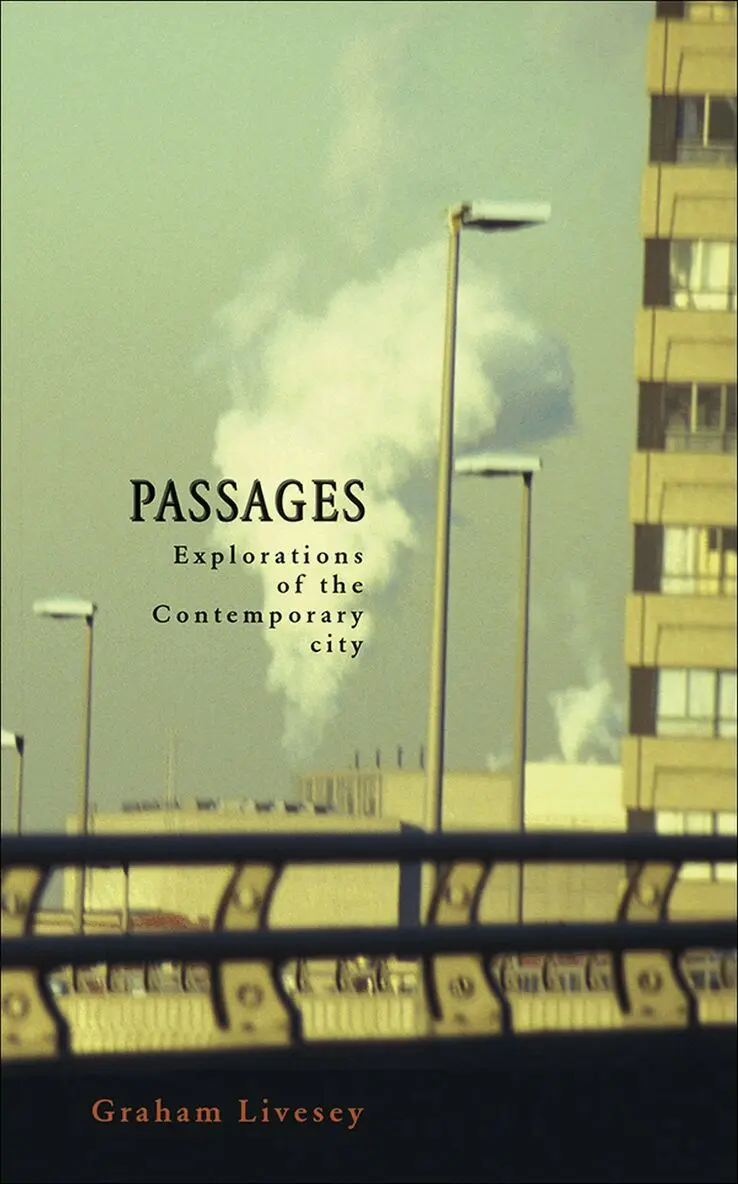
Informed by the work of writers such as Henri Lefebvre, Paul Ricoeur and Michel de Certeau, this collection of essays examines through multiple lenses eight topics related to the contemporary urban domain. The author employs powerful geographic and literary concepts such as space, narrative, and metaphor to interpret the often-bewildering complexity of the post-modern city.Recalling key aspects of our shared intellectual heritage, Passages: Explorations of the Contemporary City seeks to demystify the structure and historical development of the contemporary city in an accessible, engaging style. Passages is indispensable for those examining the city from either the professional design or the cultural studies standpoint.
Ecologies of the Early Garden City
Essays on Structure, Agency, and Greenspace
Inbunden, Engelska, 2019
622 kr
Skickas inom 5-8 vardagar
489 kr
Skickas inom 5-8 vardagar