Grazia De Michele – författare
Visar alla böcker från författaren Grazia De Michele. Handla med fri frakt och snabb leverans.
4 produkter
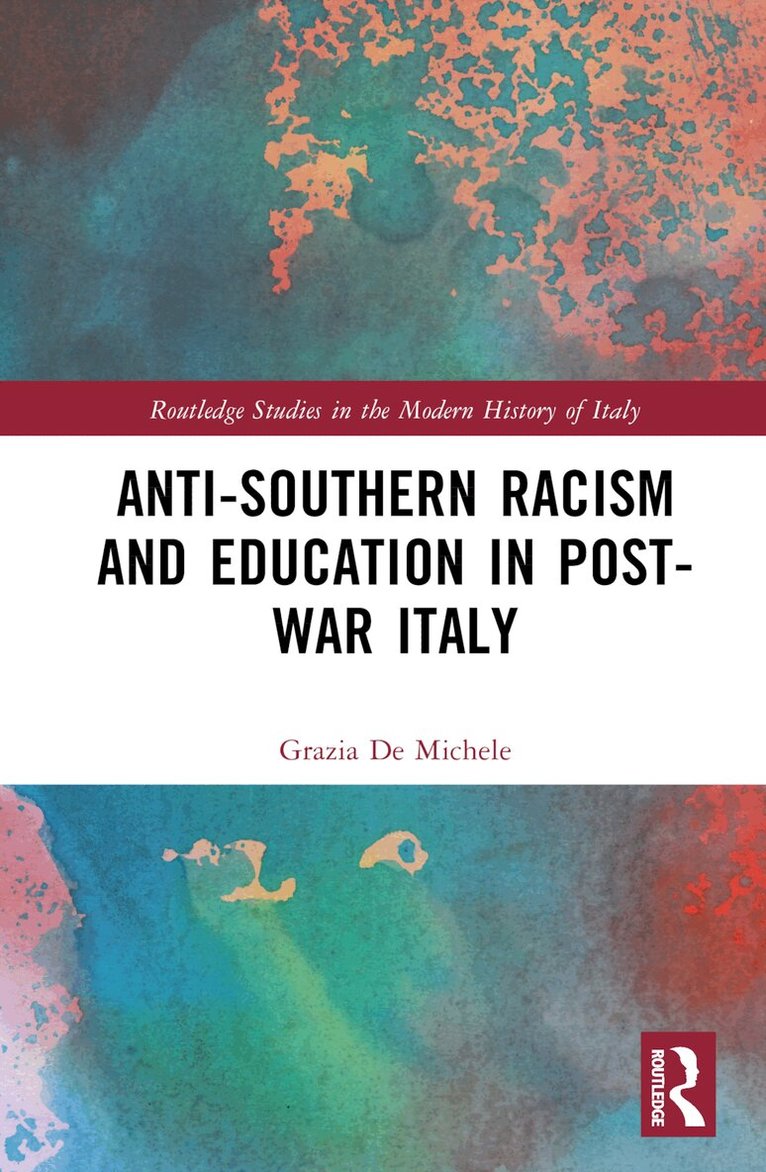
Anti-Southern Racism and Education in Post-War Italy
Inbunden, 2023
2190 kr
Lägg i varukorg
This book investigates the racism against Southern Italian children attending North-Western primary schools between the 1950s and the 1970s. Turin serves as the main case study, having become the "third Southern city" after Naples and Palermo during the considered period.Far from being a new …
Anti-Southern Racism and Education in Post-War Italy
Häftad, 2024
665 kr
Lägg i varukorg
This book investigates the racism against Southern Italian children attending North-Western primary schools between the 1950s and the 1970s. Turin serves as the main case study, having become the "third Southern city" after Naples and Palermo during the considered period.Far from being a new …
Anti-Southern Racism and Education in Post-War Italy
E-bok, 2023
762 kr
Lägg i varukorg
This book investigates the racism against Southern Italian children attending North-Western primary schools between the 1950s and the 1970s. Turin serves as the main case study, having become the "third Southern city" after Naples and Palermo during the considered period. Far from being a new …
Anti-Southern Racism and Education in Post-War Italy
E-bok, 2023
785 kr
Lägg i varukorg
This book investigates the racism against Southern Italian children attending North-Western primary schools between the 1950s and the 1970s. Turin serves as the main case study, having become the "third Southern city" after Naples and Palermo during the considered period. Far from being a new …