Greg Steinmetz – författare
Visar alla böcker från författaren . Handla med fri frakt och snabb leverans.
9 produkter
9 produkter
Häftad, Engelska, 2017
217 kr
Skickas
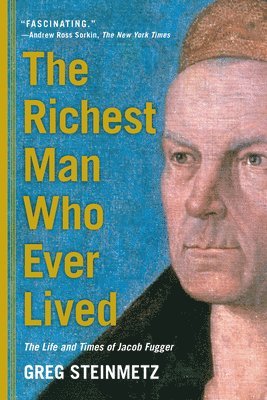
In the days when Columbus sailed the ocean and Da Vinci painted the Mona Lisa, a German banker named Jacob Fugger became the richest man in history.Fugger lived in Germany at the turn of the sixteenth century, the grandson of a peasant. By the time he died, his fortune amounted to nearly two percent of European GDP. In an era when kings had unlimited power, Fugger dared to stare down heads of state and ask them to pay back their loans, with interest. It was this coolness and self-assurance, along with his inexhaustible ambition, that made him not only the richest man ever, but a force of history as well. Before Fugger came along it was illegal under church law to charge interest on loans, but he got the Pope to change that. He also helped trigger the Reformation and likely funded Magellan’s circumnavigation of the globe. His creation of a news service gave him an information edge over his rivals and customers and earned Fugger a footnote in the history of journalism. And he took Austria’s Habsburg family from being second-tier sovereigns to rulers of the first empire where the sun never set.The Richest Man Who Ever Lived is more than a tale about the most influential businessman of all time. It is a story about palace intrigue, knights in battle, family tragedy and triumph, and a violent clash between the one percent and everybody else. “The tale of Fugger’s aspiration, ruthlessness, and greed is riveting” (The Economist).
E-bok
Engelska, 2015146 kr
Läs direkt efter köp
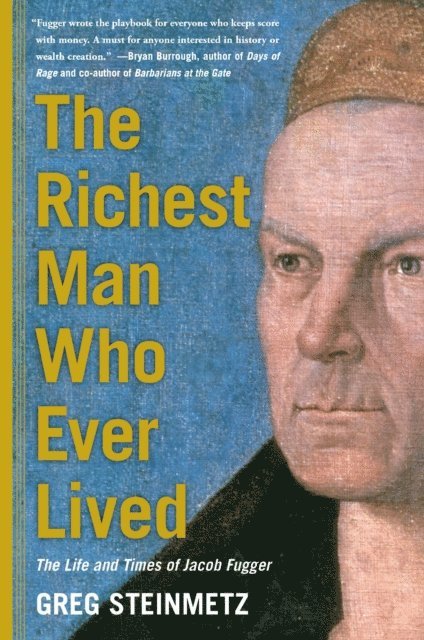
“A colorful introduction to one of the most influential businessmen in history” (The New York Times Book Review), Jacob Fugger—the Renaissance banker “who wrote the playbook for everyone who keeps score with money” (Bryan Burrough, author of Days of Rage).In the days when Columbus sailed the ocean and Da Vinci painted the Mona Lisa, a German banker named Jacob Fugger became the richest man in history. Fugger lived in Germany at the turn of the sixteenth century, the grandson of a peasant. By the time he died, his fortune amounted to nearly two percent of European GDP. In an era when kings had unlimited power, Fugger dared to stare down heads of state and ask them to pay back their loans—with interest. It was this coolness and self-assurance, along with his inexhaustible ambition, that made him not only the richest man ever, but a force of history as well. Before Fugger came along it was illegal under church law to charge interest on loans, but he got the Pope to change that. He also helped trigger the Reformation and likely funded Magellan’s circumnavigation of the globe. His creation of a news service gave him an information edge over his rivals and customers and earned Fugger a footnote in the history of journalism. And he took Austria’s Habsburg family from being second-tier sovereigns to rulers of the first empire where the sun never set. “Enjoyable…readable and fast-paced” (The Wall Street Journal), The Richest Man Who Ever Lived is more than a tale about the most influential businessman of all time. It is a story about palace intrigue, knights in battle, family tragedy and triumph, and a violent clash between the one percent and everybody else. “The tale of Fugger’s aspiration, ruthlessness, and greed is riveting” (The Economist).
Inbunden, Engelska, 2026
334 kr
Kommande
Ljudbok
Engelska, 2022368 kr
Lyssna direkt efter köp
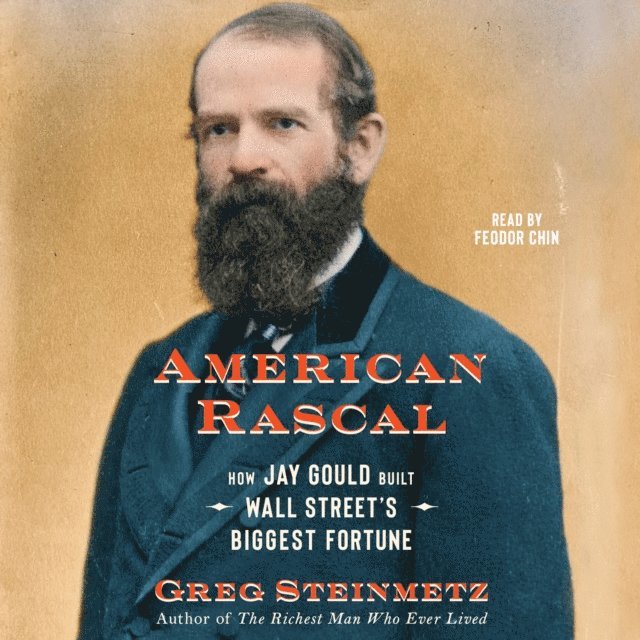
A gripping, “rollicking” (John Carreyrou, New York Times bestselling author of Bad Blood) biography of Jay Gould, the greatest of the 19th-century robber barons, whose brilliance, greed, and bare-knuckled tactics made him richer than Rockefeller and led Wall Street to institute its first financial reforms.Had Jay Gould put his name on a university or concert hall, he would undoubtedly have been a household name today. The son of a poor farmer whose early life was marked by tragedy, Gould saw money as the means to give his family a better life…even if, to do so, he had to pull a fast one on everyone else. After entering Wall Street at the age of twenty-four, he quickly became notorious when he paralyzed the economy and nearly toppled President Ulysses S. Grant in the Black Friday market collapse of 1869 in an attempt to corner the market on gold—an event that remains among the darkest days in Wall Street history. Through clever financial maneuvers, he gained control over one of every six miles of the country’s rapidly expanding network for railroad tracks—coming close to creating the first truly transcontinental railroad and making himself one of the richest men in America. American Rascal shows Gould’s complex, quirky character. He was at once praised for his brilliance by Rockefeller and Vanderbilt and condemned for forever destroying American business values by Mark Twain. He lived a colorful life, trading jokes with Thomas Edison, figuring Thomas Nast’s best sketches, paying Boss Tweed’s bail, and commuting to work in a 200-foot yacht. Gould thrived in an expanding, industrial economy in which authorities tolerated inside trading and stock price manipulation because they believed regulation would stifle the progress. But by taking these practices to new levels, Gould showed how unbridled capitalism was, in fact, dangerous for the American economy. This “gripping biography” (Fortune) explores how Gould’s audacious exploitation of economic freedom triggered the first public demands for financial reforms—a call that still resonates today.
Häftad, Engelska, 2023
270 kr
Skickas inom 3-6 vardagar
A gripping, “rollicking” (John Carreyrou, New York Times bestselling author of Bad Blood) biography of Jay Gould, the greatest of the 19th-century robber barons, whose brilliance, greed, and bare-knuckled tactics made him richer than Rockefeller and led Wall Street to institute its first financial reforms.Had Jay Gould put his name on a university or concert hall, he would undoubtedly have been a household name today. The son of a poor farmer whose early life was marked by tragedy, Gould saw money as the means to give his family a better life…even if, to do so, he had to pull a fast one on everyone else. After entering Wall Street at the age of twenty-four, he quickly became notorious when he paralyzed the economy and nearly toppled President Ulysses S. Grant in the Black Friday market collapse of 1869 in an attempt to corner the market on gold—an event that remains among the darkest days in Wall Street history. Through clever financial maneuvers, he gained control over one of every six miles of the country’s rapidly expanding network for railroad tracks—coming close to creating the first truly transcontinental railroad and making himself one of the richest men in America.American Rascal shows Gould’s complex, quirky character. He was at once praised for his brilliance by Rockefeller and Vanderbilt and condemned for forever destroying American business values by Mark Twain. He lived a colorful life, trading jokes with Thomas Edison, figuring Thomas Nast’s best sketches, paying Boss Tweed’s bail, and commuting to work in a 200-foot yacht.Gould thrived in an expanding, industrial economy in which authorities tolerated inside trading and stock price manipulation because they believed regulation would stifle the progress. But by taking these practices to new levels, Gould showed how unbridled capitalism was, in fact, dangerous for the American economy. This “gripping biography” (Fortune) explores how Gould’s audacious exploitation of economic freedom triggered the first public demands for financial reforms—a call that still resonates today.
E-bok
Engelska, 2022124 kr
Läs direkt efter köp
A gripping, “rollicking” (John Carreyrou, New York Times bestselling author of Bad Blood) biography of Jay Gould, the greatest of the 19th-century robber barons, whose brilliance, greed, and bare-knuckled tactics made him richer than Rockefeller and led Wall Street to institute its first financial reforms.Had Jay Gould put his name on a university or concert hall, he would undoubtedly have been a household name today. The son of a poor farmer whose early life was marked by tragedy, Gould saw money as the means to give his family a better life…even if, to do so, he had to pull a fast one on everyone else. After entering Wall Street at the age of twenty-four, he quickly became notorious when he paralyzed the economy and nearly toppled President Ulysses S. Grant in the Black Friday market collapse of 1869 in an attempt to corner the market on gold—an event that remains among the darkest days in Wall Street history. Through clever financial maneuvers, he gained control over one of every six miles of the country’s rapidly expanding network for railroad tracks—coming close to creating the first truly transcontinental railroad and making himself one of the richest men in America. American Rascal shows Gould’s complex, quirky character. He was at once praised for his brilliance by Rockefeller and Vanderbilt and condemned for forever destroying American business values by Mark Twain. He lived a colorful life, trading jokes with Thomas Edison, figuring Thomas Nast’s best sketches, paying Boss Tweed’s bail, and commuting to work in a 200-foot yacht. Gould thrived in an expanding, industrial economy in which authorities tolerated inside trading and stock price manipulation because they believed regulation would stifle the progress. But by taking these practices to new levels, Gould showed how unbridled capitalism was, in fact, dangerous for the American economy. This “gripping biography” (Fortune) explores how Gould’s audacious exploitation of economic freedom triggered the first public demands for financial reforms—a call that still resonates today.
Inbunden, Tyska, 2016
310 kr
Skickas inom 3-6 vardagar
Häftad, Tyska, 2025
213 kr
Skickas inom 3-6 vardagar
E-bok
Spanska, 2026166 kr
Läs direkt efter köp
«Una introducción brillante a uno de los hombres de negocios más influyentes de la historia». The New York TimesGreg Steinmetz, periodista especializado en historia económica, ha escrito la primera gran biografía de Jakob Fugger, el hombre que financió el nacimiento del mundo moderno, nieto de campesino y primer millonario documentado de la historia.Fugger vivió en los tiempos en que Colón cruzaba el Atlántico y Miguel Ángel pintaba la Capilla Sixtina. A su muerte, su fortuna equivalía al dos por ciento del PIB europeo, una cifra que ni siquiera Rockefeller alcanzaría siglos después. Convenció al papa para que levantase la prohibición sobre el préstamo con interés, financió el ascenso de los Habsburgo al poder, desencadenó la Reforma protestante y costeó la primera vuelta al mundo de Magallanes. Y cuando Carlos V tardó en devolverle un préstamo, Fugger le mandó una carta de reclamación.En su retrato, Steinmetz no oculta las contradicciones del personaje, capaz de fundar uno de los primeros proyectos de vivienda social de la historia y de condenar a la miseria a la familia de un colaborador por una deuda impagada. En su historia reconocemos la nuestra, la del primer capitalista que persiguió la riqueza sin miedo a la condenación y cuyas reglas del juego seguimos aplicando hoy.«El relato de la ambición, la crueldad y la codicia de Fugger es apasionante». The Economist«La increíble historia de un hombre que marcó las prácticas empresariales modernas y las fronteras de Europa». The New Yorker«Reyes, emperadores y papas lo conocían. Ahora, gracias a este libro fascinante, también nosotros». Steve Stecklow, periodista ganador del Premio Pulitzer«Si quieres entender a este hombre del dinero visionario, audaz y polémico, lee el relato de Steinmetz. No te arrepentirás». Laurence Bergreen, autor de Magallanes: Hasta los confines de la Tierra«Un personaje sorprendentemente reconocible: un hombre del dinero que se sentiría perfectamente a sus anchas entre los Midas de hoy». Roger Lowenstein, autor de When Genius Failed«Fugger escribió el manual que siguen todos los que llevan la cuenta con dinero». Bryan Burrough, autor de Days of Rage«Ameno, ágil y de lectura rápida». The Wall Street Journal