Grégoire Chamayou - Böcker
Visar alla böcker från författaren Grégoire Chamayou. Handla med fri frakt och snabb leverans.
7 produkter
7 produkter
112 kr
Skickas
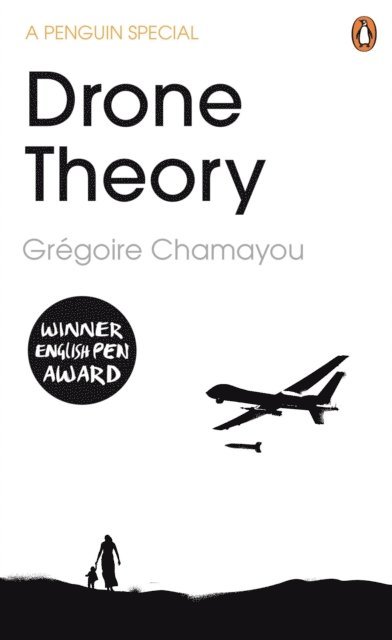
Drone Theory is Gregoire Chamayou's poignant and sharply argued polemic against US drone warfare.In 2011 alone, the US deployed one drone strike every four days in Pakistan. Drone Theory is a rigorous polemic against the increasing use of robot warfare around the world. Drawing on philosophical debate, moral lessons from Greek mythology and transcripts of conversations between drone operators, Drone Theory re-evaluates the socio-political impact of drone warfare on the world - and its people. Chamayou takes us through Nevada, Pakistan and arresting philosophical terrain to reveal how drones are changing the landscape of war theory and to highlight the profound moral implications of our own silence in the face of drone warfare.Born in 1976, Grégoire Chamayou is a philosopher at the Centre National de la Recherche Scientifique in Paris and the author of Les corps vils and Manhunts: A Philosophical History. Chamayou also lectures at Université de Paris Ouest, and has written for Le Monde Diplomatique among other publications. Janet Lloyd has translated over seventy books from French to English and has twice been awarded the Scott Moncrieff prize.
423 kr
Skickas inom 7-10 vardagar
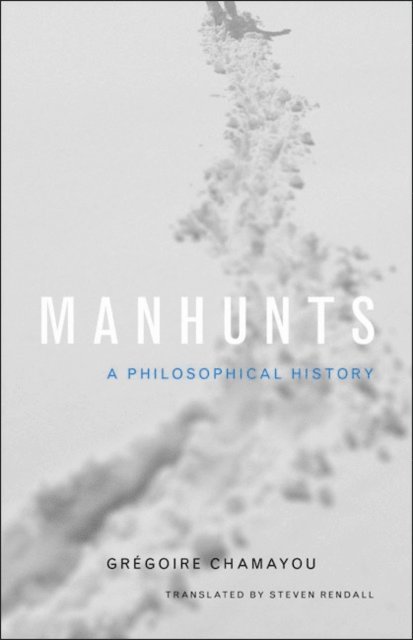
Touching on issues of power, authority, and domination, Manhunts takes an in-depth look at the hunting of humans in the West, from ancient Sparta, through the Middle Ages, to the modern practices of chasing undocumented migrants. Incorporating historical events and philosophical reflection, Gregoire Chamayou examines the systematic and organized search for individuals and small groups on the run because they have defied authority, committed crimes, seemed dangerous simply for existing, or been categorized as subhuman or dispensable. Chamayou begins in ancient Greece, where young Spartans hunted and killed Helots (Sparta's serfs) as an initiation rite, and where Aristotle and other philosophers helped to justify raids to capture and enslave foreigners by creating the concept of natural slaves. He discusses the hunt for heretics in the Middle Ages; New World natives in the early modern period; vagrants, Jews, criminals, and runaway slaves in other eras; and illegal immigrants today.Exploring evolving ideas about the human and the subhuman, what we owe to enemies and people on the margins of society, and the supposed legitimacy of domination, Chamayou shows that the hunting of humans should not be treated ahistorically, and that manhunting has varied as widely in its justifications and aims as in its practices. He investigates the psychology of manhunting, noting that many people, from bounty hunters to Balzac, have written about the thrill of hunting when the prey is equally intelligent and cunning. An unconventional history on an unconventional subject, Manhunts is an in-depth consideration of the dynamics of an age-old form of violence.
753 kr
Skickas inom 11-20 vardagar
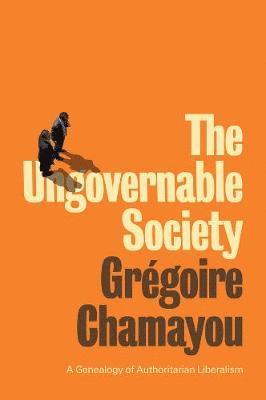
Rebellion was in the air. Workers were on strike, students were demonstrating on campuses, discipline was breaking down. No relation of domination was left untouched – the relation between the sexes, the racial order, the hierarchies of class, relationships in families, workplaces and colleges. The upheavals of the late 1960s and early 1970s quickly spread through all sectors of social and economic life, threatening to make society ungovernable. This crisis was also the birthplace of the authoritarian liberalism which continues to cast its shadow across the world in which we now live.To ward off the threat, new arts of government were devised by elites in business-related circles, which included a war against the trade unions, the primacy of shareholder value and a dethroning of politics. The neoliberalism that thus began its triumphal march was not, however, determined by a simple ‘state phobia’ and a desire to free up the economy from government interference. On the contrary, the strategy for overcoming the crisis of governability consisted in an authoritarian liberalism in which the liberalization of society went hand-in-hand with new forms of power imposed from above: a ‘strong state’ for a ‘free economy’ became the new magic formula of our capitalist societies.The new arts of government devised by ruling elites are still with us today and we can understand their nature and lasting influence only by re-examining the history of the conflicts that brought them into being.
256 kr
Skickas inom 7-10 vardagar
Rebellion was in the air. Workers were on strike, students were demonstrating on campuses, discipline was breaking down. No relation of domination was left untouched – the relation between the sexes, the racial order, the hierarchies of class, relationships in families, workplaces and colleges. The upheavals of the late 1960s and early 1970s quickly spread through all sectors of social and economic life, threatening to make society ungovernable. This crisis was also the birthplace of the authoritarian liberalism which continues to cast its shadow across the world in which we now live.To ward off the threat, new arts of government were devised by elites in business-related circles, which included a war against the trade unions, the primacy of shareholder value and a dethroning of politics. The neoliberalism that thus began its triumphal march was not, however, determined by a simple ‘state phobia’ and a desire to free up the economy from government interference. On the contrary, the strategy for overcoming the crisis of governability consisted in an authoritarian liberalism in which the liberalization of society went hand-in-hand with new forms of power imposed from above: a ‘strong state’ for a ‘free economy’ became the new magic formula of our capitalist societies.The new arts of government devised by ruling elites are still with us today and we can understand their nature and lasting influence only by re-examining the history of the conflicts that brought them into being.
356 kr
Skickas inom 3-6 vardagar
Drone warfare has raised profound ethical and constitutional questions both in the halls of Congress and among the U.S. public. Not since debates over nuclear warfare has American military strategy been the subject of discussion in living rooms, classrooms, and houses of worship. Yet as this groundbreaking new work shows, the full implications of drones have barely been addressed in the media.In a unique take on a subject that has grabbed headlines and is consuming billions of taxpayer dollars each year, philosopher Grégoire Chamayou applies the lens of philosophy to our understanding of how drones are changing our world. For the first time in history, a state has claimed the right to wage war across a mobile battlefield that potentially spans the globe. Remote-control flying weapons, he argues, take us well beyond even George W. Bush's justification for the war on terror.What we are seeing is a fundamental transformation of the laws of war that have defined military conflict as between combatants. As more and more drones are launched into battle, war now has the potential to transform into a realm of secretive, targeted assassinations of individuals—beyond the view and control not only of potential enemies but also of citizens of democracies themselves. Far more than a simple technology, Chamayou shows, drones are profoundly influencing what it means for a democracy to wage war. A Theory of the Drone will be essential reading for all who care about this important question.
299 kr
Skickas inom 3-6 vardagar
408 kr
Skickas inom 3-6 vardagar