Gregory A. Borchard - Böcker
Visar alla böcker från författaren Gregory A. Borchard. Handla med fri frakt och snabb leverans.
5 produkter
5 produkter
2 160 kr
Skickas inom 10-15 vardagar
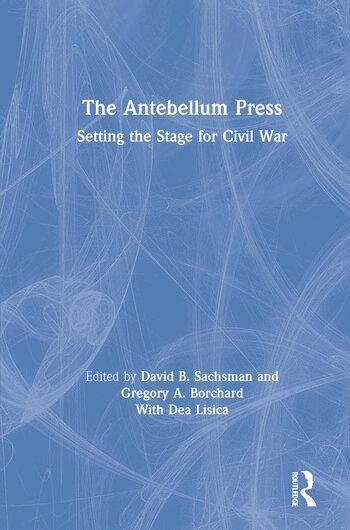
The Antebellum Press: Setting the Stage for Civil War reveals the critical role of journalism in the years leading up to America’s deadliest conflict by exploring the events that foreshadowed and, in some ways, contributed directly to the outbreak of war. This collection of scholarly essays traces how the national press influenced and shaped America’s path towards warfare. Major challenges faced by American newspapers prior to secession and war are explored, including: the economic development of the press; technology and its influence on the press; major editors and reporters (North and South) and the role of partisanship; and the central debate over slavery in the future of an expanding nation. A clear narrative of institutional, political, and cultural tensions between 1820 and 1861 is presented through the contributors’ use of primary sources. In this way, the reader is offered contemporary perspectives that provide unique insights into which local or national issues were pivotal to the writers whose words informed and influenced the people of the time.As a scholarly work written by educators, this volume is an essential text for both upper-level undergraduates and postgraduates who study the American Civil War, journalism, print and media culture, and mass communication history.
596 kr
Skickas inom 10-15 vardagar
The Antebellum Press: Setting the Stage for Civil War reveals the critical role of journalism in the years leading up to America’s deadliest conflict by exploring the events that foreshadowed and, in some ways, contributed directly to the outbreak of war. This collection of scholarly essays traces how the national press influenced and shaped America’s path towards warfare. Major challenges faced by American newspapers prior to secession and war are explored, including: the economic development of the press; technology and its influence on the press; major editors and reporters (North and South) and the role of partisanship; and the central debate over slavery in the future of an expanding nation. A clear narrative of institutional, political, and cultural tensions between 1820 and 1861 is presented through the contributors’ use of primary sources. In this way, the reader is offered contemporary perspectives that provide unique insights into which local or national issues were pivotal to the writers whose words informed and influenced the people of the time.As a scholarly work written by educators, this volume is an essential text for both upper-level undergraduates and postgraduates who study the American Civil War, journalism, print and media culture, and mass communication history.
825 kr
Skickas inom 5-8 vardagar
Journalism in the Civil War Era examines the contributions of newspapers and magazines to the American public’s understanding of the nation’s greatest internal conflict. It documents the effect the Civil War had on journalism, and the effect journalism had on the Civil War. It describes the politics that affected the press, the constraints placed upon it, and the influence of technology. The book discusses the editors and reporters who covered the war, profiling the typical newspaper of the era as well as the response of the press corps to wartime challenges. Providing a broad account of journalism during this period, this book serves as an important reference for scholars and students, and as a supplementary text for courses in journalism history, U.S. press history, civil rights law, and nineteenth century history.
Del 8 - Mediating American History
Journalism in the Civil War Era (Second Edition)
Häftad, Engelska, 2023
602 kr
Skickas inom 5-8 vardagar
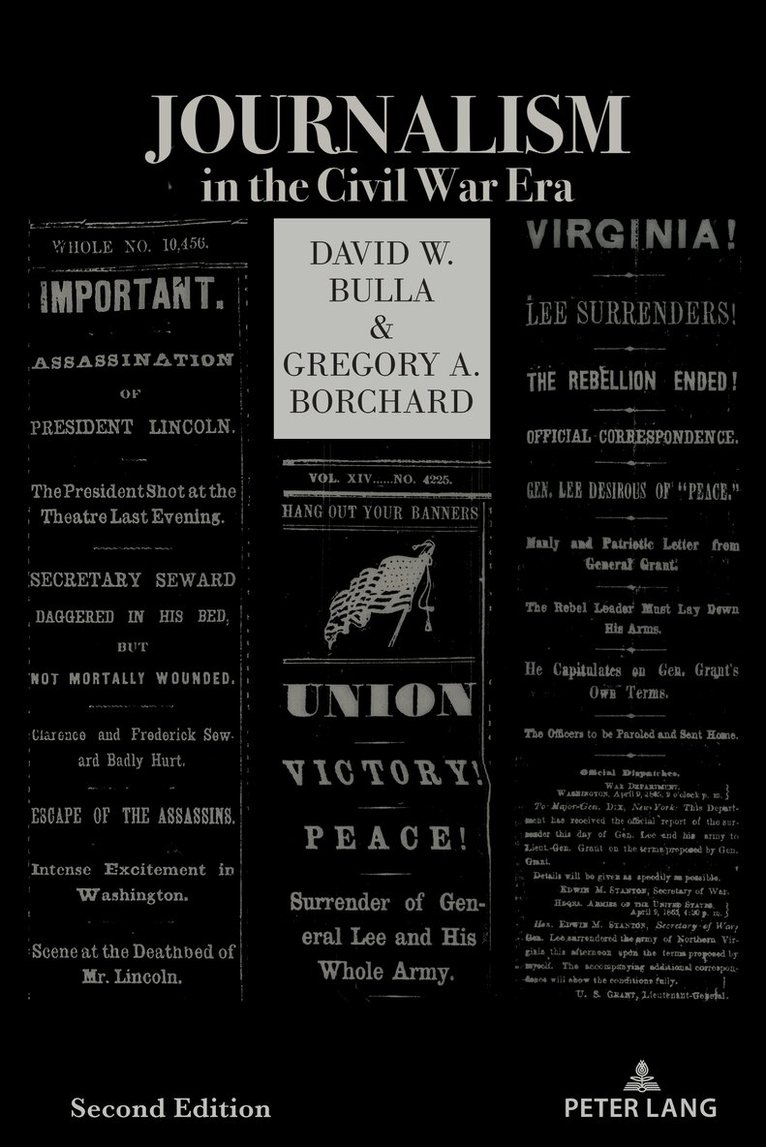
Journalism in the Civil War Era presents the historical context of Civil War journalism—placing the press of the era within the entire nineteenth century. It gives a broad account of journalism in the Civil War, reflecting on the political, military, legal, and journalistic issues involved in this era. It is written with chapters that examine these various facets of the journalism of the period, but they are connected by the theme of the development of the wartime press, with an emphasis on the professional, political, social, economic, legal, and military factors that affected it. It provides:An in-depth look at the political press in the 1850s and 1860s, and how it played a major role in the nation’s understanding of the conflict;Technology’s role in carrying information in a timely fashion;The development of journalism as a profession;The international context of Civil War journalism;The leadership journalists displayed, including Horace Greeley and his New York Tribune bully pulpit;The nature of journalism during the war;The way freedom of the press was advanced by polarizing political extremes. The work is historical, written in an engaging style, and meant to encourage readers to explore and analyze the value of freedom of the press during that very time when it most comes under fire—wartime. “David W. Bulla and Gregory A. Borchard explore ties between journalism and politics and between New York and the Midwest (then known as the West) before the Civil War. Newspapers shared an increasing emphasis on information over opinion. Facts often tended to fit the editors’ agendas with winners overplaying their triumphs and losers becoming more restrained. Major newspapers, particularly the New York Herald with the largest investment in correspondents, placed news on the front page and interpretation inside, even while publisher James Gordon Bennett initially blamed Lincoln for the war. Major dailies increasingly reported news from the front and smaller papers relied more on opinion and local angles.”—William E. Huntzicker, Minneapolis writer and author of The Popular Press 1833-1865 "Bulla and Borchard have produced what has been long needed in the study of U.S. Civil War journalism: a social and cultural history of the American press that goes beyond anecdotal accounts of war news. They explore the nature of the Civil War-era press itself in all its strengths and weaknesses, ranging from political and economic grandstanding and over-the-top verbal grandiloquence to the sheer bravery and determination of a number of editors, publishers, and journalists who viewed their tasks as interpreters and informers of the day’s news. Using a mix of carefully selected case studies as well as an extensive study of newspapers both large and small, this highly readable work places the Civil War press squarely where it belongs—as a part of the larger social and cultural experience of mid-nineteenth century America."—Mary M. Cronin, Department of Journalism, New Mexico State University "The study of Civil War journalism has traditionally been treated as a facet of the history of war correspondence, but war reporting does not exist in a vacuum, as David Bulla and Gregory Borchard skillfully show readers in their latest edition of Journalism in the Civil War Era. This new edition freshens the book’s original version by expanding on their insightful examination of the way the American Civil War ushered in the greater reliance on the information model of journalism, which would exist side-by-side with the existing partisan model. Few scholars have attempted the sort of holistic study that examines not only the nature of Civil War journalism but, more significantly, the symbiotic relationship between the press and its culture. Bulla and Borchard have done the hard work of digging out the necessary evidence to paint a full-color portrait of journalism during America’s bloodiest conflict."—Debbie van Tuyll, Professor Emerita, Department of Communications, Augusta University
Del 8 - Mediating American History
Journalism in the Civil War Era (Second Edition)
Inbunden, Engelska, 2023
1 289 kr
Skickas inom 5-8 vardagar
Journalism in the Civil War Era presents the historical context of Civil War journalism—placing the press of the era within the entire nineteenth century. It gives a broad account of journalism in the Civil War, reflecting on the political, military, legal, and journalistic issues involved in this era. It is written with chapters that examine these various facets of the journalism of the period, but they are connected by the theme of the development of the wartime press, with an emphasis on the professional, political, social, economic, legal, and military factors that affected it. It provides:An in-depth look at the political press in the 1850s and 1860s, and how it played a major role in the nation’s understanding of the conflict;Technology’s role in carrying information in a timely fashion;The development of journalism as a profession;The international context of Civil War journalism;The leadership journalists displayed, including Horace Greeley and his New York Tribune bully pulpit;The nature of journalism during the war;The way freedom of the press was advanced by polarizing political extremes. The work is historical, written in an engaging style, and meant to encourage readers to explore and analyze the value of freedom of the press during that very time when it most comes under fire—wartime. “David W. Bulla and Gregory A. Borchard explore ties between journalism and politics and between New York and the Midwest (then known as the West) before the Civil War. Newspapers shared an increasing emphasis on information over opinion. Facts often tended to fit the editors’ agendas with winners overplaying their triumphs and losers becoming more restrained. Major newspapers, particularly the New York Herald with the largest investment in correspondents, placed news on the front page and interpretation inside, even while publisher James Gordon Bennett initially blamed Lincoln for the war. Major dailies increasingly reported news from the front and smaller papers relied more on opinion and local angles.”—William E. Huntzicker, Minneapolis writer and author of The Popular Press 1833-1865 "Bulla and Borchard have produced what has been long needed in the study of U.S. Civil War journalism: a social and cultural history of the American press that goes beyond anecdotal accounts of war news. They explore the nature of the Civil War-era press itself in all its strengths and weaknesses, ranging from political and economic grandstanding and over-the-top verbal grandiloquence to the sheer bravery and determination of a number of editors, publishers, and journalists who viewed their tasks as interpreters and informers of the day’s news. Using a mix of carefully selected case studies as well as an extensive study of newspapers both large and small, this highly readable work places the Civil War press squarely where it belongs—as a part of the larger social and cultural experience of mid-nineteenth century America."—Mary M. Cronin, Department of Journalism, New Mexico State University "The study of Civil War journalism has traditionally been treated as a facet of the history of war correspondence, but war reporting does not exist in a vacuum, as David Bulla and Gregory Borchard skillfully show readers in their latest edition of Journalism in the Civil War Era. This new edition freshens the book’s original version by expanding on their insightful examination of the way the American Civil War ushered in the greater reliance on the information model of journalism, which would exist side-by-side with the existing partisan model. Few scholars have attempted the sort of holistic study that examines not only the nature of Civil War journalism but, more significantly, the symbiotic relationship between the press and its culture. Bulla and Borchard have done the hard work of digging out the necessary evidence to paint a full-color portrait of journalism during America’s bloodiest conflict."—Debbie van Tuyll, Professor Emerita, Department of Communications, Augusta University