Gregory A. Daddis – författare
Visar alla böcker från författaren Gregory A. Daddis. Handla med fri frakt och snabb leverans.
16 produkter
16 produkter
Häftad, Engelska, 2015
351 kr
Skickas inom 5-8 vardagar
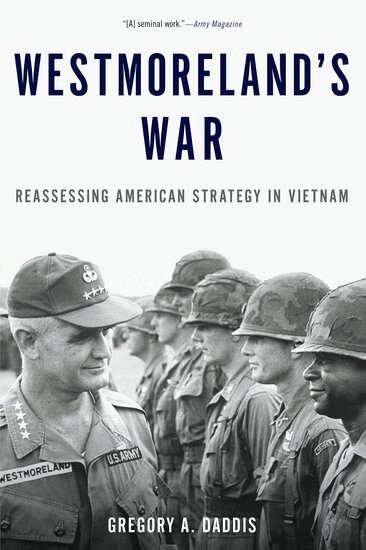
General William C. Westmoreland has long been derided for his failed strategy of "attrition" in the Vietnam War. Historians have argued that Westmoreland's strategy placed a premium on high "body counts" through a "big unit war" that relied almost solely on search and destroy missions. Many believe the U.S. Army failed in Vietnam because of Westmoreland's misguided and narrow strategyIn a groundbreaking reassessment of American military strategy in Vietnam, Gregory Daddis overturns conventional wisdom and shows how Westmoreland did indeed develop a comprehensive campaign which included counterinsurgency, civic action, and the importance of gaining political support from the South Vietnamese population. Exploring the realities of a large, yet not wholly unconventional environment, Daddis reinterprets the complex political and military battlefields of Vietnam. Without searching for blame, he analyzes how American civil and military leaders developed strategy and how Westmoreland attempted to implement a sweeping strategic vision.Westmoreland's War is a landmark reinterpretation of one of America's most divisive wars, outlining the multiple, interconnected aspects of American military strategy in Vietnam-combat operations, pacification, nation building, and the training of the South Vietnamese armed forces. Daddis offers a critical reassessment of one of the defining moments in American history.
Inbunden, Engelska, 2017
519 kr
Skickas inom 5-8 vardagar
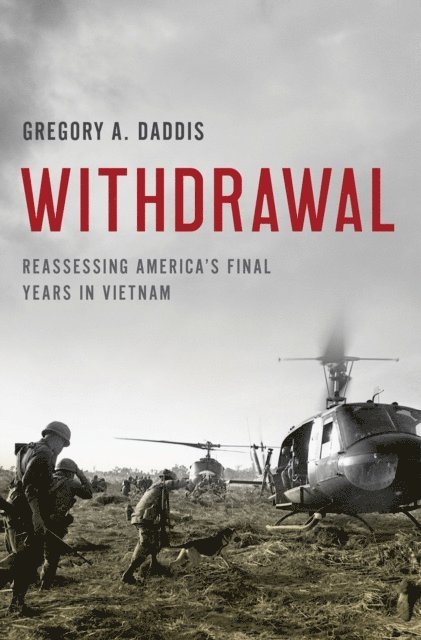
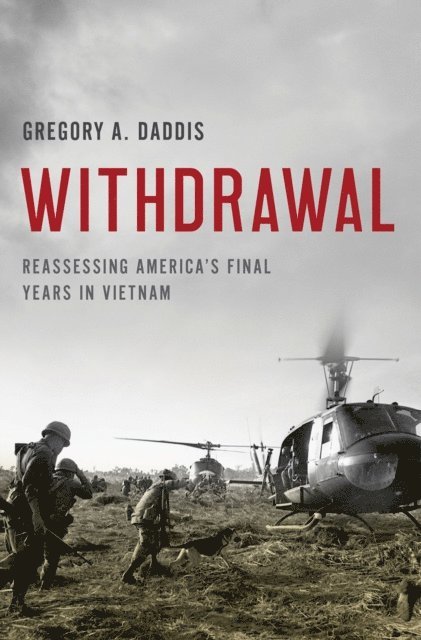
A "better war." Over the last two decades, this term has become synonymous with US strategy during the Vietnam War's final years. The narrative is enticingly simple, appealing to many audiences. After the disastrous results of the 1968 Tet offensive, in which Hanoi's forces demonstrated the failures of American strategy, popular history tells of a new American military commander who emerged in South Vietnam and with inspired leadership and a new approach turned around a long stalemated conflict. In fact, so successful was General Creighton Abrams in commanding US forces that, according to the "better war" myth, the United States had actually achieved victory by mid-1970. A new general with a new strategy had delivered, only to see his victory abandoned by weak-kneed politicians in Washington, DC who turned their backs on the US armed forces and their South Vietnamese allies.In a bold new interpretation of America's final years in Vietnam, acclaimed historian Gregory A. Daddis disproves these longstanding myths. Withdrawal is a groundbreaking reassessment that tells a far different story of the Vietnam War. Daddis convincingly argues that the entire US effort in South Vietnam was incapable of reversing the downward trends of a complicated Vietnamese conflict that by 1968 had turned into a political-military stalemate. Despite a new articulation of strategy, Abrams's approach could not materially alter a war no longer vital to US national security or global dominance. Once the Nixon White House made the political decision to withdraw from Southeast Asia, Abrams's military strategy was unable to change either the course or outcome of a decades' long Vietnamese civil war.In a riveting sequel to his celebrated Westmoreland's War, Daddis demonstrates he is one of the nation's leading scholars on the Vietnam War. Withdrawal will be a standard work for years to come.
E-bok
PDF, Engelska, 2017248 kr
Läs direkt efter köp
A "better war." Over the last two decades, this term has become synonymous with US strategy during the Vietnam War''s final years. The narrative is enticingly simple, appealing to many audiences. After the disastrous results of the 1968 Tet offensive, in which Hanoi''s forces demonstrated the failures of American strategy, popular history tells of a new American military commander who emerged in South Vietnam and with inspired leadership and a new approach turned around a long stalemated conflict. In fact, so successful was General Creighton Abrams in commanding US forces that, according to the "better war" myth, the United States had actually achieved victory by mid-1970. A new general with a new strategy had delivered, only to see his victory abandoned by weak-kneed politicians in Washington, DC who turned their backs on the US armed forces and their South Vietnamese allies.In a bold new interpretation of America''s final years in Vietnam, acclaimed historian Gregory A. Daddis disproves these longstanding myths. Withdrawal is a groundbreaking reassessment that tells a far different story of the Vietnam War. Daddis convincingly argues that the entire US effort in South Vietnam was incapable of reversing the downward trends of a complicated Vietnamese conflict that by 1968 had turned into a political-military stalemate. Despite a new articulation of strategy, Abrams''s approach could not materially alter a war no longer vital to US national security or global dominance. Once the Nixon White House made the political decision to withdraw from Southeast Asia, Abrams''s military strategy was unable to change either the course or outcome of a decades'' long Vietnamese civil war.In a riveting sequel to his celebrated Westmoreland''s War, Daddis demonstrates he is one of the nation''s leading scholars on the Vietnam War. Withdrawal will be a standard work for years to come.
E-bok
Engelska, 2017248 kr
Läs direkt efter köp
A "better war." Over the last two decades, this term has become synonymous with US strategy during the Vietnam War''s final years. The narrative is enticingly simple, appealing to many audiences. After the disastrous results of the 1968 Tet offensive, in which Hanoi''s forces demonstrated the failures of American strategy, popular history tells of a new American military commander who emerged in South Vietnam and with inspired leadership and a new approach turned around a long stalemated conflict. In fact, so successful was General Creighton Abrams in commanding US forces that, according to the "better war" myth, the United States had actually achieved victory by mid-1970. A new general with a new strategy had delivered, only to see his victory abandoned by weak-kneed politicians in Washington, DC who turned their backs on the US armed forces and their South Vietnamese allies.In a bold new interpretation of America''s final years in Vietnam, acclaimed historian Gregory A. Daddis disproves these longstanding myths. Withdrawal is a groundbreaking reassessment that tells a far different story of the Vietnam War. Daddis convincingly argues that the entire US effort in South Vietnam was incapable of reversing the downward trends of a complicated Vietnamese conflict that by 1968 had turned into a political-military stalemate. Despite a new articulation of strategy, Abrams''s approach could not materially alter a war no longer vital to US national security or global dominance. Once the Nixon White House made the political decision to withdraw from Southeast Asia, Abrams''s military strategy was unable to change either the course or outcome of a decades'' long Vietnamese civil war.In a riveting sequel to his celebrated Westmoreland''s War, Daddis demonstrates he is one of the nation''s leading scholars on the Vietnam War. Withdrawal will be a standard work for years to come.
Inbunden, Engelska, 2025
365 kr
Skickas inom 5-8 vardagar
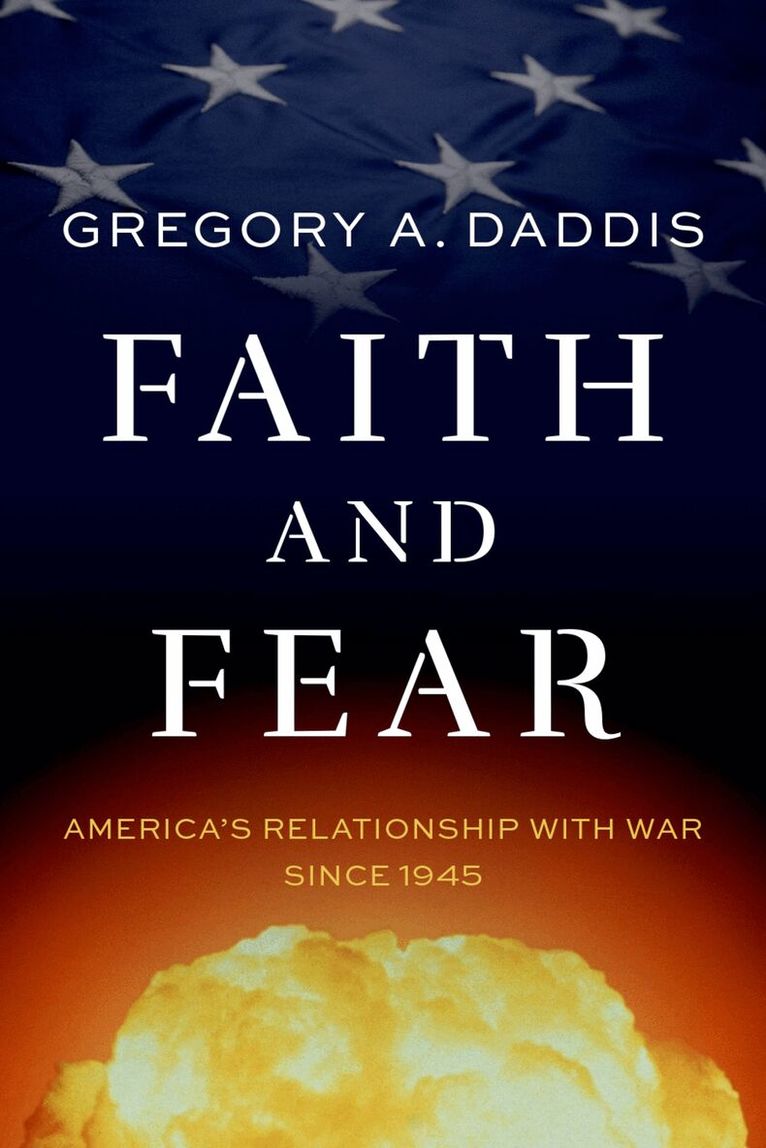
How have Americans conceptualized and understood the "promise and peril" of war since 1945? And how have their ideas and attitudes led to the ever-increasing militarization of US foreign policy since the end of World War II?In a groundbreaking reassessment of the long Cold War era, historian Gregory A. Daddis argues that ever since the Second World War's fateful conclusion, faith in and fear of war became central to Americans' thinking about the world around them. With war pervading nearly all aspects of American society, an interplay between blind faith and existential fear framed US policymaking and grand strategy, often with tragic results. These inherent tensions--an unwavering trust and confidence in war coupled with a fear that nearly all national security threats, foreign or domestic, are existential ones--have shaped Americans' relationship with war that persists to the current day.A sweeping history, Faith and Fear makes a forceful argument by examining the tensions between Americans' overreaching faith in war as a foreign policy tool and their overwhelming fear of war as a destructive force.
E-bok
Engelska, 2025354 kr
Läs direkt efter köp
In this groundbreaking reflection on America's relationship with war in the modern era, Gregory A. Daddis explores the deep-seated tension between faith in and fear of war that has shaped US grand strategy and helped militarize US foreign policy with great costs at home and abroad. How have Americans conceptualized and understood the "e;promise and peril"e; of war since 1945? And how have their ideas and attitudes led to the ever-increasing militarization of US foreign policy since the end of World War II?In a groundbreaking reassessment of the long Cold War era, historian Gregory A. Daddis argues that ever since the Second World War's fateful conclusion, faith in and fear of war became central to Americans' thinking about the world around them. With war pervading nearly all aspects of American society, an interplay between blind faith and existential fear framed US policymaking and grand strategy, often with tragic results. These inherent tensions--an unwavering trust and confidence in war coupled with a fear that nearly all national security threats, foreign or domestic, are existential ones--have shaped Americans' relationship with war that persists to the current day.A sweeping history, Faith and Fear makes a forceful argument by examining the tensions between Americans' overreaching faith in war as a foreign policy tool and their overwhelming fear of war as a destructive force.
E-bok
PDF, Engelska, 2025354 kr
Läs direkt efter köp
In this groundbreaking reflection on America's relationship with war in the modern era, Gregory A. Daddis explores the deep-seated tension between faith in and fear of war that has shaped US grand strategy and helped militarize US foreign policy with great costs at home and abroad. How have Americans conceptualized and understood the "e;promise and peril"e; of war since 1945? And how have their ideas and attitudes led to the ever-increasing militarization of US foreign policy since the end of World War II?In a groundbreaking reassessment of the long Cold War era, historian Gregory A. Daddis argues that ever since the Second World War's fateful conclusion, faith in and fear of war became central to Americans' thinking about the world around them. With war pervading nearly all aspects of American society, an interplay between blind faith and existential fear framed US policymaking and grand strategy, often with tragic results. These inherent tensions--an unwavering trust and confidence in war coupled with a fear that nearly all national security threats, foreign or domestic, are existential ones--have shaped Americans' relationship with war that persists to the current day.A sweeping history, Faith and Fear makes a forceful argument by examining the tensions between Americans' overreaching faith in war as a foreign policy tool and their overwhelming fear of war as a destructive force.
Inbunden, Engelska, 2011
670 kr
Skickas inom 5-8 vardagar
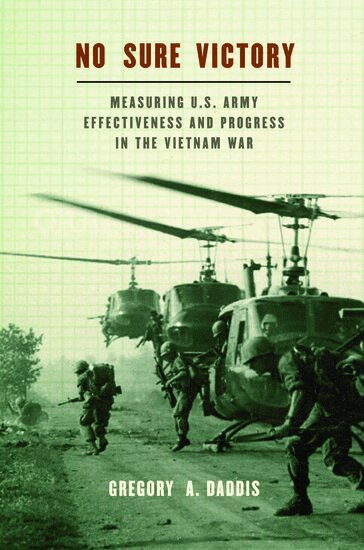
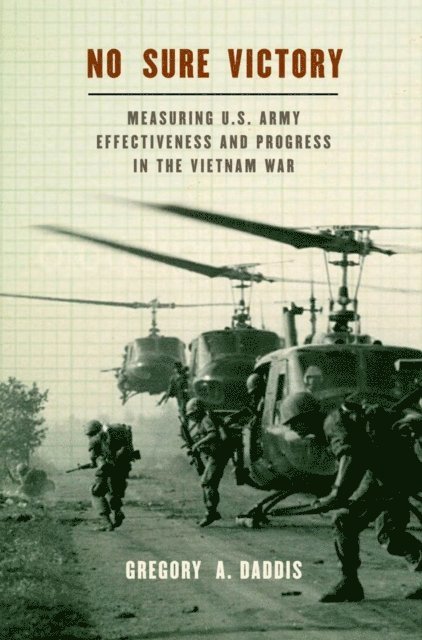
It is commonly thought that the U.S. Army in Vietnam, thrust into a war in which territory occupied was meaningless, depended on body counts as its sole measure of military progress. In No Sure Victory, Army officer and historian Gregory A. Daddis uncovers the truth behind this gross simplification of the historical record. Daddis shows that, confronted by an unfamiliar enemy and an even more unfamiliar form of warfare, the U.S. Army adopted a massive, and eventually unmanageable, system of measurements and formulas to track the progress of military operations that ranged from pacification efforts to search-and-destroy missions. Concentrating more on data collection and less on data analysis, these indiscriminate attempts to gauge success may actually have hindered the army's ability to evaluate the true outcome of the fight at hand--a roadblock that Daddis believes significantly contributed to the multitude of failures that American forces in Vietnam faced. Filled with incisive analysis and rich historical detail, No Sure Victory is a valuable case study in unconventional warfare, a cautionary tale that offers important perspectives on how to measure performance in current and future armed conflict.
E-bok
PDF, Engelska, 2011672 kr
Läs direkt efter köp
Conventional wisdom holds that the US Army in Vietnam, thrust into an unconventional war where occupying terrain was a meaningless measure of success, depended on body counts as its sole measure of military progress. In No Sure Victory, Army officer and historian Gregory Daddis looks far deeper into the Army''s techniques for measuring military success and presents a much more complicated-and disturbing-account of the American misadventure in Indochina. Daddis shows how the US Army, which confronted an unfamiliar enemy and an even more unfamiliar form of warfare, adopted a massive, and eventually unmanageable, system of measurements and formulas to track the progress of military operations that ranged from pacification efforts to search-and-destroy missions. The Army''s monthly "Measurement of Progress" reports covered innumerable aspects of the fighting in Vietnam-force ratios, Vietcong/North Vietnamese Army incidents, tactical air sorties, weapons losses, security of base areas and roads, population control, area control, and hamlet defenses. Concentrating more on data collection and less on data analysis, these indiscriminate attempts to gauge success may actually have hindered the army''s ability to evaluate the true outcome of the fight at hand--a roadblock that Daddis believes significantly contributed to the many failures that American forces suffered in Vietnam. Filled with incisive analysis and rich historical detail, No Sure Victory is not only a valuable case study in unconventional warfare, but a cautionary tale that offers important perspectives on how to measure performance in current and future armed conflict. Given America''s ongoing counterinsurgency efforts in Iraq and Afghanistan, No Sure Victory provides valuable historical perspective on how to measure--and mismeasure--military success.
672 kr
Läs direkt efter köp
Conventional wisdom holds that the US Army in Vietnam, thrust into an unconventional war where occupying terrain was a meaningless measure of success, depended on body counts as its sole measure of military progress. In No Sure Victory, Army officer and historian Gregory Daddis looks far deeper into the Army''s techniques for measuring military success and presents a much more complicated-and disturbing-account of the American misadventure in Indochina. Daddis shows how the US Army, which confronted an unfamiliar enemy and an even more unfamiliar form of warfare, adopted a massive, and eventually unmanageable, system of measurements and formulas to track the progress of military operations that ranged from pacification efforts to search-and-destroy missions. The Army''s monthly "Measurement of Progress" reports covered innumerable aspects of the fighting in Vietnam-force ratios, Vietcong/North Vietnamese Army incidents, tactical air sorties, weapons losses, security of base areas and roads, population control, area control, and hamlet defenses. Concentrating more on data collection and less on data analysis, these indiscriminate attempts to gauge success may actually have hindered the army''s ability to evaluate the true outcome of the fight at hand--a roadblock that Daddis believes significantly contributed to the many failures that American forces suffered in Vietnam. Filled with incisive analysis and rich historical detail, No Sure Victory is not only a valuable case study in unconventional warfare, but a cautionary tale that offers important perspectives on how to measure performance in current and future armed conflict. Given America''s ongoing counterinsurgency efforts in Iraq and Afghanistan, No Sure Victory provides valuable historical perspective on how to measure--and mismeasure--military success.
Inbunden, Engelska, 2025
345 kr
Skickas inom 5-8 vardagar
Häftad, Engelska, 2025
180 kr
Skickas inom 5-8 vardagar
Inbunden, Engelska, 2020
290 kr
Skickas
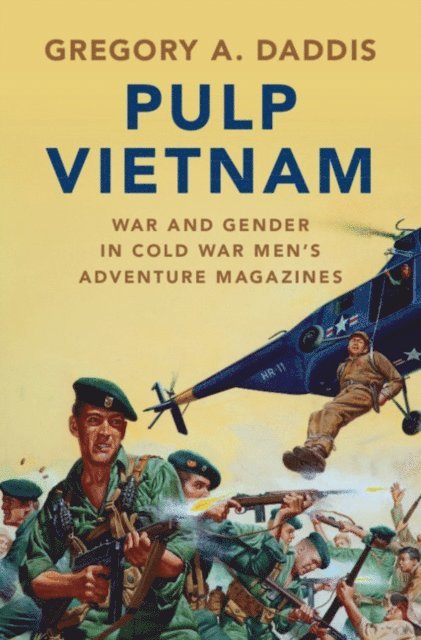
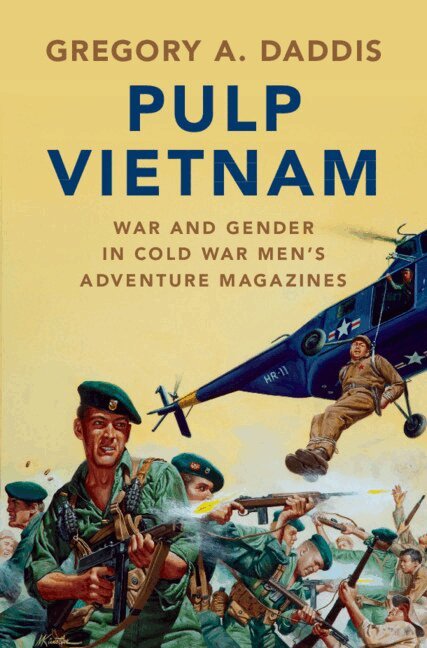
In this compelling evaluation of Cold War popular culture, Pulp Vietnam explores how men's adventure magazines helped shape the attitudes of young, working-class Americans, the same men who fought and served in the long and bitter war in Vietnam. The 'macho pulps' - boasting titles like Man's Conquest, Battle Cry, and Adventure Life - portrayed men courageously defeating their enemies in battle, while women were reduced to sexual objects, either trivialized as erotic trophies or depicted as sexualized villains using their bodies to prey on unsuspecting, innocent men. The result was the crafting and dissemination of a particular version of martial masculinity that helped establish GIs' expectations and perceptions of war in Vietnam. By examining the role that popular culture can play in normalizing wartime sexual violence and challenging readers to consider how American society should move beyond pulp conceptions of 'normal' male behavior, Daddis convincingly argues that how we construct popular tales of masculinity matters in both peace and war.
E-bok
PDF, Engelska, 2020299 kr
Läs direkt efter köp
In this compelling evaluation of Cold War popular culture, Pulp Vietnam explores how men''s adventure magazines helped shape the attitudes of young, working-class Americans, the same men who fought and served in the long and bitter war in Vietnam. The ''macho pulps'' - boasting titles like Man''s Conquest, Battle Cry, and Adventure Life - portrayed men courageously defeating their enemies in battle, while women were reduced to sexual objects, either trivialized as erotic trophies or depicted as sexualized villains using their bodies to prey on unsuspecting, innocent men. The result was the crafting and dissemination of a particular version of martial masculinity that helped establish GIs'' expectations and perceptions of war in Vietnam. By examining the role that popular culture can play in normalizing wartime sexual violence and challenging readers to consider how American society should move beyond pulp conceptions of ''normal'' male behavior, Daddis convincingly argues that how we construct popular tales of masculinity matters in both peace and war.
Häftad, Engelska, 2022
250 kr
Skickas inom 7-10 vardagar
In this compelling evaluation of Cold War popular culture, Pulp Vietnam explores how men's adventure magazines helped shape the attitudes of young, working-class Americans, the same men who fought and served in the long and bitter war in Vietnam. The 'macho pulps' - boasting titles like Man's Conquest, Battle Cry, and Adventure Life - portrayed men courageously defeating their enemies in battle, while women were reduced to sexual objects, either trivialized as erotic trophies or depicted as sexualized villains using their bodies to prey on unsuspecting, innocent men. The result was the crafting and dissemination of a particular version of martial masculinity that helped establish GIs' expectations and perceptions of war in Vietnam. By examining the role that popular culture can play in normalizing wartime sexual violence and challenging readers to consider how American society should move beyond pulp conceptions of 'normal' male behavior, Daddis convincingly argues that how we construct popular tales of masculinity matters in both peace and war.
Häftad, Engelska, 2012
611 kr
Tillfälligt slut