Gregory C. Shaffer - Böcker
Visar alla böcker från författaren Gregory C. Shaffer. Handla med fri frakt och snabb leverans.
7 produkter
7 produkter
When Cooperation Fails
The International Law and Politics of Genetically Modified Foods
Inbunden, Engelska, 2009
1 505 kr
Skickas inom 5-8 vardagar
The transatlantic dispute over genetically modified organisms (GMOs) has brought into conflict the United States and the European Union, two long-time allies and economically interdependent democracies with a long record of successful cooperation. Yet the dispute - pitting a largely acceptant US against an EU deeply suspicious of GMOs - has developed into one of the most bitter and intractable transatlantic and global conflicts, resisting efforts at negotiated resolution and resulting in a bitterly contested legal battle before the World Trade Organization. Professors Pollack and Shaffer investigate the obstacles to reconciling regulatory differences among nations through international cooperation, using the lens of the GMO dispute. The book addresses the dynamic interactions of domestic law and politics, transnational networks, international regimes, and global markets, through a theoretically grounded and empirically comprehensive analysis of the governance of GM foods and crops. They demonstrate that the deeply politicized, entrenched and path-dependent nature of the regulation of GMOs in the US and the EU has fundamentally shaped negotiations and decision-making at the international level, limiting the prospects for deliberation and providing incentives for both sides to engage in hard bargaining and to "shop" for favorable international forums. They then assess the impacts, and the limits, of international pressures on domestic US and European law, politics and business practice, which have remained strikingly resistant to change. International cooperation in areas like GMO regulation, the authors conclude, must overcome multiple obstacles, legal and political, domestic and international. Any effective response to this persistent dispute, they argue, must recognize both the obstacles to successful cooperation, and the options that remain for each side when cooperation fails.
When Cooperation Fails
The International Law and Politics of Genetically Modified Foods
Häftad, Engelska, 2009
462 kr
Skickas inom 5-8 vardagar
The transatlantic dispute over genetically modified organisms (GMOs) has brought into conflict the United States and the European Union, two long-time allies and economically interdependent democracies with a long record of successful cooperation. Yet the dispute - pitting a largely acceptant US against an EU deeply suspicious of GMOs - has developed into one of the most bitter and intractable transatlantic and global conflicts, resisting efforts at negotiated resolution and resulting in a bitterly contested legal battle before the World Trade Organization. Professors Pollack and Shaffer investigate the obstacles to reconciling regulatory differences among nations through international cooperation, through the lens of the GMO dispute. The book addresses the dynamic interactions of domestic law and politics, transnational networks, international regimes, and global markets, through a theoretically grounded and empirically comprehensive analysis of the governance of GM foods and crops. They demonstrate that the deeply politicized, entrenched and path-dependent nature of the regulation of GMOs in the US and the EU has fundamentally shaped negotiations and decision-making at the international level, limiting the prospects for deliberation and providing incentives for both sides to engage in hard bargaining and to "shop" for favorable international forums. They then assess the impacts, and the limits, of international pressures on domestic US and European law, politics and business practice, which have remained strikingly resistant to change. International cooperation in areas like GMO regulation, the authors conclude, must overcome multiple obstacles, legal and political, domestic and international. Any effective response to this persistent dispute, they argue, must recognize both the obstacles to successful cooperation, and the options that remain for each side when cooperation fails.
854 kr
Skickas inom 7-10 vardagar
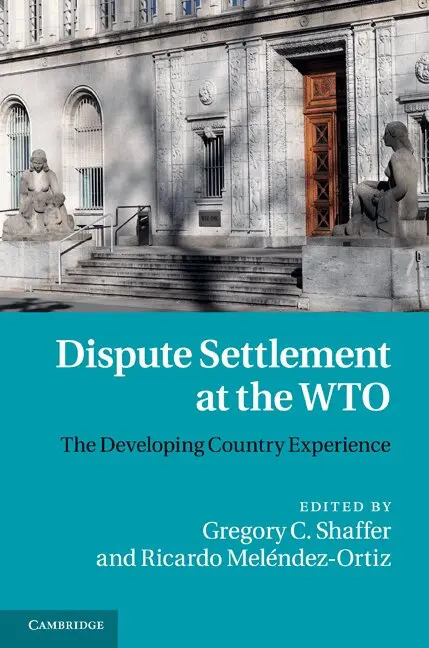
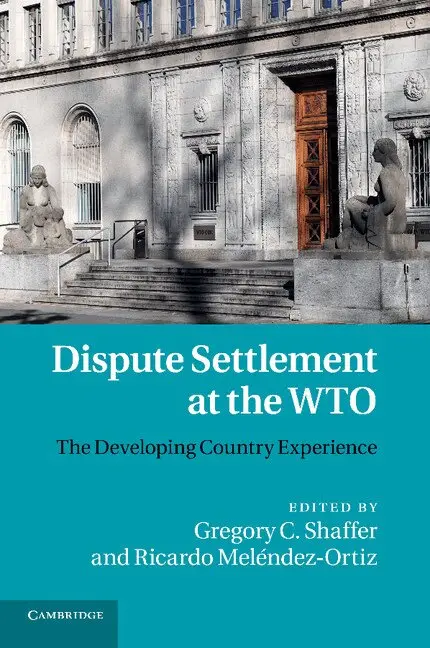
This examination of the law in action of WTO dispute settlement takes a developing-country perspective. Providing a bottom-up assessment of the challenges, experiences and strategies of individual developing countries, it assesses what these countries have done and can do to build the capacity to deploy and shape the WTO legal system, as well as the daunting challenges that they face. Chapters address developing countries of varying size and wealth, including China, India, Brazil, Argentina, Thailand, South Africa, Egypt, Kenya and Bangladesh. Building from empirical work by leading academics and practitioners, this book provides a much needed understanding of how the WTO dispute settlement system actually operates behind the scenes for developing countries.
274 kr
Skickas inom 10-15 vardagar
This book examines the growing interaction between private enterprises and public officials to challenge foreign trade barriers. Building on more than one hundred interviews with former and current trade officials and private attorneys in the United States and Europe, Gregory Shaffer calls attention to the ways in which well-organized private parties are using the World Trade Organization's legal system to advance their own commercial ambitions, and how public officials increasingly are dependent on their assistance. Shaffer assesses the historical, political, legal, economic, and cultural factors that have affected the formation of these ad hoc public-private partnerships, as well as trends in the European Union toward U.S.-style practice. He considers the implications of these public-private trade litigation networks for the effectiveness and equity of the WTO system and the stability of U.S.-E.U. relations.
1 218 kr
Skickas inom 7-10 vardagar
Law can no longer be viewed through a purely national lens. Transnational legal ordering affects the boundary of the state and the market, the allocation of power among national institutions, the role of professions and their expertise, and associational patterns that provide new normative frames. This book breaks new ground for understanding the impacts of transnational legal ordering within nation-states in today's globalized world. The book addresses the different dimensions of state change at stake and the factors that determine these impacts. It brings together leading scholars from sociology and law who study the effects of transnational legal ordering within different countries. Their case studies illustrate how transnational legal ordering interacts with national law and institutions in different regulatory areas, and cover anti-money laundering, bankruptcy, competition, education, intellectual property, health, and municipal water law and policy in different countries. The book explains the extent and limits of transnational legal ordering in today's world.
431 kr
Skickas inom 7-10 vardagar
Law can no longer be viewed through a purely national lens. Transnational legal ordering affects the boundary of the state and the market, the allocation of power among national institutions, the role of professions and their expertise, and associational patterns that provide new normative frames. This book breaks new ground for understanding the impacts of transnational legal ordering within nation-states in today's globalized world. The book addresses the different dimensions of state change at stake and the factors that determine these impacts. It brings together leading scholars from sociology and law who study the effects of transnational legal ordering within different countries. Their case studies illustrate how transnational legal ordering interacts with national law and institutions in different regulatory areas, and cover anti-money laundering, bankruptcy, competition, education, intellectual property, health, and municipal water law and policy in different countries. The book explains the extent and limits of transnational legal ordering in today's world.
576 kr
Skickas inom 7-10 vardagar
This examination of the law in action of WTO dispute settlement takes a developing-country perspective. Providing a bottom-up assessment of the challenges, experiences and strategies of individual developing countries, it assesses what these countries have done and can do to build the capacity to deploy and shape the WTO legal system, as well as the daunting challenges that they face. Chapters address developing countries of varying size and wealth, including China, India, Brazil, Argentina, Thailand, South Africa, Egypt, Kenya and Bangladesh. Building from empirical work by leading academics and practitioners, this book provides a much needed understanding of how the WTO dispute settlement system actually operates behind the scenes for developing countries.