Gregory Corso - Böcker
Visar alla böcker från författaren Gregory Corso. Handla med fri frakt och snabb leverans.
9 produkter
9 produkter
204 kr
87 kr
Skickas inom 5-8 vardagar
253 kr
Skickas inom 3-6 vardagar
Long live Man! sings the poet Gregory Corso—despite atom bombs and computers, cold wars that get hot and togetherness that isn’t, too many cars and too little love…and in these poems he celebrates the wonders (and the laughs and griefs) of being a man alive. Whether he is musing on antic glories amid the ruins of the Acropolis or watching a New York child invent games on the city’s sidewalks, Corso is there in it, putting us into it, with the magic of vision, with the senses—awakening images, that transmute reality into something more—insights that let us share his joy and echo his shout of Long live Man!
168 kr
Skickas inom 7-10 vardagar
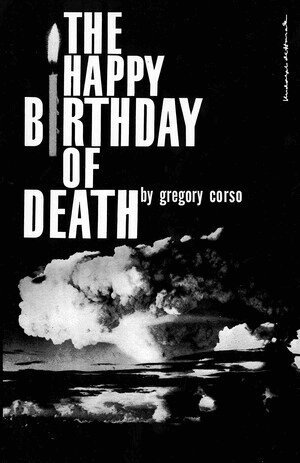
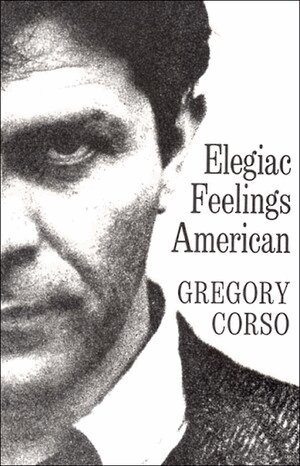
Gregory Corso's collection of poems contains works of major proportions. The title poem is a tribute to Jack Kerouac, fusing a memorial to the poet's dead friend with a bitter lament for the present state of America. The second major work, "The Geometric Poem," published previously in a limited edition by Fernanda Pivano in Italy, is a complex visionary restatement of themes from ancient Egyptian religion. Reproduced in facsimile from Corso's handwritten sheets, his marginal decorations, drawings and glyphs are included. The balance of the book is drawn from his shorter poems. Corso's reputation as a leading poet and co-founder of the Beat movement is clearly upheld in these poems. His instinct for integrated lyrical statement, his special contribution to Beat poetry, is as strong as ever; his sense of humor and sexuality have not diminished. But he has added a wider-ranging moral urgency and a new depth of humane solicitude that hold even his strangest visions close to the heart of contemporary feeling.
156 kr
Skickas inom 7-10 vardagar
It is true that he has been one of the inner circle of the 'Beats' from the first, but many admirers of his poetry feel that it belongs quite as much to other and older traditions in world literature. One of these is the revival of pure poetry whenever an “original”––be it Rimbaud or Whitman––has broken with current verse conventions to give free rein to the magic of language. Another is that ancient pre-occupation of poets––the sense of the immediacy of death. Like Villon or Dylan Thomas, Corso lives close to the mystery of death. It is, perhaps, his central theme, on which variations ranging from the terrible to the comic are sounded. But Corso is seldom macabre. A bursting vitality always carries him back to the sensations of the living, though always it is the reality behind the obvious which has caught his eye. “How I love to probe life,” Corso has written, “That’s what poetry is to me, a wondrous prober… It’s not the metre or measure of a line, a breath; not ‘law’ music; but the assembly of great eye sounds placed into an inspired measured idea.”
253 kr
Skickas inom 3-6 vardagar
Gregory Corso is still kicking “the ivory applecart of tyrannical values,” heralding the wild and keenly experienced life. Since the 1950s, when with Allen Ginsberg, Jack Kerouac, and others, Corso electrified the literary establishment with what he describes as “spontaneous subterranean poesy of the streets,” he has fathered “three fleshed angels,” traveled through Europe and Egypt, seen the demise of several fellow “Daddies of an Age,” and now finds himself over half a century old.The lush, fervent oratory of Shelley is evident in these poems of one who may be his most ardent American heir, and the author of The Happy Birthday of Death and Elegiac Feelings American never entirely forgets that a “leaky lifeboat” is the mortal’s only home. “You’d think there would be chaos/the futility of it all/Yet children are born/oft times spitting images of us/ … and the gift keeps on coming.”Corso knows death, despair, and silence only too well, and his first major collection in eleven years is permeated with a sense of crucial choices to be made. “Columbia U Poesy Reading––1975” begins with Beat history and ends with a solitary vision of God in the form of the muse: “Seated on a cold park bench/I heard her moan: ’O Gregorio Gregorio/you’ll fail me, I know/Walking away/a little old lady behind me was singing: True! True!’/’Not so!’/ rang the spirit, ’Not so!’” In a cocky, exuberant blend of high style and down-home New Yorkese, the Herald of the Autochthonic Spirit brings more auspicious tidings.
247 kr
Skickas inom 7-10 vardagar
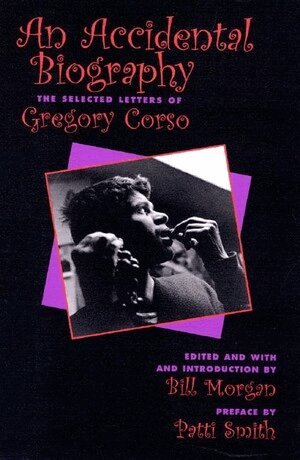
Fabulous letters from the vagabond Beat poet to his friendsamong them Allen Ginsberg and Lawrence Ferlinghetti. For all his charm and intelligence poet Gregory Corso lived a vagabond life. He never held down a regular job. He rarely stayed very long under the same roof. He spent long stretchessome as long as four or five yearsabroad. Many of his letters came from EuropeFrance, England, Germany, Italy, Sweden, Greeceas he kept in touch with his circle of friendsamong them his best friend Allen Ginsberg and a steady supporter, Lawrence Ferlinghetti. He left (or was left by) a number of girlfriends and he fathered five children along the way. He was apt to raise a bit of a ruckus at poetry readings and other public events. No one could be sure what he might do next except that he would write poetry and get it published and that it would be widely read. When the idea of a book of selected letters was first proposed, Gregory had some reservations about it. Would the book reveal too much of his private life? But then with typical hubris he said the equivalent of "let it all hang out" and "all" does hang out in An Accidental Autobiography. The book is indeed the next thing to an unplanned self-portrait and gives a lively sense of the life Gregory Corso led, marching to his own drummer and leaving in his wake such marvelous books of Beat poetry as The Happy Birthday of Death, Elegiac Feelings American, Long Live Man, and Herald of the Autochthonic Spirit. Bill Morgan, who is extremely conversant with the Beats, has done an admirable job collecting letters from libraries and various individuals across the country and then selecting and organizing them in a progression that spans Corso's lifetime. In addition to Morgan's introduction and commentary, the book includes a special foreword by poet and rock star Patti Smith as well as a number of photographs.
164 kr
Skickas inom 5-8 vardagar
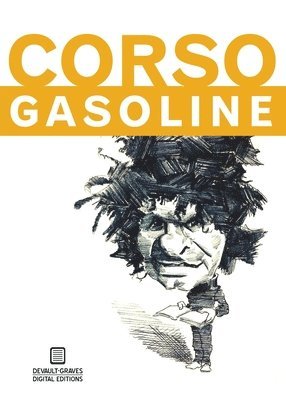
Gasoline & Vestal Lady on Brattle is volume number 8 in the City Lights Pocket Series. "Open this book as you would a box of crazy toys, take in your hands a refinement of beauty out of a destructive atmosphere. These combinations are imaginary and pure, in accordance with Corso's individual (therefore universal) desire." --Allen Ginsberg "Gregory is a gambler. He suffers reverses, like every man who takes chances. But his vitality and resilience always shine through, with a light that is more than human: The immortal light of his muse." --William S. Burroughs "...A touch young kid from the Lower East Side who rose like an angel over the rooftops and sang Italian songs as sweet as Caruso and Sinatra, but in words...Amazing and Beautiful Gregory Corso, The one and only Gregory the Herald. Read slowly and see."--Jack Kerouac "[M]ore than fifty years on from when it was first published in 1958, Gasoline (City Lights, 1958) by Beat poet Gregory Corso is a seminal book in the birth of that particular literary generation." --Paul Stubbs, 3AM Magazine Gregory Corso's first book of poetry, The Vestal Lady on Brattle, was published by City Lights Press in 1955.Born in New York City and raised in Little Italy, Gregory Corso was an American Poet and the youngest of the iconic Beat Generation writers. Homeless and family-less, Corso was arrested at 13 for petty theft and larcenry and spent some time in New York's infamous jail "The Tombs." He was arrested again, but was admitted to Bellevue Hospital Center. On the night of his 18th birthday, he was arrested again and convicted as an adult, resulting in being detained in Clinton State Prison. Gasoline is dedicated to "the Angels of Clinton Prison..." Corso met Allen Ginsberg in 1951 and Ginsberg recognized Corso as "spiritually gifted." Together they traveled from New York to San Francisco to Paris where Corso wrote some of his most famous poems Bombs and Marriage. His journey to, in, and around Paris resulted in his third book of poetry which included poems The Happy Birthday of Death, Minutes to Go, The American Express, and Long LIve Man. He returned to New York in 1958 only to discover he and the other Beat writers had become famous literary figures. Corso and Ginsberg traveled to college campuses and read their famous works Howl and Bomb and Marriage.On January 17, 2001, Corso died from prostate cancer.
171 kr
Skickas inom 5-8 vardagar