Gregory Crane – författare
Visar alla böcker från författaren Gregory Crane. Handla med fri frakt och snabb leverans.
2 produkter
2 produkter
838 kr
Skickas inom 5-8 vardagar
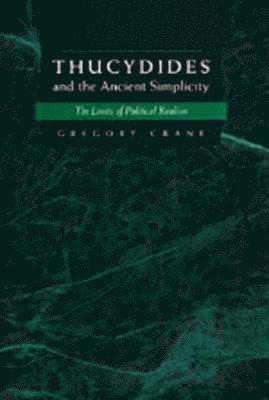
Thucydides' History of the Peloponnesian War is the earliest surviving realist text in the European tradition. As an account of the Peloponnesian War, it is famous both as an analysis of power politics and as a classic of political realism. From the opening speeches, Thucydides' Athenians emerge as a new and frightening source of power, motivated by self-interest and oblivious to the rules and shared values under which the Greeks had operated for centuries. Gregory Crane demonstrates how Thucydides' history brilliantly analyzes both the power and the dramatic weaknesses of realist thought. The tragedy of Thucydides' history emerges from the ultimate failure of the Athenian project. The new morality of the imperialists proved as conflicted as the old; history shows that their values were unstable and self-destructive. Thucydides' history ends with the recounting of an intellectual stalemate that, a century later, motivated Plato's greatest work. Thucydides and the Ancient Simplicity includes a thought-provoking discussion questioning currently held ideas of political realism and its limits.Crane's sophisticated claim for the continuing usefulness of the political examples of the classical past will appeal to anyone interested in the conflict between the exercise of political power and the preservation of human freedom and dignity.
365 kr
Kommande
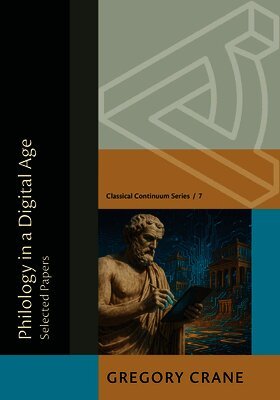
Philology in a Digital Age: Selected Papers brings together more than four decades of scholarship by Gregory Crane documenting the evolution of Classical Studies during the rise of digital technologies—including both published and previously unpublished essays ranging from early proposals in the 1980s to recent reflections on the role of AI, open data, and multilingual inclusion in the humanities. Together, these essays trace the transformation of Greco-Roman philology as it enters a new phase of engagement with digital media.Drawing on his unique perspective as a traditionally trained classicist, an early architect of the Perseus Digital Library, and a professor working across the disciplines of Classics, Digital Humanities, and Computer Science, Crane explores the profound implications of transitioning from physical to digital infrastructure, not only in terms of access and scale, but in rethinking the very practice and goals of philology. Emphasizing lived understanding over static texts or tools, he argues for a field that must continuously adapt to new technologies while remaining committed to open, inclusive scholarship. Philology in a Digital Age is both a record of a scholarly transformation and a call to envision the future of humanistic inquiry in a world of ubiquitous digitization.