Gregory Dobrov – författare
Visar alla böcker från författaren . Handla med fri frakt och snabb leverans.
2 produkter
2 produkter
E-bok
PDF, Engelska, 20001 781 kr
Läs direkt efter köp
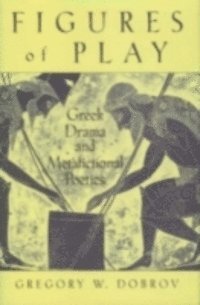
Figures of Play explores the reflexive aspects of ancient theatrical culture across genres. Fifth century tragedy and comedy sublimated the agonistic basis of Greek civilization in a way that invited the community of the polis to confront itself. In the theatre, as in the courts and assemblies, a significant subset of the Athenian public was spectator and judge of contests where important social and ideological issues were played to it by its own members. The "syntax" of drama is shown to involve specific "figures of play" through which the theatrical medium turns back on itself to study the various contexts of its production. Greek tragedy and comedy were argued to be tempermentally metafictional in that they are always involved in recycling older fictions into contemporary scenarios of immediate relevance to the polis. The phemonenology of this process is discussed under three headings, each a "figure of play": 1) surface play--momentary disruption of the theatrical pretense through word, sign, gesture; 2) mise en abyme--a mini-drama embedded in a larger framework; 3) contrafact--an extended remake in which one play is based on another. Following three chapters in which this framework is set forth and illustrated with concrete examples there are five case studies named after the protagonists of the plays in question: Aias, Pentheus, Tereus, Bellerophontes, Herakles. Hence the other meaning of "figures of play" as stage figures. In the second section of the book on "the Anatomy of Dramatic Fiction," special attention is paid to the interaction between genres. In particular, Aristophanic comedy is shown to be engaged in an intense rivalry with tragedy that underscores the different ways in which each genre deployed its powers of representation. Tragedy refashions myth: in Bakkhai, for example, it is argued that Euripides reinvented Dionysis to be specifically a theatrical god, a symbol of tragedy''s powers of representation. Comedy refashions tragedy: in a series of utopian comedies, Aristophanes re-enacts a tragic scenario in a way that revals comedy as a superior means of solving political and social crisis.
Inbunden, Engelska, 2010
4 896 kr
Skickas inom 5-8 vardagar
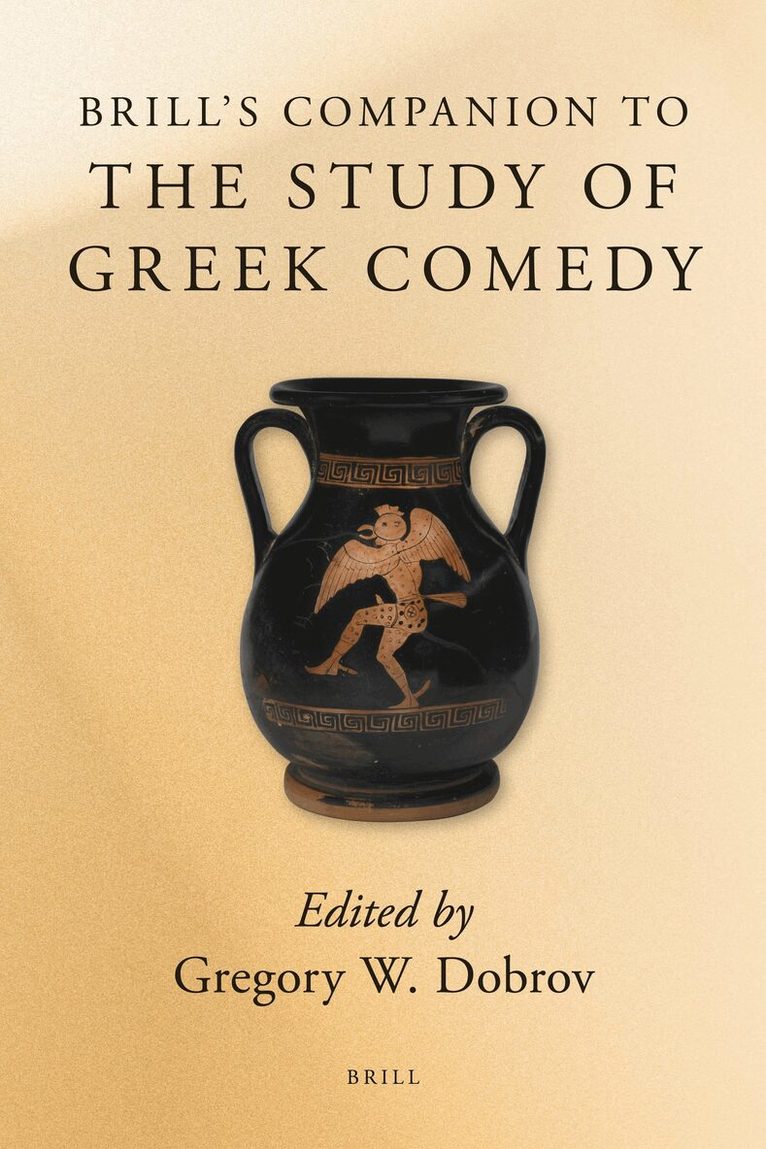
The present volume sets forth the main resources for the advancing student of Ancient Greek Comedy. An international roster of specialists contributes chapters organized into three sections: "Contexts": the intellectual, physical and socio-historical setting of Athenian Comedy; "History": the literary history of the Old, Middle and New periods; and "Elements": the text, language and formal components of the genre (including a comprehensive bibliography). This Companion is designed as a resource for understanding and interpreting the classics of Athenian Comedy from its inception through Menander. It will also be useful for navigating the principal corpora of texts, fragments and scholia that have been revised and augmented in recent years.This unique volume occupies the middle ground between short surveys and highly specialized scholarship.Contributors include: W. Geoffrey Arnott, Angus Bowie, Eric Csapo, Gregory W. Dobrov, J. Richard Green, Stanley Ireland, Heinz-Günther Nesselrath, S. Douglas Olson, Alan H. Sommerstein, Ian Storey, Ralph M. Rosen, Andreas Willi, Bernhard Zimmermann.