Gregory Ioffe – författare
Visar alla böcker från författaren . Handla med fri frakt och snabb leverans.
7 produkter
7 produkter
Inbunden, Engelska, 2019
2 402 kr
Skickas inom 10-15 vardagar
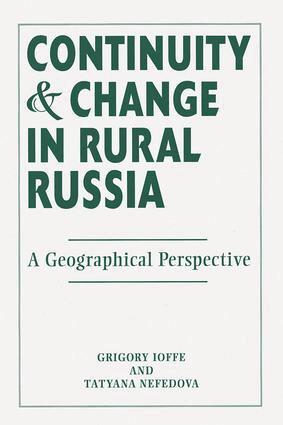
Contrary to the viewpoint of many Western scholars, the authors of this penetrating analysis argue that private farming is not a viable option in Russia's future. Instead, a convergence of Soviet-style subsidiary farming with traditional and reorganized collective farms is the most plausible path of evolution in most rural areas.Grigory Ioffe and Tatyana Nefedova arrive at this conclusion by a careful examination of ongoing reform efforts in Russian agriculture against the backdrop of European and Russian agrarian history and rural spatial development since the late nineteenth century. The comparisons at the national level are then filled in with consideration of a number of Russian provinces (oblasti) and regions (raiony). Their research reveals the substantial negative impact of rural depopulation on the Russian agrarian economy. Seventy original maps richly complement and support the narrative.
E-bok
PDF, Engelska, 2018858 kr
Läs direkt efter köp
Contrary to the viewpoint of many Western scholars, the authors of this penetrating analysis argue that private farming is not a viable option in Russia''s future. Instead, a convergence of Soviet-style subsidiary farming with traditional and reorganized collective farms is the most plausible path of evolution in most rural areas.Grigory Ioffe and Tatyana Nefedova arrive at this conclusion by a careful examination of ongoing reform efforts in Russian agriculture against the backdrop of European and Russian agrarian history and rural spatial development since the late nineteenth century. The comparisons at the national level are then filled in with consideration of a number of Russian provinces (oblasti) and regions (raiony). Their research reveals the substantial negative impact of rural depopulation on the Russian agrarian economy. Seventy original maps richly complement and support the narrative.
E-bok
PDF, Engelska, 20182 186 kr
Läs direkt efter köp
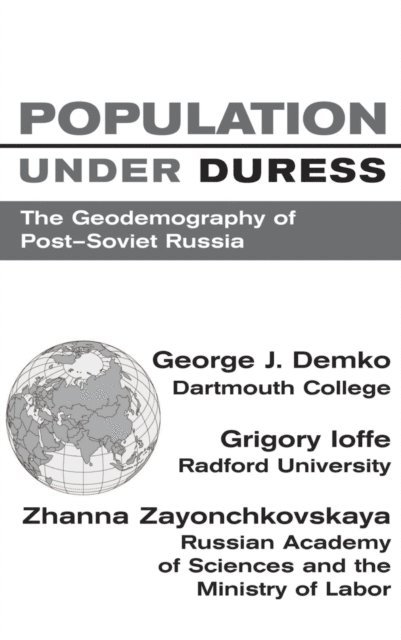
The demographic history of twentieth-century Russia has been marked by a series of tragedies. Calamitous wars, revolutions, civil strife, and political murders have resulted in unparalleled mortality rates, depressed fertility rates, and sadly unprecedented demographic patterns of all types. This volume explores the most recent problems afflicting the Russian population in the post?Cold War era.The demise of the Soviet Union has brought new hardships?the collapse of the health-care system, internal strife, and economic disruptions?to the people and has deeply affected demographic processes throughout Russia. The contributors explore key trends, from increasing mortality rates and decreasing birth rates to refugee flows into Russia and the ?brain drain? out of Russia. Problems of aging, increased infant mortality, and urban and rural population change are discussed in detail for each major region.Rarely has there been a better opportunity to examine the spatial, economic, psychological, and political factors contributing to demographic stress in a current setting. These demographic processes are not only unique as a domestic social phenomenon but are also immensely significant in their global impact, influencing international migration and foreign aid.
E-bok
Engelska, 2018858 kr
Läs direkt efter köp
Contrary to the viewpoint of many Western scholars, the authors of this penetrating analysis argue that private farming is not a viable option in Russia''s future. Instead, a convergence of Soviet-style subsidiary farming with traditional and reorganized collective farms is the most plausible path of evolution in most rural areas.Grigory Ioffe and Tatyana Nefedova arrive at this conclusion by a careful examination of ongoing reform efforts in Russian agriculture against the backdrop of European and Russian agrarian history and rural spatial development since the late nineteenth century. The comparisons at the national level are then filled in with consideration of a number of Russian provinces (oblasti) and regions (raiony). Their research reveals the substantial negative impact of rural depopulation on the Russian agrarian economy. Seventy original maps richly complement and support the narrative.
E-bok
Engelska, 20182 180 kr
Läs direkt efter köp
The demographic history of twentieth-century Russia has been marked by a series of tragedies. Calamitous wars, revolutions, civil strife, and political murders have resulted in unparalleled mortality rates, depressed fertility rates, and sadly unprecedented demographic patterns of all types. This volume explores the most recent problems afflicting the Russian population in the post?Cold War era.The demise of the Soviet Union has brought new hardships?the collapse of the health-care system, internal strife, and economic disruptions?to the people and has deeply affected demographic processes throughout Russia. The contributors explore key trends, from increasing mortality rates and decreasing birth rates to refugee flows into Russia and the ?brain drain? out of Russia. Problems of aging, increased infant mortality, and urban and rural population change are discussed in detail for each major region.Rarely has there been a better opportunity to examine the spatial, economic, psychological, and political factors contributing to demographic stress in a current setting. These demographic processes are not only unique as a domestic social phenomenon but are also immensely significant in their global impact, influencing international migration and foreign aid.
Häftad, Engelska, 1998
738 kr
Skickas inom 10-15 vardagar
Contrary to the viewpoint of many Western scholars, the authors of this penetrating analysis argue that private farming is not a viable option in Russia's future. Instead, a convergence of Soviet-style subsidiary farming with traditional and reorganized collective farms is the most plausible path of evolution in most rural areas.Grigory Ioffe and Tatyana Nefedova arrive at this conclusion by a careful examination of ongoing reform efforts in Russian agriculture against the backdrop of European and Russian agrarian history and rural spatial development since the late nineteenth century. The comparisons at the national level are then filled in with consideration of a number of Russian provinces (oblasti) and regions (raiony). Their research reveals the substantial negative impact of rural depopulation on the Russian agrarian economy. Seventy original maps richly complement and support the narrative.
Inbunden, Engelska, 1999
2 040 kr
Skickas inom 10-15 vardagar
The demographic history of twentieth-century Russia has been marked by a series of tragedies. Calamitous wars, revolutions, civil strife, and political murders have resulted in unparalleled mortality rates, depressed fertility rates, and sadly unprecedented demographic patterns of all types. This volume explores the most recent problems afflicting the Russian population in the post?Cold War era.The demise of the Soviet Union has brought new hardships?the collapse of the health-care system, internal strife, and economic disruptions?to the people and has deeply affected demographic processes throughout Russia. The contributors explore key trends, from increasing mortality rates and decreasing birth rates to refugee flows into Russia and the ?brain drain? out of Russia. Problems of aging, increased infant mortality, and urban and rural population change are discussed in detail for each major region.Rarely has there been a better opportunity to examine the spatial, economic, psychological, and political factors contributing to demographic stress in a current setting. These demographic processes are not only unique as a domestic social phenomenon but are also immensely significant in their global impact, influencing international migration and foreign aid.