Gregory L. Possehl – Författare
Visar alla böcker från författaren Gregory L. Possehl. Handla med fri frakt och snabb leverans.
4 produkter
4 produkter
2 183 kr
Skickas inom 3-6 vardagar
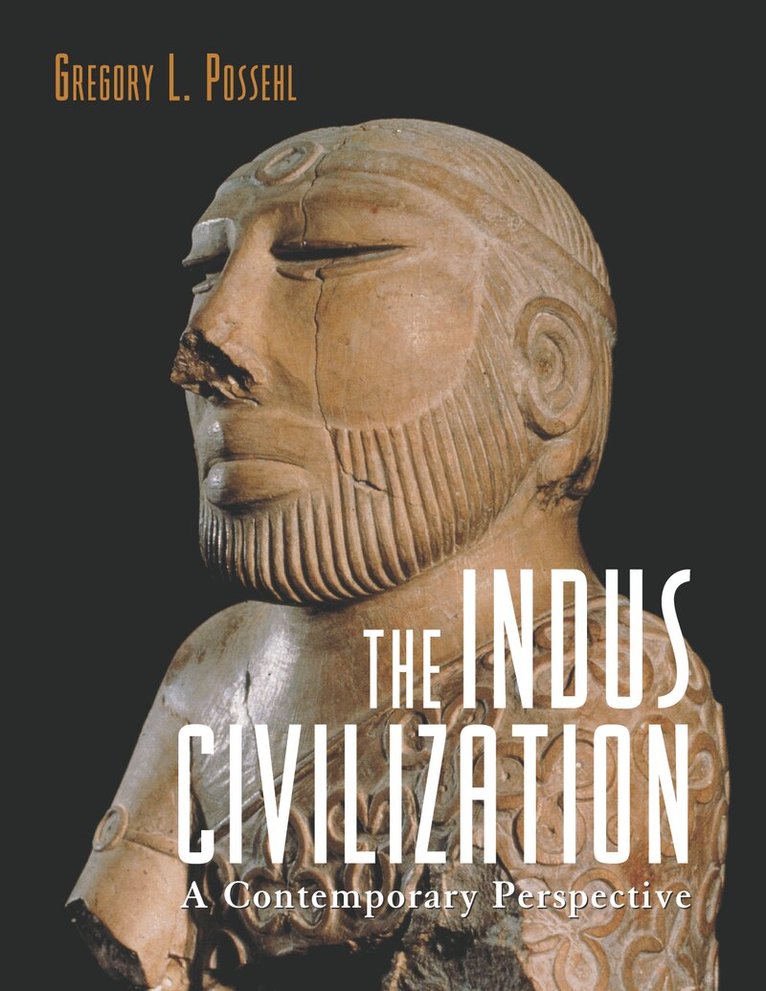
The Indus Civilization of India and Pakistan was contemporary with, and equally complex as the better-known cultures of Mesopotamia, Egypt and China. The dean of North American Indus scholars, Gregory Possehl, attempts here to marshal the state of knowledge about this fascinating culture in a readable synthesis. He traces the rise and fall of this civilization, examines the economic, architectural, artistic, religious, and intellectual components of this culture, describes its most famous sites, and shows the relationships between the Indus Civilization and the other cultures of its time. As a sourcebook for scholars, a textbook for archaeology students, and an informative volume for the lay reader, The Indus Civilization will be an exciting and informative read.
813 kr
Skickas inom 5-8 vardagar
The Indus Civilization of India and Pakistan was contemporary with, and equally complex as the better-known cultures of Mesopotamia, Egypt and China. The dean of North American Indus scholars, Gregory Possehl, attempts here to marshal the state of knowledge about this fascinating culture in a readable synthesis. He traces the rise and fall of this civilization, examines the economic, architectural, artistic, religious, and intellectual components of this culture, describes its most famous sites, and shows the relationships between the Indus Civilization and the other cultures of its time. As a sourcebook for scholars, a textbook for archaeology students, and an informative volume for the lay reader, The Indus Civilization will be an exciting and informative read.
Bronze Age Towers at Bat, Sultanate of Oman – Research by the Bat Archaeological Project, 27–12
Research by the Bat Archaeological Project, 27-12
Inbunden, Engelska, 2017
1 373 kr
Skickas inom 5-8 vardagar
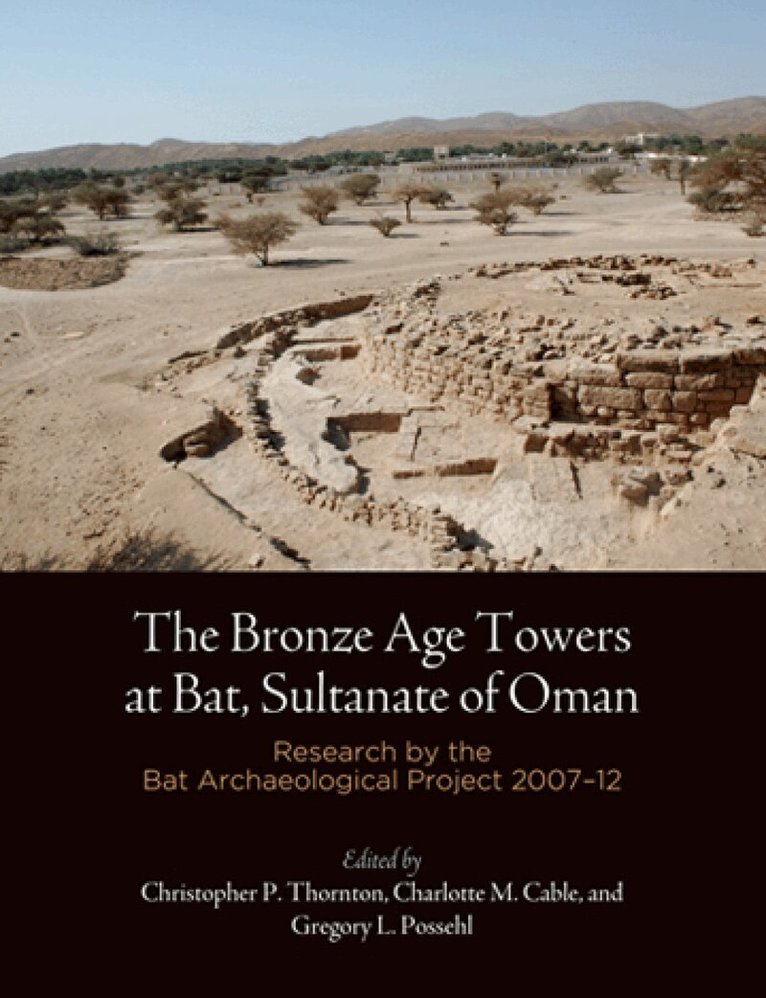
In the third millennium B.C.E., the Oman Peninsula was the site of an important kingdom known in Akkadian texts as "Magan," which traded extensively with the Indus Civilization, southern Iran, the Persian Gulf states, and southern Mesopotamia. Excavations have been carried out in this region since the 1970s, although the majority of studies have focused on mortuary monuments at the expense of settlement archaeology. While domestic structures of the Bronze Age have been found and are the focus of current research at Bat, most settlements dating from the third millennium B.C.E. in Oman and the U.A.E. are defined by the presence of large, circular monuments made of mudbrick or stone that are traditionally called "towers." Whether these so-called towers are defensive, agricultural, political, or ritual structures has long been debated, but very few comprehensive studies of these monuments have been attempted. Between 2007 and 2012, the University of Pennsylvania Museum of Archaeology and Anthropology conducted excavations at the UNESCO World Heritage Site of Bat in the Sultanate of Oman under the direction of the late Gregory L. Possehl. The focus of these years was on the monumental stone towers of the third millennium B.C.E., looking at the when, how, and why of their construction through large-scale excavation, GIS-aided survey, and the application of radiocarbon dates. This has been the most comprehensive study of nonmortuary Bronze Age monuments ever conducted on the Oman Peninsula, and the results provide new insight into the formation and function of these impressive structures that surely formed the social and political nexus of Magan's kingdom.
Excavations at Gilund – The Artifacts and Other Studies
The Artifacts and Other Studies
Inbunden, Engelska, 2014
1 524 kr
Skickas inom 5-8 vardagar
Located in the Mewar region of Rajasthan, India, Gilund is the largest known site of the Ahar-Banas Cultural Complex, a large agropastoral group that was contemporaneous with and flanked by the Indus Civilization. Occupied during the Chalcolithic and Early Historic periods, the ancient site of Gilund holds significant clues to understanding third millennium B.C.E cultural interactions in South Asia and beyond. Excavations at Gilund provides a full analysis of the artifacts recovered during the five-year excavation project conducted by the University of Pennsylvania and Deccan College. The excavators investigated the regional development of early farming villages, their shifting subsistence practices, their economy and trade with other cultures, and the traces of Gilund's transition from the Chalcolithic to the Iron Age. Their findings shed light on the extent and nature of early trade networks, the rise of early complex societies, and the symbolic and ideological beliefs of this region. This volume synthesizes new discoveries with previous findings and considers Gilund in a broader regional and global context, making it the most comprehensive presentation of archaeological data for this region to date. Contributors: Marta Ameri, Shweta Sinha Deshpande, Debasri Dasgupta Ghosh, Lorena Giorgio, Praveena Gullapalli, Julie Hanlon, Peter Johansen, Matthew Landt, Gregory L. Possehl, Teresa P. Raczek, Vasant Shinde.