
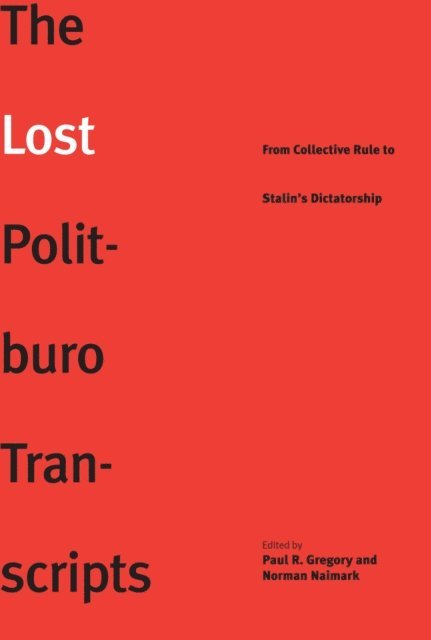
In this groundbreaking book, prominent Western and Russian scholars examine the “lost” transcripts of the Soviet Politburo, a set of verbatim accounts of meetings that took place from the 1920s to 1938 but remained hidden in secret archives until the late 1990s. Never intended for publication or wide distribution, these records (known as stenograms in Russia) reveal the actual process of decision making at the highest levels of the Soviet communist party. The transcripts also provide new, first-hand records of the rise of Stalin’s dictatorship. The contributors to the volume explore the power struggles among the Politburo members, their methods of discourse and propaganda, and their economic policies. Taken as a whole, the essays shed light on early Soviet history and on the individuals who supported or opposed Stalin’s consolidation of power.
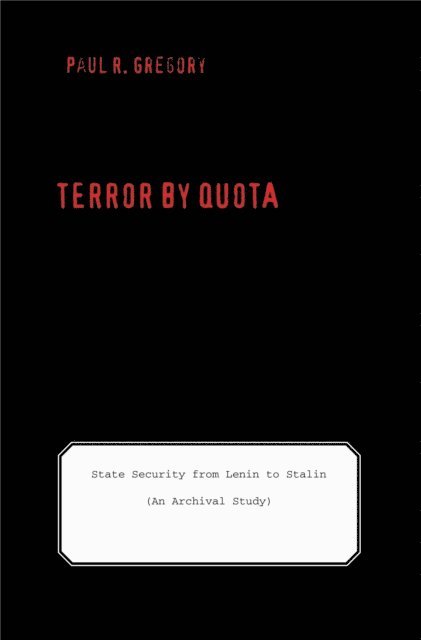
This original analysis of the workings of Soviet state security organs under Lenin and Stalin addresses a series of questions that have long resisted satisfactory answers. Why did political repression affect so many people, most of them ordinary citizens? Why did repression come in waves or cycles? Why were economic and petty crimes regarded as political crimes? What was the reason for relying on extra-judicial tribunals? And what motivated the extreme harshness of punishments, including the widespread use of the death penalty? Through an approach that synthesizes history and economics, Paul Gregory develops systematic explanations for the way terror was applied, how terror agents were recruited, how they carried out their jobs, and how they were motivated. The book draws on extensive, recently opened archives of the Gulag administration, the Politburo, and state security agencies themselves to illuminate in new ways terror and repression in the Soviet Union as well as dictatorships in other times and places.
In this groundbreaking book, prominent Western and Russian scholars examine the “lost” transcripts of the Soviet Politburo, a set of verbatim accounts of meetings that took place from the 1920s to 1938 but remained hidden in secret archives until the late 1990s. Never intended for publication or wide distribution, these records (known as stenograms in Russia) reveal the actual process of decision making at the highest levels of the Soviet communist party. The transcripts also provide new, first-hand records of the rise of Stalin’s dictatorship. The contributors to the volume explore the power struggles among the Politburo members, their methods of discourse and propaganda, and their economic policies. Taken as a whole, the essays shed light on early Soviet history and on the individuals who supported or opposed Stalin’s consolidation of power.
This original analysis of the workings of Soviet state security organs under Lenin and Stalin addresses a series of questions that have long resisted satisfactory answers. Why did political repression affect so many people, most of them ordinary citizens? Why did repression come in waves or cycles? Why were economic and petty crimes regarded as political crimes? What was the reason for relying on extra-judicial tribunals? And what motivated the extreme harshness of punishments, including the widespread use of the death penalty? Through an approach that synthesizes history and economics, Paul Gregory develops systematic explanations for the way terror was applied, how terror agents were recruited, how they carried out their jobs, and how they were motivated. The book draws on extensive, recently opened archives of the Gulag administration, the Politburo, and state security agencies themselves to illuminate in new ways terror and repression in the Soviet Union as well as dictatorships in other times and places.