Gréte Dalmi – författare
Visar alla böcker från författaren Gréte Dalmi. Handla med fri frakt och snabb leverans.
10 produkter
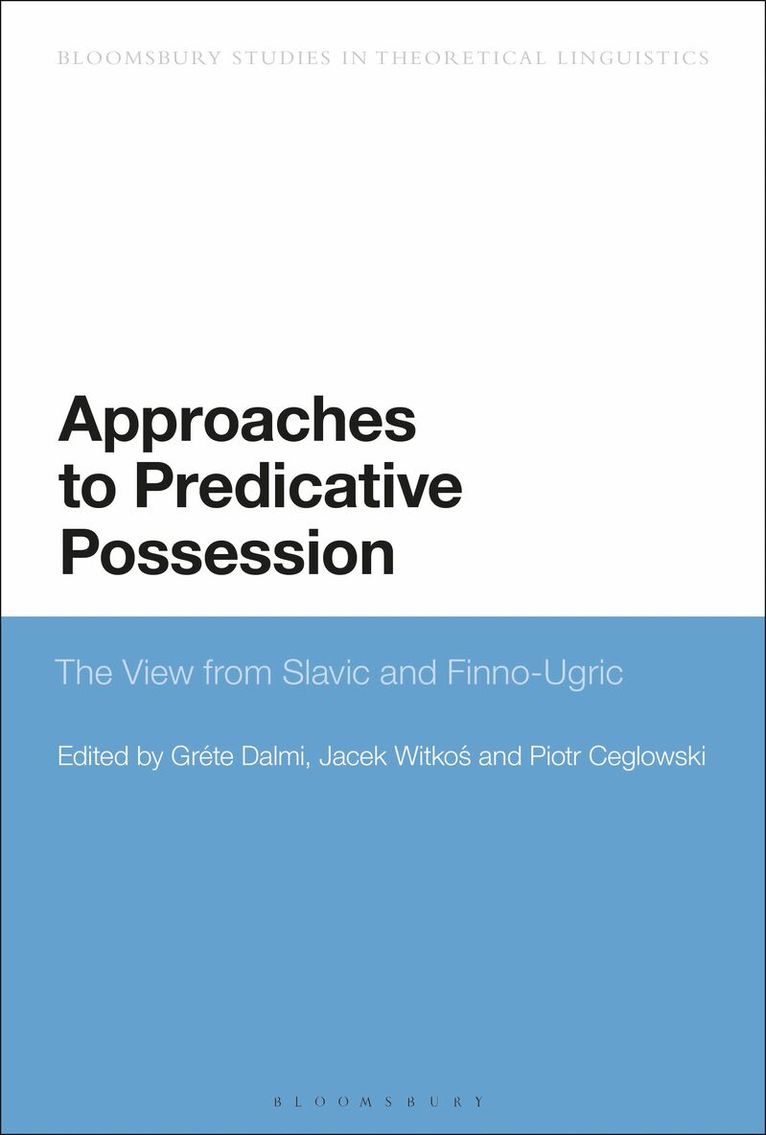
Approaches to Predicative Possession
The View from Slavic and Finno-Ugric
Av Gréte Dalmi, Jacek Witkos m. fl.
Inbunden, 2020
1898 kr
Lägg i varukorg
This book discusses existential and possessive constructions in two important, yet under-studied, language families, Slavic and Finno-Ugric. Using data from the Slavic languages of Polish, Belarusian and Russian, and the Finno-Ugric languages of Finnish, Hungarian, Meadow Mari, Komi-Permiyak and …
Approaches to Predicative Possession
The View from Slavic and Finno-Ugric
Av Gréte Dalmi, Jacek Witkos m. fl.
E-bok, 2020
518 kr
Lägg i varukorg
This book discusses existential and possessive constructions in two important, yet under-studied, language families, Slavic and Finno-Ugric. Using data from the Slavic languages of Polish, Belarusian and Russian, and the Finno-Ugric languages of Finnish, Hungarian, Meadow Mari, Komi-Permiyak and …
Approaches to Predicative Possession
The View from Slavic and Finno-Ugric
Av Gréte Dalmi, Jacek Witkos m. fl.
E-bok, 2020
518 kr
Lägg i varukorg
This book discusses existential and possessive constructions in two important, yet under-studied, language families, Slavic and Finno-Ugric. Using data from the Slavic languages of Polish, Belarusian and Russian, and the Finno-Ugric languages of Finnish, Hungarian, Meadow Mari, Komi-Permiyak and …
Approaches to Predicative Possession
The View from Slavic and Finno-Ugric
Av Gréte Dalmi, Jacek Witkos m. fl.
Häftad, 2021
487 kr
Lägg i varukorg
This book discusses existential and possessive constructions in two important, yet under-studied, language families, Slavic and Finno-Ugric. Using data from the Slavic languages of Polish, Belarusian and Russian, and the Finno-Ugric languages of Finnish, Hungarian, Meadow Mari, Komi-Permiyak and …
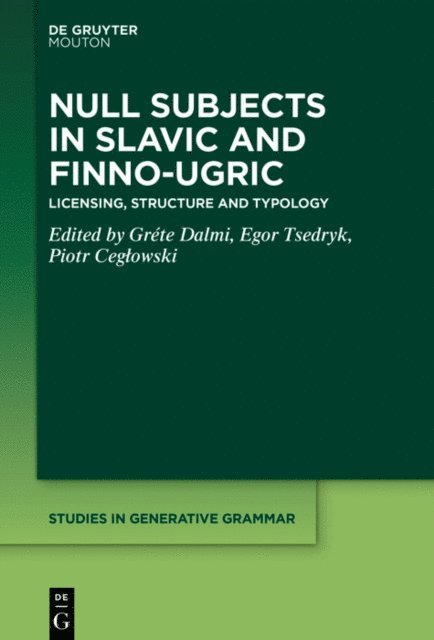
Null Subjects in Slavic and Finno-Ugric
Licensing, Structure and Typology
Av Piotr Ceglowski, Egor Tsedryk m. fl.
E-bok, 2022
1600 kr
Lägg i varukorg
Even though null subjects have been extensively studied in the past four decades, there is a growing interest in partial null subject languages (e.g. Finnish) and a subtler classification of null subject phenomena overall. This volume aims at contributing to this trend, focusing on Slavic and …
Null Subjects in Slavic and Finno-Ugric
Licensing, Structure and Typology
Av Piotr Ceglowski, Egor Tsedryk m. fl.
E-bok, 2022
1617 kr
Lägg i varukorg
Even though null subjects have been extensively studied in the past four decades, there is a growing interest in partial null subject languages (e.g. Finnish) and a subtler classification of null subject phenomena overall. This volume aims at contributing to this trend, focusing on Slavic and …
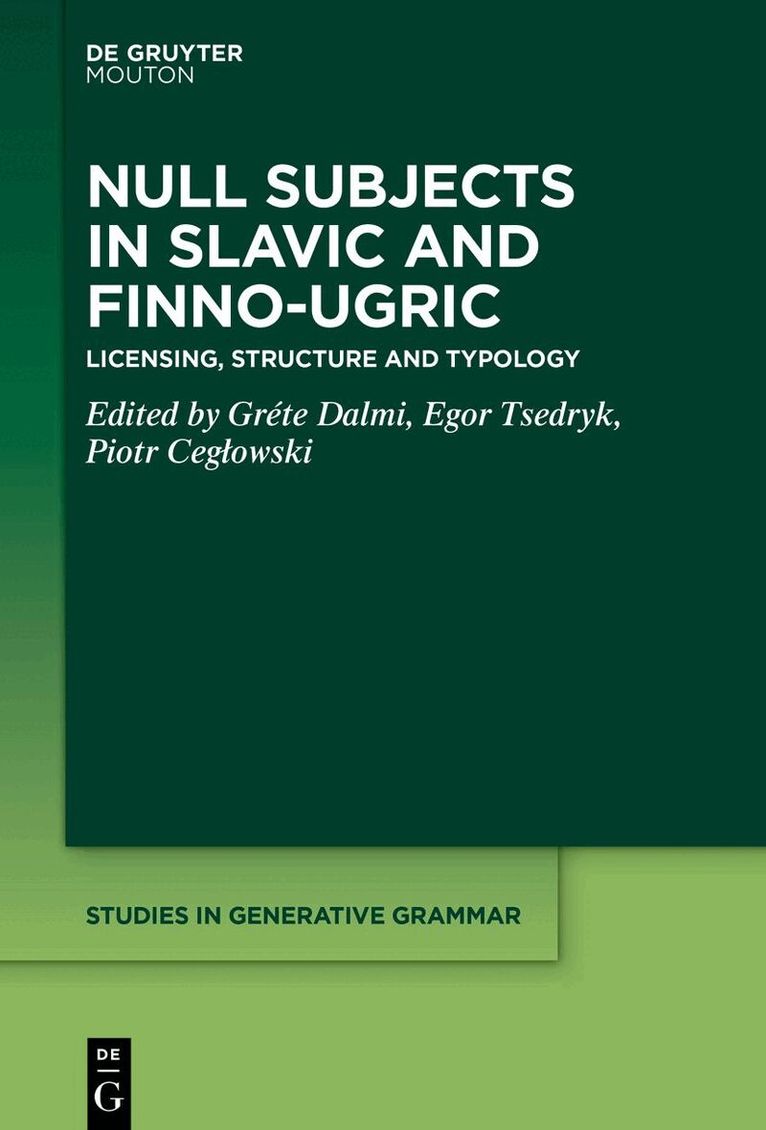
Null Subjects in Slavic and Finno-Ugric
Licensing, Structure and Typology
Av Gréte Dalmi, Egor Tsedryk m. fl.
Inbunden, 2022
1877 kr
Lägg i varukorg
Even though null subjects have been extensively studied in the past four decades, there is a growing interest in partial null subject languages (e.g. Finnish) and a subtler classification of null subject phenomena overall. This volume aims at contributing to this trend, focusing on Slavic and …
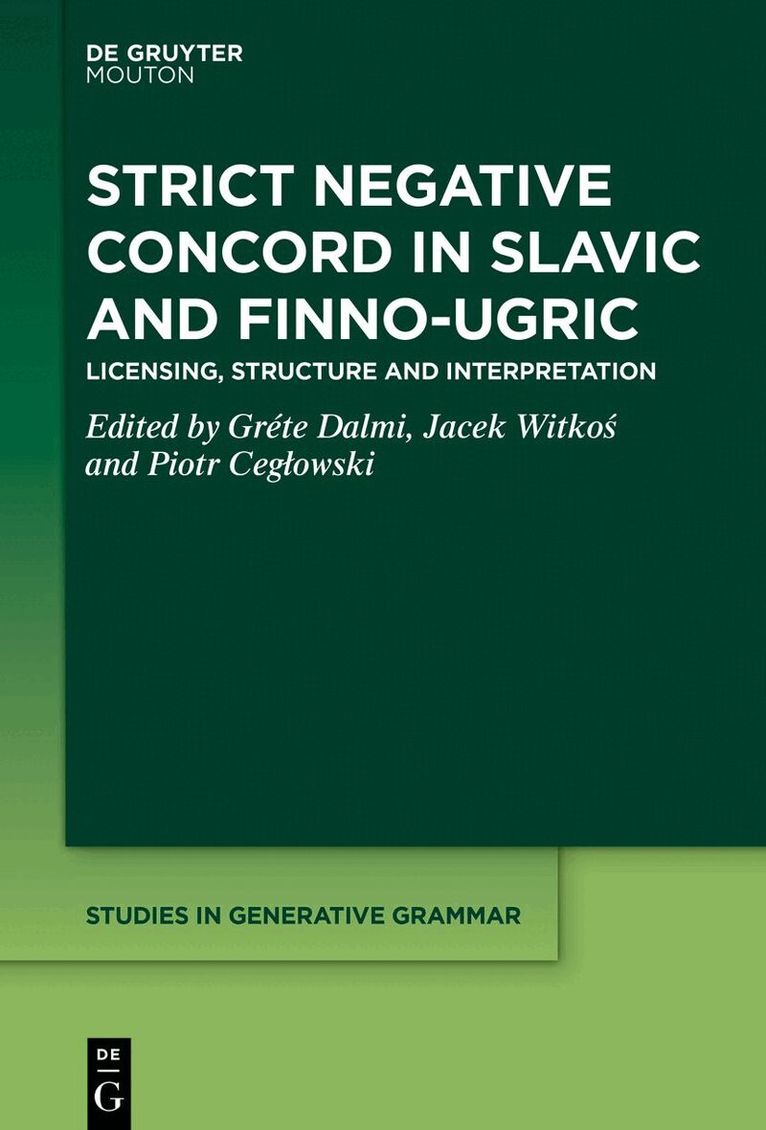
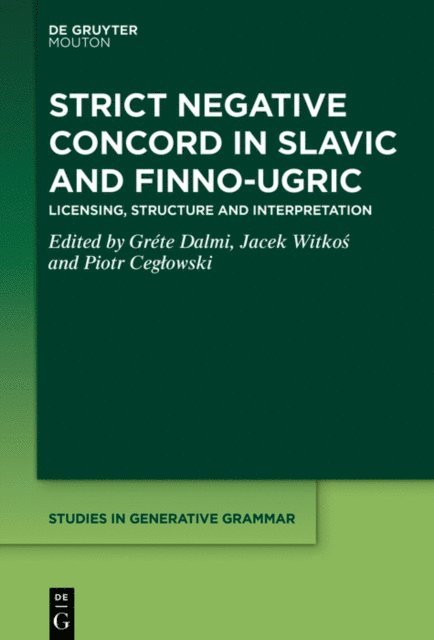
Strict Negative Concord in Slavic and Finno-Ugric
Licensing, Structure and Interpretation
Av Gréte Dalmi, Jacek Witkoś m. fl.
Inbunden, 2024
2767 kr
Lägg i varukorg
Expressing negation is a universal property of all human languages. There is considerable variation, however, in the exact ways negation materializes cross-linguistically. Strict Negative Concord differs both from the Negative Polarity Item strategy and the Asymmetric Negative Concord strategy in …
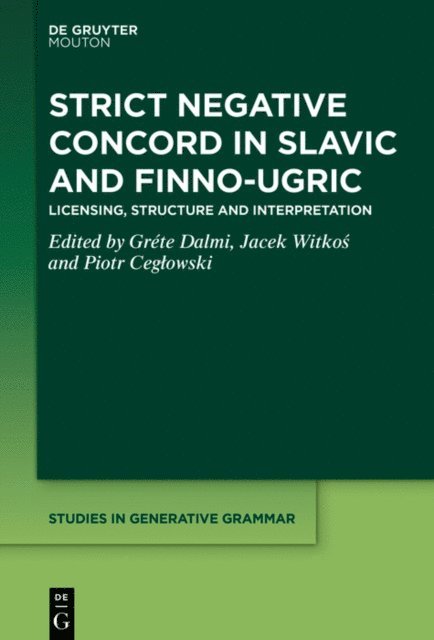
Strict Negative Concord in Slavic and Finno-Ugric
Licensing, Structure and Interpretation
Av Piotr Ceglowski, Jacek Witkos m. fl.
E-bok, 2024
2056 kr
Lägg i varukorg
Expressing negation is a universal property of all human languages. There is considerable variation, however, in the exact ways negation materializes cross-linguistically. Strict Negative Concord differs both from the Negative Polarity Item strategy and the Asymmetric Negative Concord strategy in …
Strict Negative Concord in Slavic and Finno-Ugric
Licensing, Structure and Interpretation
Av Piotr Ceglowski, Jacek Witkos m. fl.
E-bok, 2024
2056 kr
Lägg i varukorg
Expressing negation is a universal property of all human languages. There is considerable variation, however, in the exact ways negation materializes cross-linguistically. Strict Negative Concord differs both from the Negative Polarity Item strategy and the Asymmetric Negative Concord strategy in …