G.s. Fraser – författare
Visar alla böcker från författaren G.s. Fraser. Handla med fri frakt och snabb leverans.
8 produkter
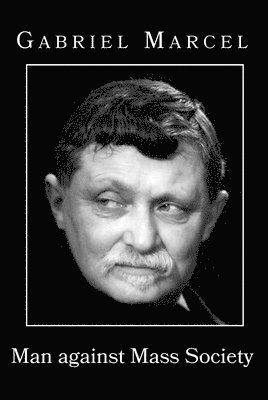
Man against Mass Society
Av Gabriel Marcel, G.s. Fraser m. fl.
Häftad, 2008
5,0 utav 5 stjärnor. Totalt antal röster: (1)
152 kr
Lägg i varukorg
The central theme of this important book is that we are paying the price of an arrogance that refuses to recognize mystery. The author invites the reader to enter into the argument that he holds with himself on a great number of problems. Written in the early 1950s, Marcel’s discussion of these …
Mystery Of Being Vol 1
Reflection & Mystery
Av Gabriel Marcel, G.S. Fraser
Häftad, 2001
247 kr
Lägg i varukorg
The Mystery of Being contains the most systematic exposition of the philosophical thought of Gabriel Marcel, a convert to Catholicism and the most distinguished twentieth-century exponent of Christian existentialism. Its two volumes are the Gifford lectures which Marcel delivered in Aberdeen, …
Alexander Pope
Av G.S. Fraser
E-bok, 2022
677 kr
Lägg i varukorg
First published in 1978, Alexander Pope is an introduction to Pope’s life and work, which sets the poet solidly in his age and relates the liveliness and variety of his poetry to the strange combination of chronic invalidism and a sociable disposition which marked his life. G. S. Fraser argues …
Alexander Pope
Av G.S. Fraser
E-bok, 2022
625 kr
Lägg i varukorg
First published in 1978, Alexander Pope is an introduction to Pope’s life and work, which sets the poet solidly in his age and relates the liveliness and variety of his poetry to the strange combination of chronic invalidism and a sociable disposition which marked his life. G. S. Fraser argues …
Alexander Pope
Av G.S. Fraser
Inbunden, 2022
1748 kr
Lägg i varukorg
First published in 1978, Alexander Pope is an introduction to Pope’s life and work, which sets the poet solidly in his age and relates the liveliness and variety of his poetry to the strange combination of chronic invalidism and a sociable disposition which marked his life. G. S. Fraser argues that …
Alexander Pope
Av G.S. Fraser
Häftad, 2024
577 kr
Lägg i varukorg
First published in 1978, Alexander Pope is an introduction to Pope’s life and work, which sets the poet solidly in his age and relates the liveliness and variety of his poetry to the strange combination of chronic invalidism and a sociable disposition which marked his life. G. S. Fraser argues that …
Keats: Odes
Av G.S. Fraser
E-bok, 1971
610 kr
Lägg i varukorg
This is a Bloomsbury Academic title. For our full Academic Catalogue, please visit https://www.bloomsbury.com/uk/academic/