Guadalupe Paz - Böcker
Visar alla böcker från författaren Guadalupe Paz. Handla med fri frakt och snabb leverans.
2 produkter
2 produkter
428 kr
Skickas inom 7-10 vardagar
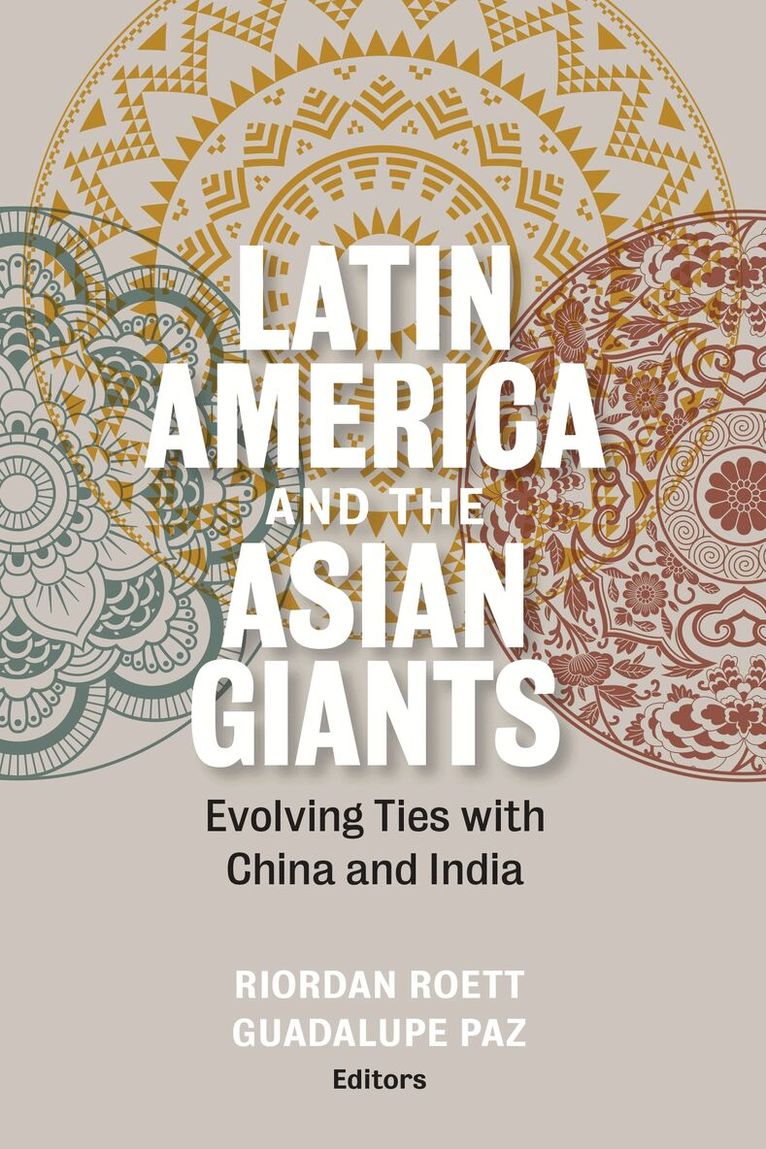
How an evolving relationship with China and India is changing Latin America's political and economic dynamics.In the years since China has adopted a ""going global"" strategy to promote its overseas investment, expand export markets, and gain much-needed access to natural resources abroad, SinoLatin American relations have both deepened and broadened at an unexpectedly rapid pace. The main driver behind this sea change in bilateral relations has been economic complementarity, with resource-rich countries in Latin America exporting primary goods to the Asian giants' growing market and China exporting manufactured goods back into the region. In recent years, SinoLatin American relations have matured considerably, becoming far more nuanced and multifaceted than ever before.India is a relatively new player in the region, but has slowly strengthened its ties. As one of Asia's largest markets, it offers interesting parallels to the Chinese case. Will IndoLatin American ties follow a similar path? The main areas of growth include trade and investment, mining, energy, information technology, motor vehicle production, and pharmaceuticals. To what extent these changing dynamics will redefine Latin America's relations with India is a question of increasing relevance for policymakers.This volume offers a review of key cross-regional trends and critical policy issues involving the changing relationship between these two Asian giants and Latin America. Selected country case studiesArgentina, Brazil, Chile, and Mexicoprovide a more in-depth analysisof the implications of China's and India's evolving interaction with the region.
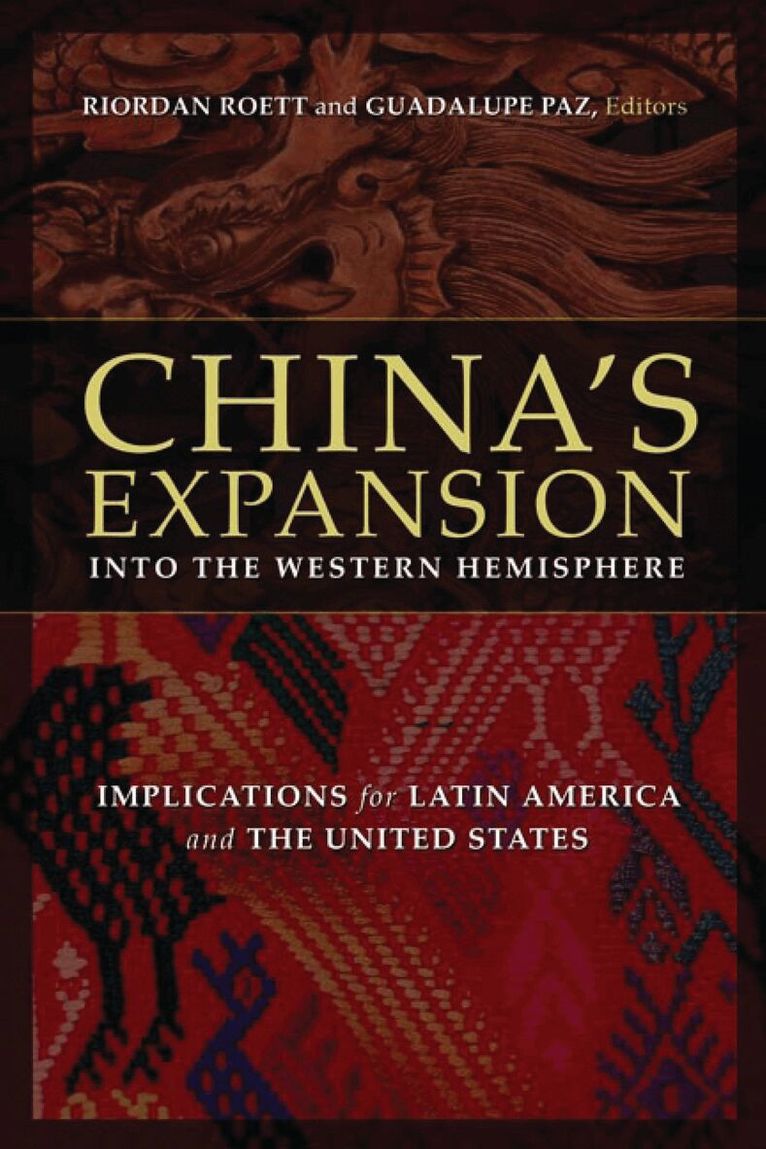
China's Expansion into the Western Hemisphere
Implications for Latin America and the United States
Häftad, Engelska, 2008
354 kr
Skickas inom 10-15 vardagar
With President Hu Jintao's November 2004 visit to Latin America, China signaled to the rest of the world its growing interest in the region. Many observers welcome this development, highlighting the benefits of increased trade and investment, as well as diplomatic cooperation, for both sides. But other analysts have raised concerns about the relationship's impact on Latin American competitiveness and its implications for U.S. influence in Washington's traditional backyard. In C hina's Expansion into the Western Hemisphere, experts from Latin America, China, and the United States, as well as Europe, analyze the history of this triangular relationship and the motivations of each of the major players. Several chapters focus on China's growing economic ties to the region, including Latin America's role in China's search for energy resources worldwide. Other essays highlight the geopolitical implications of Chinese hemispheric policy and set recent developments in the broader context of China's role in the developing world. Together, they provide an absorbing look at a particularly sensitive aspect of China's emergence as a world power. Contributors include Christopher Alden (London School of Economics), Robert Devlin (ECLAC), Francisco González (Johns HopkinsSAIS), Monica Hirst (Torcuato Di Tella University), Josh Kurlantzick (Carnegie Endowment for International Peace), Xiang Lanxin (Graduate Institute of International Studies, Geneva), Luisa Palacios (Barclays), Jiang Shixue (Chinese Academy of Social Sciences), Barbara Stallings (Brown University), Juan Tokatlián (San Andrés University), and Zheng Kai (Fudan University).