
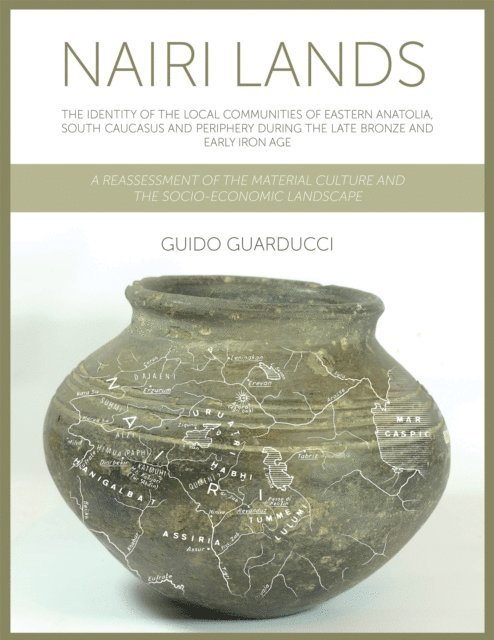
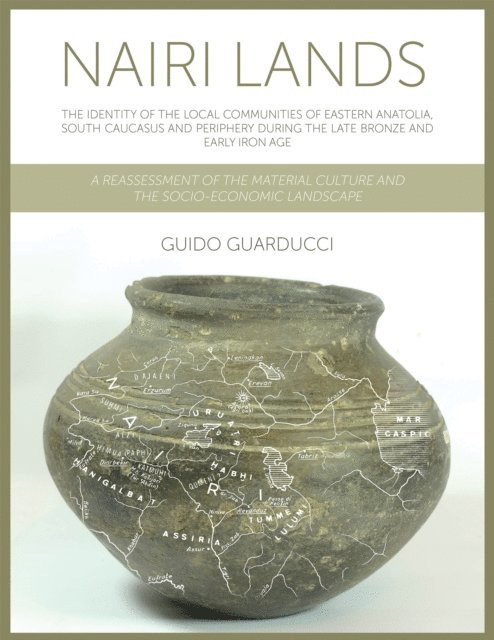
This study analyses the social and symbolic value of the material culture, in particular the pottery production and the architecture, and the social structure of the local communities of a broad area encompassing Eastern Anatolia, the South Caucasus and North-western Iran during the last phase of the Late Bronze Age and the Early Iron Age. This broad area is known from the Assyrian texts as ‘Nairi lands’. The second part of the study, furnishes a reassessment of pottery production characteristics and theories, as well as of the socio-economic structure and issues, tied to the sedentary and mobile local communities of the Nairi lands. The study brings into focus the characteristics, the extension and the distribution of Grooved pottery, along with other pottery typologies, by providing an accompanying online catalogue with detailed descriptions and high-resolution images of the pots and sherds obtained from public and private institutions in Turkey and Armenia. Moreover, the socio-political organisation and subsistence economy issues are addressed in order to advance a possible reconstruction of the social structure of the Nairi lands communities. Particular attention is devoted to the pastoral nomad component and the role played within the Nairi phenomenon. The study includes a very large corpus of text images and high-resolution color images of the pottery of the area under examination, gathered by the author in order to offer a reliable tool and compendium.
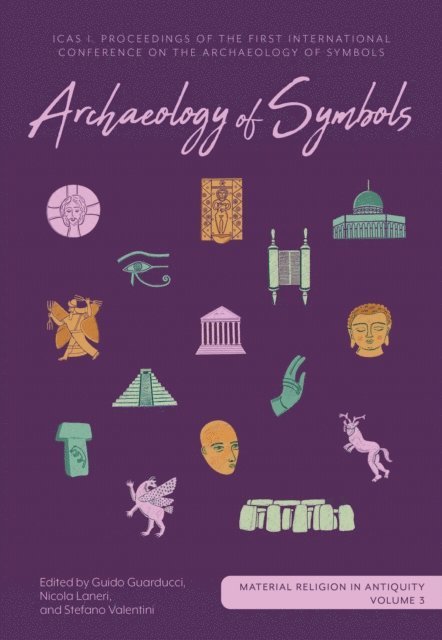
These case studies offer new approaches to the analysis and interpretation of symbols in a variety of media and as expressed on a range of objects at different scales.This third volume in the Material Religion in Antiquity series stems from the First International Congress on the Archaeology of Symbols (ICAS I) that took place in Florence in May 2022. The archaeological process of reconstructing and understanding our past has undergone several reassessments in the last century, producing an equal number of new perspectives and approaches. The recent materiality turn emphasizes the necessity to ground those achievements in order to build fresh avenues of interpretation and reach new boundaries in the study of the human kind and its ecology. Symbols must not be conceived only as allegory but also, and perhaps mainly, as reason (raison d’être) and meaning (culture). They may be considered key elements leading to interpretation, not only in their physical manifestation but by being infused with the gestures, beliefs and intentions of their creators, created in a specific context and with a specific chaîne opératoire.In this volume a variety of case studies is offered, representing disparate ancient cultures in the Mediterranean and central Europe and the Near East. The thread that connects them revolves around the prominence of symbols and allegorical aspects in archaeology, whether they are considered as expressions of iconographic evidence, material culture or ritual ceremonies, seen from a multicultural perspective. This (and subsequent ICAS) volumes, therefore, aims to embrace all the different aspects pertaining to symbols in archaeology in a specific ‘place’, allowing the reader to deepen their knowledge of such a fascinating and multifaceted topic, by looking at it from a multicultural perspective.
This study analyses the social and symbolic value of the material culture, in particular the pottery production and the architecture, and the social structure of the local communities of a broad area encompassing Eastern Anatolia, the South Caucasus and North-western Iran during the last phase of the Late Bronze Age and the Early Iron Age. This broad area is known from the Assyrian texts as ‘Nairi lands’. The second part of the study, furnishes a reassessment of pottery production characteristics and theories, as well as of the socio-economic structure and issues, tied to the sedentary and mobile local communities of the Nairi lands. The study brings into focus the characteristics, the extension and the distribution of Grooved pottery, along with other pottery typologies, by providing an accompanying online catalogue with detailed descriptions and high-resolution images of the pots and sherds obtained from public and private institutions in Turkey and Armenia. Moreover, the socio-political organisation and subsistence economy issues are addressed in order to advance a possible reconstruction of the social structure of the Nairi lands communities. Particular attention is devoted to the pastoral nomad component and the role played within the Nairi phenomenon. The study includes a very large corpus of text images and high-resolution color images of the pottery of the area under examination, gathered by the author in order to offer a reliable tool and compendium.
These case studies offer new approaches to the analysis and interpretation of symbols in a variety of media and as expressed on a range of objects at different scales.This third volume in the Material Religion in Antiquity series stems from the First International Congress on the Archaeology of Symbols (ICAS I) that took place in Florence in May 2022. The archaeological process of reconstructing and understanding our past has undergone several reassessments in the last century, producing an equal number of new perspectives and approaches. The recent materiality turn emphasizes the necessity to ground those achievements in order to build fresh avenues of interpretation and reach new boundaries in the study of the human kind and its ecology. Symbols must not be conceived only as allegory but also, and perhaps mainly, as reason (raison d’être) and meaning (culture). They may be considered key elements leading to interpretation, not only in their physical manifestation but by being infused with the gestures, beliefs and intentions of their creators, created in a specific context and with a specific chaîne opératoire.In this volume a variety of case studies is offered, representing disparate ancient cultures in the Mediterranean and central Europe and the Near East. The thread that connects them revolves around the prominence of symbols and allegorical aspects in archaeology, whether they are considered as expressions of iconographic evidence, material culture or ritual ceremonies, seen from a multicultural perspective. This (and subsequent ICAS) volumes, therefore, aims to embrace all the different aspects pertaining to symbols in archaeology in a specific ‘place’, allowing the reader to deepen their knowledge of such a fascinating and multifaceted topic, by looking at it from a multicultural perspective.