Guglielmo Verdirame – författare
Visar alla böcker från författaren Guglielmo Verdirame. Handla med fri frakt och snabb leverans.
12 produkter
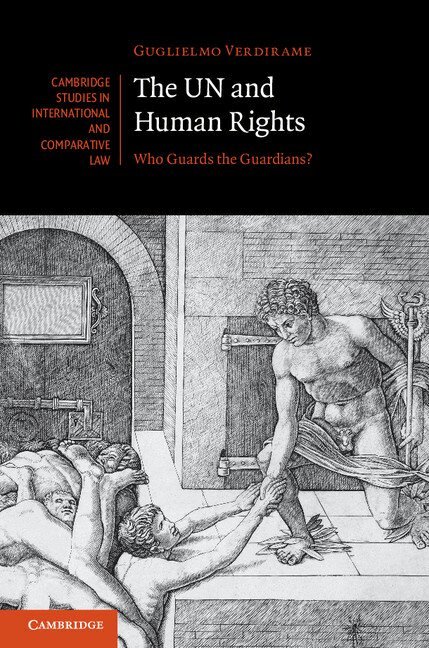
The UN and Human Rights
Who Guards the Guardians?
Inbunden, 2011
2199 kr
Lägg i varukorg
Through an analysis of UN operations including international territorial administration, refugee camps, peacekeeping, the implementation of sanctions and the provision of humanitarian aid, this book shows that the powers exercised by the UN carry a serious risk of human rights abuse. The …
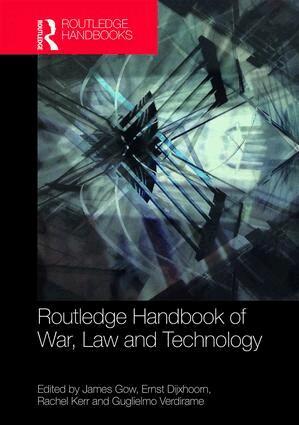
Routledge Handbook of War, Law and Technology
Av James Gow, Ernst Dijxhoorn m. fl.
Häftad, 2021
772 kr
Lägg i varukorg
This volume provides an authoritative, cutting-edge resource on the characteristics of both technological and social change in warfare in the twenty-first century, and the challenges such change presents to international law.The character of contemporary warfare has recently undergone significant …
Whither the West?
International Law in Europe and the United States
Av Chiara Giorgetti, Guglielmo Verdirame
Inbunden, 2021
1648 kr
Lägg i varukorg
On a variety of international legal matters, relations between the US and European countries are evolving and even diverging. In an ever-changing world, understanding the reasons for this increasing dichotomy is fundamental and has a profound impact on our understanding of world dynamics and …
The UN and Human Rights
Who Guards the Guardians?
Häftad, 2013
764 kr
Lägg i varukorg
Through an analysis of UN operations including international territorial administration, refugee camps, peacekeeping, the implementation of sanctions and the provision of humanitarian aid, this book shows that the powers exercised by the UN carry a serious risk of human rights abuse. The …
Whither the West?
International Law in Europe and the United States
Av Guglielmo Verdirame, Chiara Giorgetti
E-bok, 2021
1599 kr
Lägg i varukorg
On a variety of international legal matters, relations between the US and European countries are evolving and even diverging. In an ever-changing world, understanding the reasons for this increasing dichotomy is fundamental and has a profound impact on our understanding of world dynamics and …
Whither the West?
International Law in Europe and the United States
Av Guglielmo Verdirame, Chiara Giorgetti
E-bok, 2021
1634 kr
Lägg i varukorg
On a variety of international legal matters, relations between the US and European countries are evolving and even diverging. In an ever-changing world, understanding the reasons for this increasing dichotomy is fundamental and has a profound impact on our understanding of world dynamics and …
Routledge Handbook of War, Law and Technology
Av James Gow, Ernst Dijxhoorn m. fl.
Inbunden, 2019
3904 kr
Lägg i varukorg
This volume provides an authoritative, cutting-edge resource on the characteristics of both technological and social change in warfare in the twenty-first century, and the challenges such change presents to international law.The character of contemporary warfare has recently undergone significant …
Routledge Handbook of War, Law and Technology
Av Guglielmo Verdirame, Rachel Kerr m. fl.
E-bok, 2019
910 kr
Lägg i varukorg
This volume provides an authoritative, cutting-edge resource on the characteristics of both technological and social change in warfare in the twenty-first century, and the challenges such change presents to international law. The character of contemporary warfare has recently undergone significant …
Routledge Handbook of War, Law and Technology
Av Guglielmo Verdirame, Rachel Kerr m. fl.
E-bok, 2019
910 kr
Lägg i varukorg
This volume provides an authoritative, cutting-edge resource on the characteristics of both technological and social change in warfare in the twenty-first century, and the challenges such change presents to international law. The character of contemporary warfare has recently undergone significant …
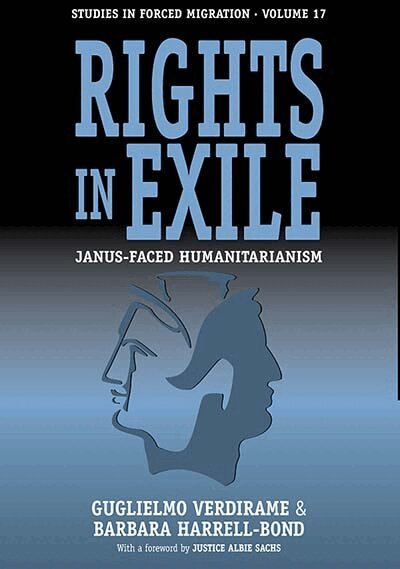
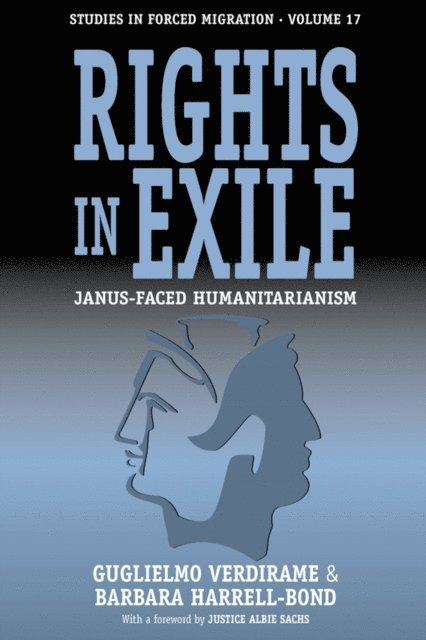
Rights in Exile
Janus-Faced Humanitarianism
Av Guglielmo Verdirame, Barbara Harrell-Bond
Inbunden, 2005
2056 kr
Lägg i varukorg
Of the estimated 12 million refugees in the world, more than 7 million have been confined to camps, effectively "warehoused," in some cases, for 10 years or more. Holding refugees in camps was anathema to the founders of the refugee protection regime. Today, with most refugees encamped in the less …
Rights in Exile
Janus-Faced Humanitarianism
Av Barbara Harrell-Bond, Guglielmo Verdirame
E-bok, 2005
374 kr
Lägg i varukorg
Of the estimated 12 million refugees in the world, more than 7 million have been confined to camps, effectively "warehoused," in some cases, for 10 years or more. Holding refugees in camps was anathema to the founders of the refugee protection regime. Today, with most refugees encamped in the less …
Rights in Exile
Janus-Faced Humanitarianism
Av Guglielmo Verdirame, Barbara Harrell-Bond
Häftad, 2005
618 kr
Lägg i varukorg
Of the estimated 12 million refugees in the world, more than 7 million have been confined to camps, effectively "warehoused," in some cases, for 10 years or more. Holding refugees in camps was anathema to the founders of the refugee protection regime. Today, with most refugees encamped in the less …