Guido Niccolò Barbi – författare
Visar alla böcker från författaren Guido Niccolò Barbi. Handla med fri frakt och snabb leverans.
2 produkter
2 produkter
Häftad, Engelska, 2025
1 091 kr
Skickas inom 10-15 vardagar
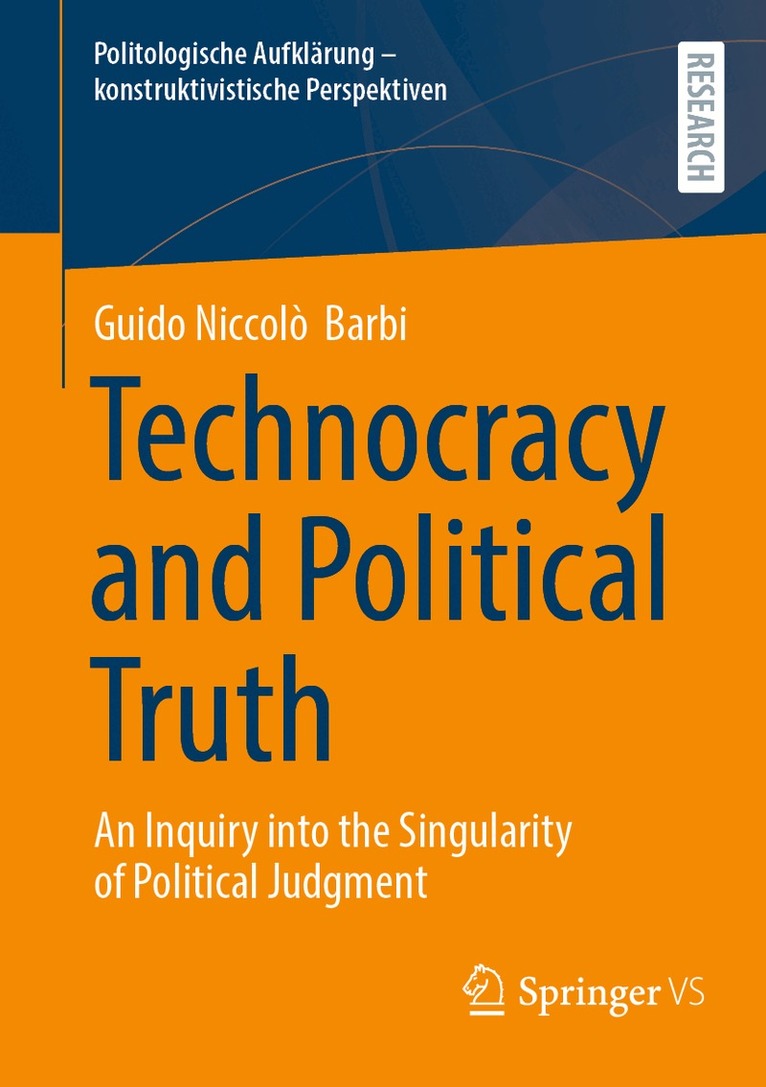
The inability to envision political alternatives – or, to use Arendt’s terminology, to make new beginnings – is a key component of today’s democratic crisis. In its first part, this study shows that this situation results from the growing technocratization of both government and the democratic public sphere, which hinders the ability to form new political judgments. By analyzing rationalized bureaucracy, which substitutes automated procedures for political decision, and mass democracy, which permits the infinite expansion of the administration’s purview, an account of technocracy as administrative, non-political rule is constructed. The book’s second part expands on this diagnosis by examining how political judgment differs from epistemic reasoning. This examination puts into dialogue Arendt, Kant, and Vico, reviving a humanist understanding of common sense (sensus communis) and ingenuity (ingenium). This allows us to rethink political judgment as both cognitively immediate and reflectively plural, showcasing how technocratic decision-making illegitimately delimits the horizon for political judgments and new beginnings.
E-bok
Engelska, 20251 367 kr
Läs direkt efter köp
The inability to envision political alternatives – or, to use Arendt’s terminology, to make new beginnings – is a key component of today’s democratic crisis. In its first part, this study shows that this situation results from the growing technocratization of both government and the democratic public sphere, which hinders the ability to form new political judgments. By analyzing rationalized bureaucracy, which substitutes automated procedures for political decision, and mass democracy, which permits the infinite expansion of the administration’s purview, an account of technocracy as administrative, non-political rule is constructed. The book’s second part expands on this diagnosis by examining how political judgment differs from epistemic reasoning. This examination puts into dialogue Arendt, Kant, and Vico, reviving a humanist understanding of common sense (sensus communis) and ingenuity (ingenium). This allows us to rethink political judgment as both cognitively immediate and reflectively plural, showcasing how technocratic decision-making illegitimately delimits the horizon for political judgments and new beginnings.