Guiguo Wang – Författare
Visar alla böcker från författaren Guiguo Wang. Handla med fri frakt och snabb leverans.
4 produkter
4 produkter
2 944 kr
Skickas inom 10-15 vardagar
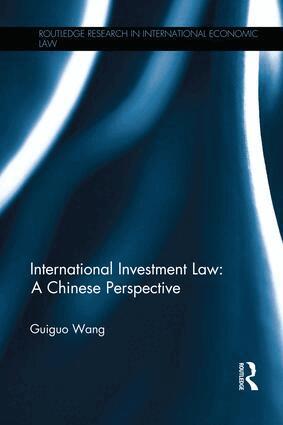
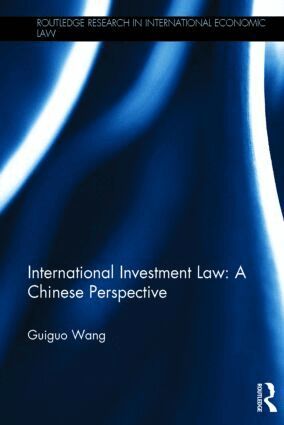
Increasing and intensified cross-border economic exchange such as trade and investment is an important feature of globalization. In the past, a distinction could be made between capital importing and exporting countries, or host and home countries for foreign direct investment (FDI). Due to globalization, FDI is presently made by and in both developed and developing countries. Differences in political, economic and legal systems and culture are no longer obstacles for FDI, and to varying degrees the economic development of almost all countries is closely linked with the inflow of FDI. This book conducts critical assessments of aspects of current international law on FDI, focusing on cases decided by the tribunals of the International Centre for Settlement of Investment Disputes (ICSID) and other tribunals as well as decisions of annulment ad hoc committees of the ICSID. In examining such cases, Guiguo Wang takes into account the Chinese culture and China’s practice in the related areas. The book explores topics including: the development and trend of international investment law; unilateral, bilateral and multilateral mechanisms for encouraging and protecting FDIs; determination of qualified investors and investments and consent as conditions for protection; relative and absolute standards of treatment; determination of expropriation in practice; assessment of compensation for expropriation; difficulties in enforcing investment arbitral awards; and alternatives for improving the existing system. The book will be of great use and interest to scholars, practitioners and students of international investment law and international economic law, Asian law, and Chinese studies.
694 kr
Skickas inom 10-15 vardagar
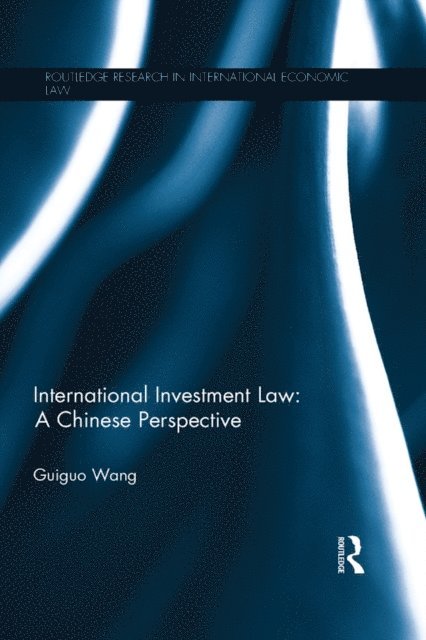
Increasing and intensified cross-border economic exchange such as trade and investment is an important feature of globalization. In the past, a distinction could be made between capital importing and exporting countries, or host and home countries for foreign direct investment (FDI). Due to globalization, FDI is presently made by and in both developed and developing countries. Differences in political, economic and legal systems and culture are no longer obstacles for FDI, and to varying degrees the economic development of almost all countries is closely linked with the inflow of FDI. This book conducts critical assessments of aspects of current international law on FDI, focusing on cases decided by the tribunals of the International Centre for Settlement of Investment Disputes (ICSID) and other tribunals as well as decisions of annulment ad hoc committees of the ICSID. In examining such cases, Guiguo Wang takes into account the Chinese culture and China’s practice in the related areas. The book explores topics including: the development and trend of international investment law; unilateral, bilateral and multilateral mechanisms for encouraging and protecting FDIs; determination of qualified investors and investments and consent as conditions for protection; relative and absolute standards of treatment; determination of expropriation in practice; assessment of compensation for expropriation; difficulties in enforcing investment arbitral awards; and alternatives for improving the existing system. The book will be of great use and interest to scholars, practitioners and students of international investment law and international economic law, Asian law, and Chinese studies.
1 268 kr
Skickas inom 10-15 vardagar
This book examines resolution of the disputes between both sides of Belt and Road economic cooperation. To address the problems surrounding legal guarantee and dispute resolution, the International Academy of the Belt and Road has gathered almost 50 experts from over 30 Belt and Road countries and regions to utilize current advances in the dispute resolution mechanism, taking into account the legal systems, legal environment and historical and cultural characteristics of Belt and Road countries and regions. The dispute resolution mechanism presented advocates giving priority to mediation when a dispute arises—arbitration is necessary only when mediation is ineffective. In addition, arbitration should be highly transparent, show respect to both contracting parties, and be equipped with an appeal system. This hands-on book offers detailed explanations of mediation rules, arbitration rules and appeal procedures. On the one hand, this mechanism embodies the integrationof the cultures, traditions, legal systems, legal values and legal thoughts of Belt and Road countries and regions. On the other hand, it highlights the importance of mediation, which not only is the idea of oriental culture carrying forward traditional Chinese culture, but also follows the trend of dispute resolution. As a result, the dispute resolution mechanism established in this book is beneficial to the development of the Belt and Road Initiative.
1 268 kr
Skickas inom 10-15 vardagar
This book examines resolution of the disputes between both sides of Belt and Road economic cooperation. To address the problems surrounding legal guarantee and dispute resolution, the International Academy of the Belt and Road has gathered almost 50 experts from over 30 Belt and Road countries and regions to utilize current advances in the dispute resolution mechanism, taking into account the legal systems, legal environment and historical and cultural characteristics of Belt and Road countries and regions. The dispute resolution mechanism presented advocates giving priority to mediation when a dispute arises—arbitration is necessary only when mediation is ineffective. In addition, arbitration should be highly transparent, show respect to both contracting parties, and be equipped with an appeal system. This hands-on book offers detailed explanations of mediation rules, arbitration rules and appeal procedures. On the one hand, this mechanism embodies the integrationof the cultures, traditions, legal systems, legal values and legal thoughts of Belt and Road countries and regions. On the other hand, it highlights the importance of mediation, which not only is the idea of oriental culture carrying forward traditional Chinese culture, but also follows the trend of dispute resolution. As a result, the dispute resolution mechanism established in this book is beneficial to the development of the Belt and Road Initiative.