Guillermo Martínez Pastur – författare
Visar alla böcker från författaren Guillermo Martínez Pastur. Handla med fri frakt och snabb leverans.
7 produkter
7 produkter
Del 56 - Burleigh Dodds Science: Instant Insights
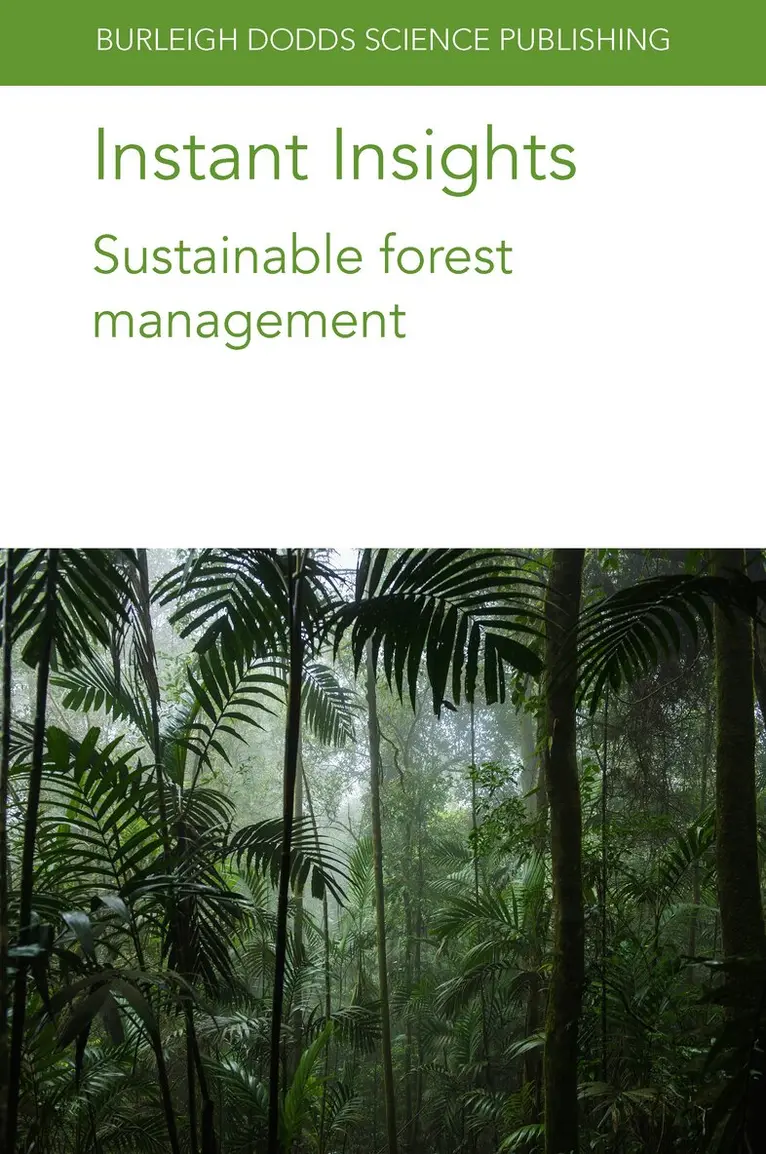
Instant Insights: Sustainable Forest Management
Häftad, Engelska, 2022
691 kr
Skickas inom 5-8 vardagar
This collection features five peer-reviewed literature reviews on sustainable forest management.The first chapter discusses the varying definitions of sustainable forest management (SFM) in tropical landscapes, as well as the trade-offs associated with SFM. The chapter also reviews the spatial scales of assessing SFM and explores expanding the scope of SFM from individual strands to forested landscapes.The second chapter provides a comprehensive review of the current research undertaken in sustainable forestry. It considers the concept and evolution of sustainable forestry and the challenges which arise as a result of implementing SFM practices. The third chapter reviews the role and impact of forest certification schemes in the achievement of SFM. The chapter summarises the wealth of research available on the development of forest certification and how individual elements can be optimised to further improve the model.The fourth chapter discusses the recent history and implementation challenges of SFM across the Congo Basin, including logging concessions, land zones and the processes and institutions required to implement effective SFM policies.The final chapter analyses the potential trade-offs between ecosystem services and biodiversity in the southern Patagonian forests. The chapter explores the implementation of SFM as a strategy to mitigate these trade-offs at a landscape level.
Häftad, Engelska, 2018
2 160 kr
Skickas inom 10-15 vardagar
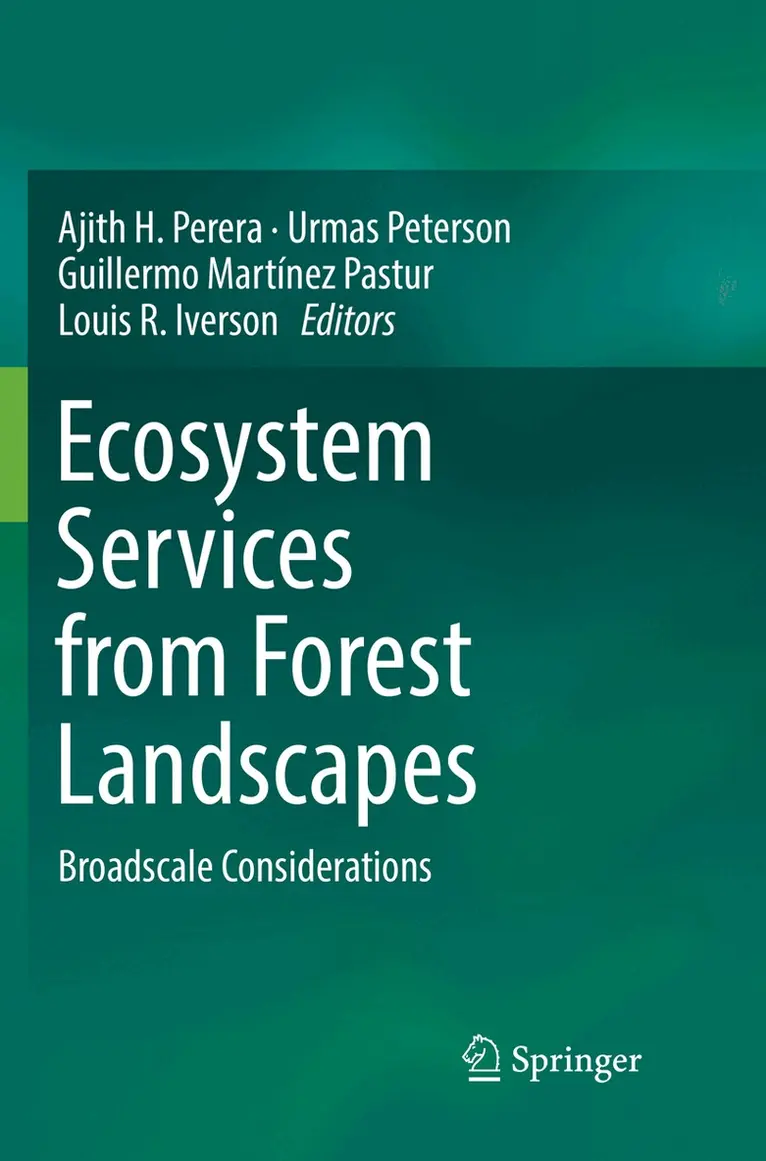
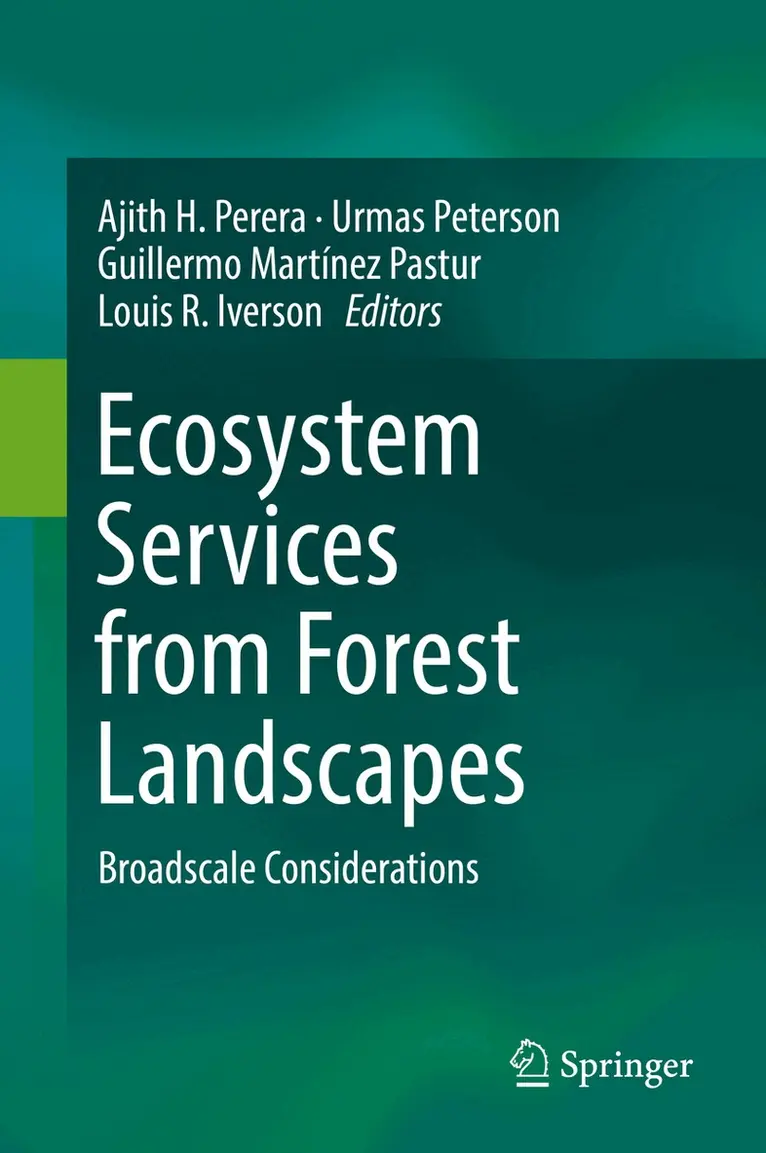
Over the last two decades, the topic of forest ecosystem services has attracted the attention of researchers, land managers, and policy makers around the globe. The services rendered by forest ecosystems range from intrinsic to anthropocentric benefits that are typically grouped as provisioning, regulating, supporting, and cultural. The research efforts, assessments, and attempts to manage forest ecosystems for their sustained services are now widely published in scientific literature. This volume focuses on broad-scale aspects of forest ecosystem services, beyond individual stands to large landscapes. In doing so, it illustrates the conceptual and practical opportunities as well as challenges involved with planning for forest ecosystem services across landscapes, regions, and nations. The goal here is to broaden the scope of land use planning through the adoption of a landscape-scale approach. Even though this approach is complex and involves multiple ecological, social, cultural, economic, and political dimensions, the landscape perspective appears to offer the best opportunity for a sustained provision of forest ecosystem services.
Inbunden, Engelska, 2021
1 622 kr
Skickas inom 10-15 vardagar
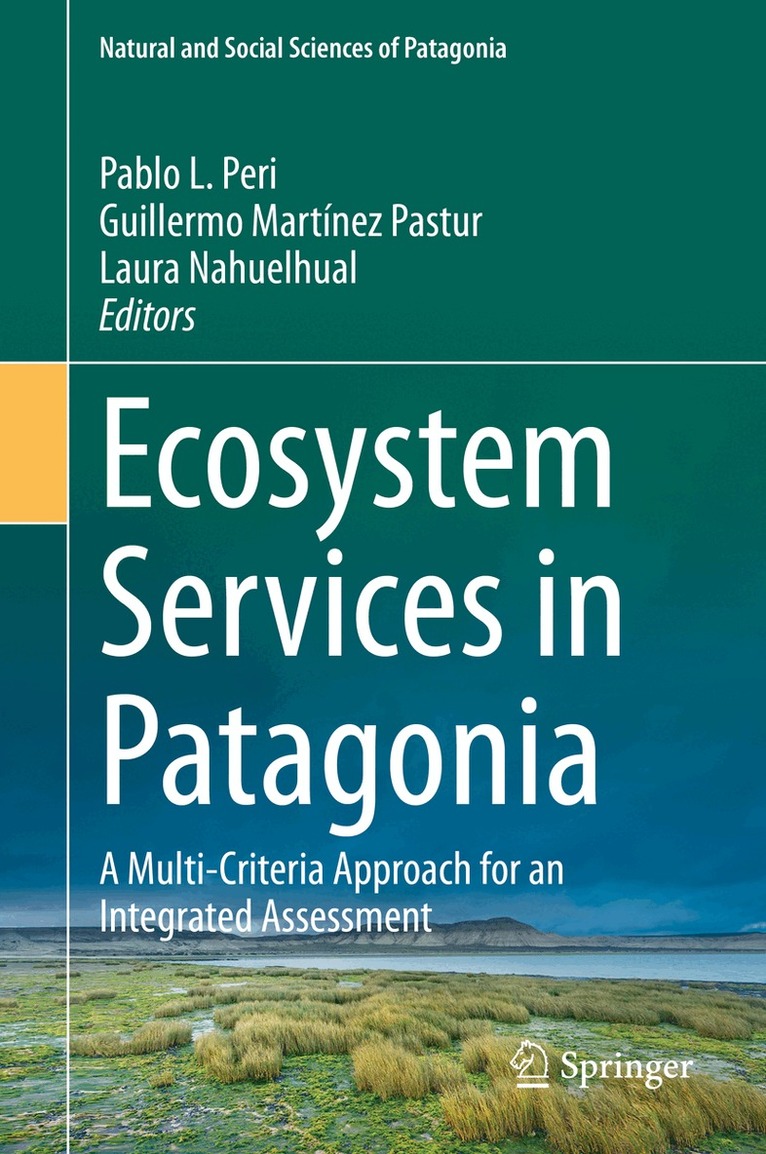
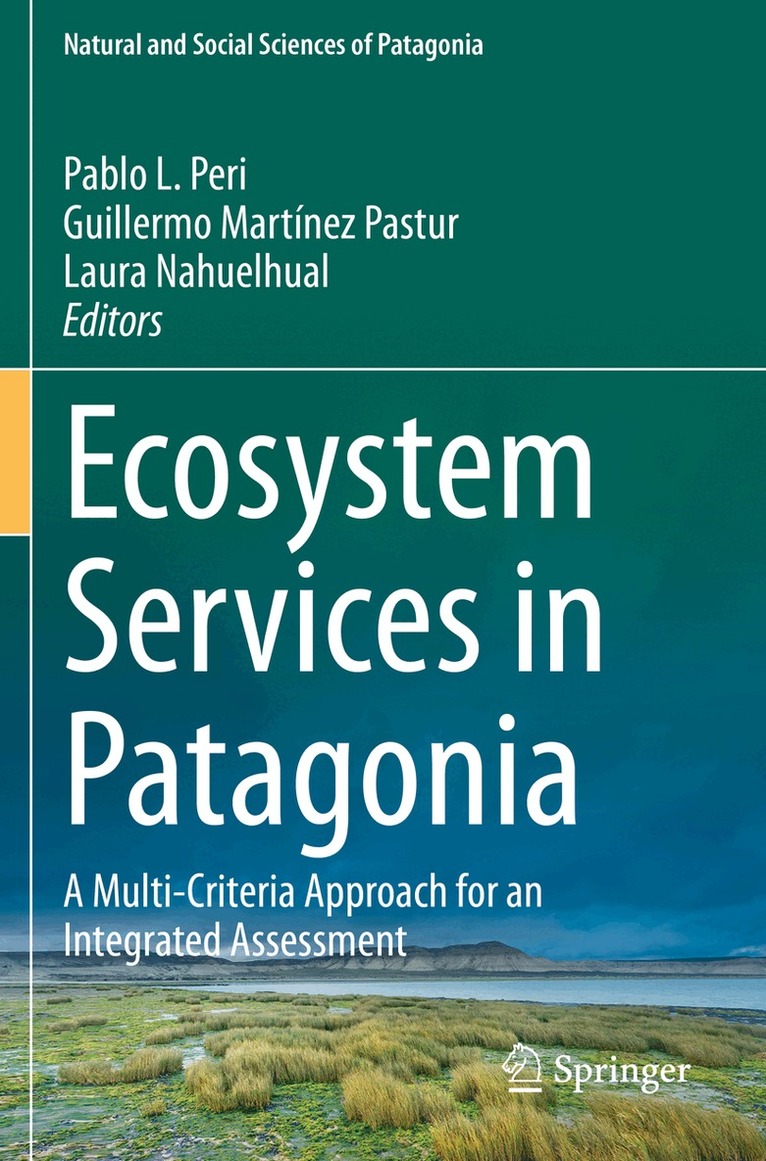
This book aims to quantify and discuss how societies have directly and indirectly benefited from ecosystem services in Patagonia; not only in terms of provisioning and cultural services, but also regulating and supporting services. Patagonia, a region that stretches across two countries (ca. 10% in Chile and 90% in Argentina), is home to some of the most extensive wilderness areas on our planet. Natural grasslands comprise almost 30% of the Americas, including the Patagonian steppe, while Patagonian southern temperate forests are important for carbon sequestration and storage, play a pivotal role in water regulation, and have become widely recognized for their ecotourism value. However, profound changes are now underway that could affect key ecosystem functions and ultimately human well-being. In this context, one major challenge we face in Patagonia is that ecosystem services are often ignored in economic markets, government policies and land management practices. The book explores the synergies and trade-offs between conservation and economic development as natural landscapes and seascapes continue to degrade in Patagonia. Historically, economic markets have largely focused on the provisioning services (forest products, livestock) while neglecting the interdependent roles of regulating services (erosion and climate control), supporting services (nutrient cycling) and cultural services (recreation, local identity, tourism). Therefore, the present work focuses on ecosystem functions and ecosystem services, as well as on trends in biodiversity and the interactions between natural environments and land-use activities throughout Patagonia.
E-bok
Engelska, 20212 049 kr
Läs direkt efter köp
This book aims to quantify and discuss how societies have directly and indirectly benefited from ecosystem services in Patagonia; not only in terms of provisioning and cultural services, but also regulating and supporting services. Patagonia, a region that stretches across two countries (ca. 10% in Chile and 90% in Argentina), is home to some of the most extensive wilderness areas on our planet. Natural grasslands comprise almost 30% of the Americas, including the Patagonian steppe, while Patagonian southern temperate forests are important for carbon sequestration and storage, play a pivotal role in water regulation, and have become widely recognized for their ecotourism value. However, profound changes are now underway that could affect key ecosystem functions and ultimately human well-being. In this context, one major challenge we face in Patagonia is that ecosystem services are often ignored in economic markets, government policies and land management practices. The book explores the synergies and trade-offs between conservation and economic development as natural landscapes and seascapes continue to degrade in Patagonia. Historically, economic markets have largely focused on the provisioning services (forest products, livestock) while neglecting the interdependent roles of regulating services (erosion and climate control), supporting services (nutrient cycling) and cultural services (recreation, local identity, tourism). Therefore, the present work focuses on ecosystem functions and ecosystem services, as well as on trends in biodiversity and the interactions between natural environments and land-use activities throughout Patagonia.
Häftad, Engelska, 2022
1 622 kr
Skickas inom 10-15 vardagar
This book aims to quantify and discuss how societies have directly and indirectly benefited from ecosystem services in Patagonia; not only in terms of provisioning and cultural services, but also regulating and supporting services. Patagonia, a region that stretches across two countries (ca. 10% in Chile and 90% in Argentina), is home to some of the most extensive wilderness areas on our planet. Natural grasslands comprise almost 30% of the Americas, including the Patagonian steppe, while Patagonian southern temperate forests are important for carbon sequestration and storage, play a pivotal role in water regulation, and have become widely recognized for their ecotourism value. However, profound changes are now underway that could affect key ecosystem functions and ultimately human well-being. In this context, one major challenge we face in Patagonia is that ecosystem services are often ignored in economic markets, government policies and land management practices. The book explores the synergies and trade-offs between conservation and economic development as natural landscapes and seascapes continue to degrade in Patagonia. Historically, economic markets have largely focused on the provisioning services (forest products, livestock) while neglecting the interdependent roles of regulating services (erosion and climate control), supporting services (nutrient cycling) and cultural services (recreation, local identity, tourism). Therefore, the present work focuses on ecosystem functions and ecosystem services, as well as on trends in biodiversity and the interactions between natural environments and land-use activities throughout Patagonia.
Inbunden, Engelska, 2018
2 160 kr
Skickas inom 10-15 vardagar
Over the last two decades, the topic of forest ecosystem services has attracted the attention of researchers, land managers, and policy makers around the globe. The services rendered by forest ecosystems range from intrinsic to anthropocentric benefits that are typically grouped as provisioning, regulating, supporting, and cultural. The research efforts, assessments, and attempts to manage forest ecosystems for their sustained services are now widely published in scientific literature. This volume focuses on broad-scale aspects of forest ecosystem services, beyond individual stands to large landscapes. In doing so, it illustrates the conceptual and practical opportunities as well as challenges involved with planning for forest ecosystem services across landscapes, regions, and nations. The goal here is to broaden the scope of land use planning through the adoption of a landscape-scale approach. Even though this approach is complex and involves multiple ecological, social, cultural, economic, and political dimensions, the landscape perspective appears to offer the best opportunity for a sustained provision of forest ecosystem services.
E-bok
Engelska, 20182 840 kr
Läs direkt efter köp
Over the last two decades, the topic of forest ecosystem services has attracted the attention of researchers, land managers, and policy makers around the globe. The services rendered by forest ecosystems range from intrinsic to anthropocentric benefits that are typically grouped as provisioning, regulating, supporting, and cultural. The research efforts, assessments, and attempts to manage forest ecosystems for their sustained services are now widely published in scientific literature. This volume focuses on broad-scale aspects of forest ecosystem services, beyond individual stands to large landscapes. In doing so, it illustrates the conceptual and practical opportunities as well as challenges involved with planning for forest ecosystem services across landscapes, regions, and nations. The goal here is to broaden the scope of land use planning through the adoption of a landscape-scale approach. Even though this approach is complex and involves multiple ecological, social, cultural, economic, and political dimensions, the landscape perspective appears to offer the best opportunity for a sustained provision of forest ecosystem services.