Günay Yildiz Tore – författare
Visar alla böcker från författaren Günay Yildiz Tore. Handla med fri frakt och snabb leverans.
8 produkter
Advanced Oxidation Processes for Wastewater Treatment
An Innovative Approach
Av Maulin P Shah, Sweta Parimita Bera m. fl.
Inbunden, 2022
2743 kr
Lägg i varukorg
Advanced Oxidation Processes for Wastewater Treatment: An Innovative Approach: This book highlights the importance of various innovative advanced oxidation technology to clean up the environment from pollution caused by human activities. It assesses the potential application of several existing …
Advanced Oxidation Processes for Wastewater Treatment
An Innovative Approach
Av Gunay Yildiz Tore, Sweta Parimita Bera m. fl.
E-bok, 2022
2998 kr
Lägg i varukorg
Advanced Oxidation Processes for Wastewater Treatment: An Innovative Approach : This book highlights the importance of various innovative advanced oxidation technology to clean up the environment from pollution caused by human activities. It assesses the potential application of several existing …
Advanced Oxidation Processes for Wastewater Treatment
An Innovative Approach
Av Gunay Yildiz Tore, Sweta Parimita Bera m. fl.
E-bok, 2022
3065 kr
Lägg i varukorg
Advanced Oxidation Processes for Wastewater Treatment: An Innovative Approach : This book highlights the importance of various innovative advanced oxidation technology to clean up the environment from pollution caused by human activities. It assesses the potential application of several existing …
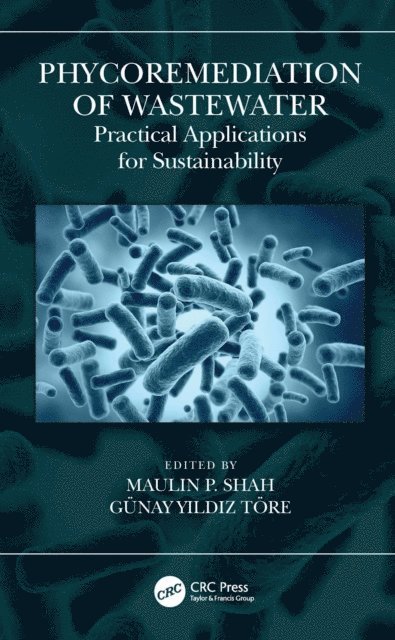
Phycoremediation of Wastewater
Practical Applications for Sustainability
Av Gunay Yildiz Tore, Maulin P. Shah
E-bok, 2024
1749 kr
Lägg i varukorg
Phycoremediation is an alternative method of water and wastewater remediation, which includes the use of algae for treatment, and is an environmentally friendly and sustainable technology. More conventional methods of wastewater treatment have been successful in the removal of conventional …
Phycoremediation of Wastewater
Practical Applications for Sustainability
Av Gunay Yildiz Tore, Maulin P. Shah
E-bok, 2024
1749 kr
Lägg i varukorg
Phycoremediation is an alternative method of water and wastewater remediation, which includes the use of algae for treatment, and is an environmentally friendly and sustainable technology. More conventional methods of wastewater treatment have been successful in the removal of conventional …
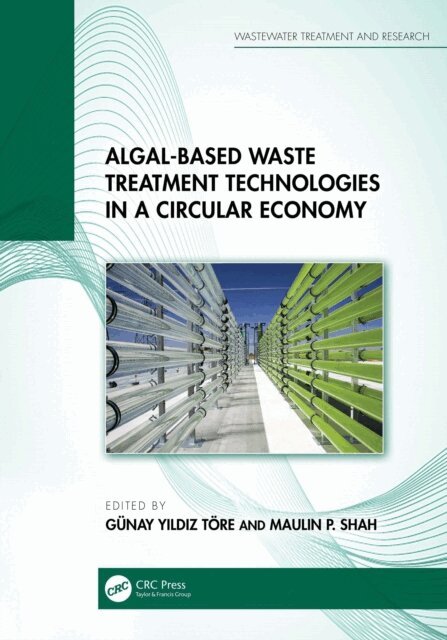
Algal-based Waste Treatment Technologies in a Circular Economy
Av Maulin P. Shah, Gunay Yildiz Tore
E-bok, 2025
1022 kr
Lägg i varukorg
In recent years, problems such as environmental pollution, global warming, and high energy consumption have brought waste treatment technologies to the forefront. As the scientific world turns to sustainable, environmentally friendly, and ecologically sound energy sources, microalgae-based …
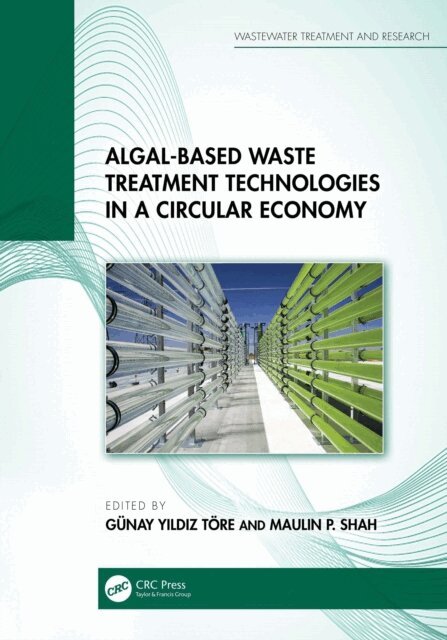
Algal-based Waste Treatment Technologies in a Circular Economy
Av Maulin P. Shah, Gunay Yildiz Tore
E-bok, 2025
1000 kr
Lägg i varukorg
In recent years, problems such as environmental pollution, global warming, and high energy consumption have brought waste treatment technologies to the forefront. As the scientific world turns to sustainable, environmentally friendly, and ecologically sound energy sources, microalgae-based …
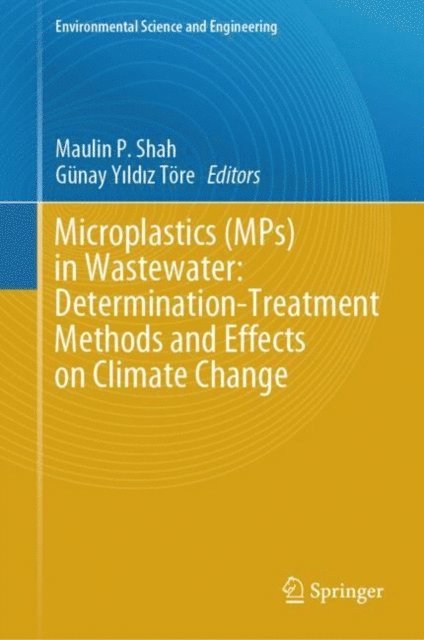
Microplastics (MPs) in Wastewater: Determination-Treatment Methods and Effects on Climate Change
Av Gunay Yildiz Tore, Maulin P. Shah
E-bok, 2025
2267 kr
Lägg i varukorg
This book systematically summarizes the occurrence and source of MPs through various municipal and industrial wastewaters. It covers the type of MPs, its effects on human health and climate, and emerging detection and treatment methods. Plastics are one of the refractory pollutants produced in many …