Günseli Berik – författare
3 296 kr
Skickas inom 10-15 vardagar
665 kr
Skickas inom 10-15 vardagar
547 kr
Skickas inom 10-15 vardagar
2 596 kr
Skickas inom 10-15 vardagar
679 kr
Skickas inom 10-15 vardagar
2 246 kr
Skickas inom 10-15 vardagar
637 kr
Skickas inom 10-15 vardagar
315 kr
Skickas inom 10-15 vardagar
833 kr
Skickas inom 10-15 vardagar
2 241 kr
Skickas inom 10-15 vardagar
741 kr
Läs direkt efter köp
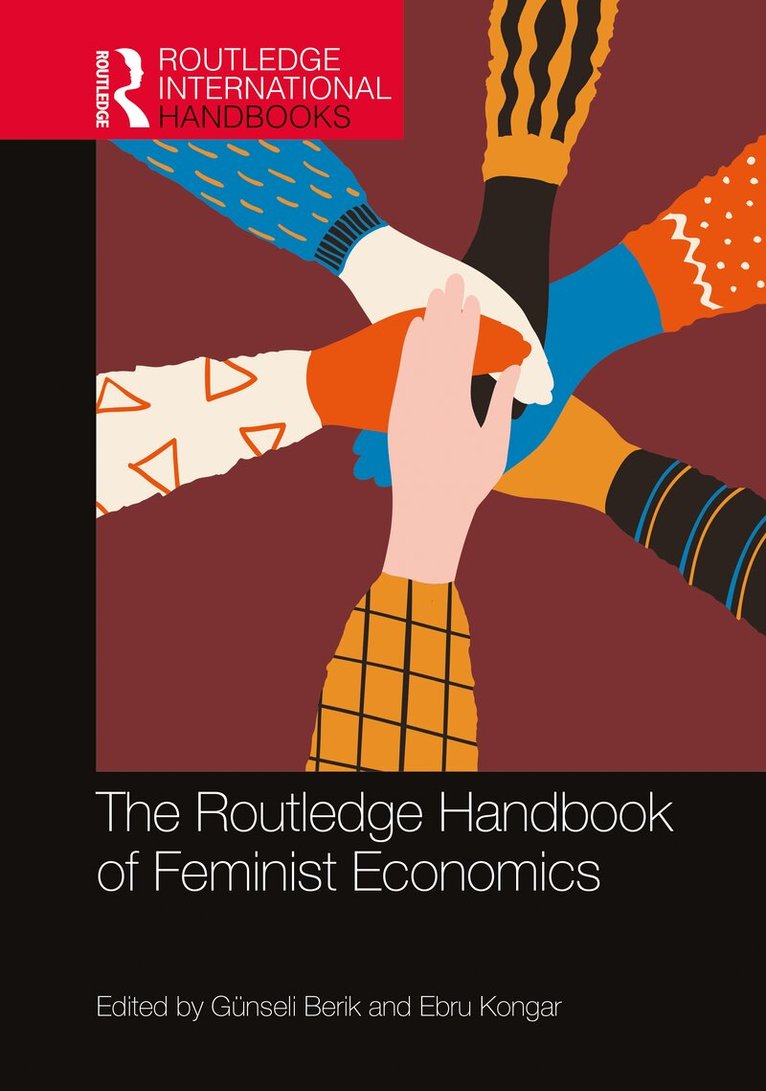
The Routledge Handbook of Feminist Economics presents a comprehensive overview of the contributions of feminist economics to the discipline of economics and beyond.
Each chapter situates the topic within the history of the field, reflects upon current debates, and looks forward to identify cutting-edge research. Consistent with feminist economics’ goal of strong objectivity, this Handbook compiles contributions from different traditions in feminist economics (including but not limited to Marxian political economy, institutionalist economics, ecological economics and neoclassical economics) and from different disciplines (such as economics, philosophy and political science). The Handbook delineates the social provisioning methodology and highlights its insights for the development of feminist economics. The contributors are a diverse mix of established and rising scholars of feminist economics from around the globe who skilfully frame the current state and future direction of feminist economic scholarship.
This carefully crafted volume will be an essential resource for researchers and instructors of feminist economics.
741 kr
Läs direkt efter köp
The Routledge Handbook of Feminist Economics presents a comprehensive overview of the contributions of feminist economics to the discipline of economics and beyond.
Each chapter situates the topic within the history of the field, reflects upon current debates, and looks forward to identify cutting-edge research. Consistent with feminist economics’ goal of strong objectivity, this Handbook compiles contributions from different traditions in feminist economics (including but not limited to Marxian political economy, institutionalist economics, ecological economics and neoclassical economics) and from different disciplines (such as economics, philosophy and political science). The Handbook delineates the social provisioning methodology and highlights its insights for the development of feminist economics. The contributors are a diverse mix of established and rising scholars of feminist economics from around the globe who skilfully frame the current state and future direction of feminist economic scholarship.
This carefully crafted volume will be an essential resource for researchers and instructors of feminist economics.
957 kr
Läs direkt efter köp
The contributors to this edited volume explore the effects of various development strategies and associated macroeconomic policies on women’s well-being and progress towards gender equality. Detailed analyses of major UN reports on gender reveal the different approaches to assessing absolute and relative progress for women and the need to take into account the specifics of policy regimes when making such assessments. The book argues that neoliberal policies, especially the liberalization of trade and investment, make it difficult to close gender wage and earnings gaps, and new gender sensitive policies need to be devised. These and other issues are all examined in more detail in several gendered development histories of countries from Latin America and Asia.
957 kr
Läs direkt efter köp
The contributors to this edited volume explore the effects of various development strategies and associated macroeconomic policies on women’s well-being and progress towards gender equality. Detailed analyses of major UN reports on gender reveal the different approaches to assessing absolute and relative progress for women and the need to take into account the specifics of policy regimes when making such assessments. The book argues that neoliberal policies, especially the liberalization of trade and investment, make it difficult to close gender wage and earnings gaps, and new gender sensitive policies need to be devised. These and other issues are all examined in more detail in several gendered development histories of countries from Latin America and Asia.
860 kr
Läs direkt efter köp
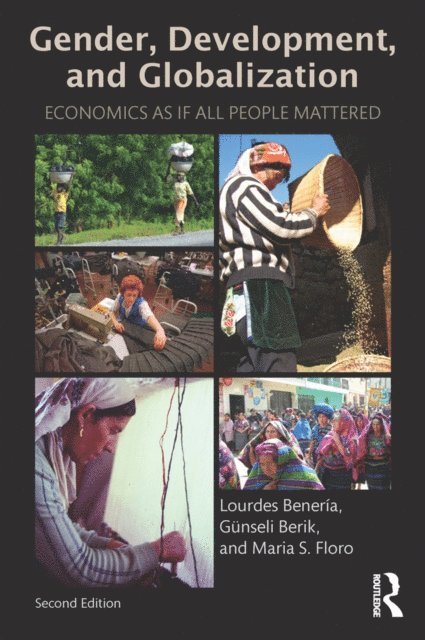
Gender, Development, and Globalization is the leading primer on global feminist economics and development. Lourdes Benería, a pioneer in the field of feminist economics, is joined in this second edition by Gunseli Berik and Maria Floro to update the text to reflect the major theoretical, empirical, and methodological contributions and global developments in the last decade. Its interdisciplinary investigation remains accessible to a broad audience interested in an analytical treatment of the impact of globalization processes on development and wellbeing in general and on social and gender equality in particular.
The revision will continue to provide a wide-ranging discussion of the strategies and policies that hold the most promise in promoting equitable and sustainable development. The authors make the case for feminist economics as a useful framework to address major contemporary global challenges, such as inequalities between the global South and North as well as within single countries; persistent poverty; and increasing vulnerability to financial crises, food crises, and climate change. The authors’ approach is grounded in the intellectual current of feminism and human development, drawing on Amartya Sen’s capability approach and focused on the importance of the care economy, increasing pressures faced by women, and the failures of neoliberal reforms to bring about sustainable development, reduction in poverty, inequality, and vulnerability to economic crisis.
860 kr
Läs direkt efter köp
Gender, Development, and Globalization is the leading primer on global feminist economics and development. Lourdes Benería, a pioneer in the field of feminist economics, is joined in this second edition by Gunseli Berik and Maria Floro to update the text to reflect the major theoretical, empirical, and methodological contributions and global developments in the last decade. Its interdisciplinary investigation remains accessible to a broad audience interested in an analytical treatment of the impact of globalization processes on development and wellbeing in general and on social and gender equality in particular.
The revision will continue to provide a wide-ranging discussion of the strategies and policies that hold the most promise in promoting equitable and sustainable development. The authors make the case for feminist economics as a useful framework to address major contemporary global challenges, such as inequalities between the global South and North as well as within single countries; persistent poverty; and increasing vulnerability to financial crises, food crises, and climate change. The authors’ approach is grounded in the intellectual current of feminism and human development, drawing on Amartya Sen’s capability approach and focused on the importance of the care economy, increasing pressures faced by women, and the failures of neoliberal reforms to bring about sustainable development, reduction in poverty, inequality, and vulnerability to economic crisis.