Gurpreet Mahajan – författare
Visar alla böcker från författaren . Handla med fri frakt och snabb leverans.
8 produkter
8 produkter
Inbunden, Engelska, 2010
2 429 kr
Skickas inom 10-15 vardagar
By making religious community a relevant category for discussing development deficit, the Sachar Committee Report (that was submitted to the Prime Minister of India in 2007) initiated a new political discourse in India. While the liberal secular framework privileged the individual over the community and was more inclined to use the category of class rather than the identity of religion, the Sachar Committee differentiated citizens on the basis of their religious identity. Its conclusions reinforced the necessity of approaching issues of development through the optic of religious community. This volume focuses on this shift in public policy. The articles in this collection examine the nature and implications of this new approach to the Indian social reality. Taking a close look at the findings of the Sachar Committee Report (SCR) they highlight the challenges posed by inter-community comparisons. At another level the articles supplement the debate initiated by the SCR by constructing a profile of religious communities in India so as to factor in their concerns of development into the present discourse and to nuance and modify the simple indicators to which development is often reduced. As most religious communities are themselves engaged in development-related activities the volume also examines some of these initiatives in order to see what development connotes to the members themselves and what receives attention by the community. Students of social sciences and development studies as well as those dealing with issues of marginalization will find this collection an invaluable resource for understanding contemporary India and for undertaking further theoretical and empirical research.
E-bok
Engelska, 2010841 kr
Läs direkt efter köp
By making religious community a relevant category for discussing development deficit, the Sachar Committee Report (that was submitted to the Prime Minister of India in 2007) initiated a new political discourse in India. While the liberal secular framework privileged the individual over the community and was more inclined to use the category of class rather than the identity of religion, the Sachar Committee differentiated citizens on the basis of their religious identity. Its conclusions reinforced the necessity of approaching issues of development through the optic of religious community. This volume focuses on this shift in public policy. The articles in this collection examine the nature and implications of this new approach to the Indian social reality. Taking a close look at the findings of the Sachar Committee Report (SCR) they highlight the challenges posed by inter-community comparisons. At another level the articles supplement the debate initiated by the SCR by constructing a profile of religious communities in India so as to factor in their concerns of development into the present discourse and to nuance and modify the simple indicators to which development is often reduced. As most religious communities are themselves engaged in development-related activities the volume also examines some of these initiatives in order to see what development connotes to the members themselves and what receives attention by the community. Students of social sciences and development studies as well as those dealing with issues of marginalization will find this collection an invaluable resource for understanding contemporary India and for undertaking further theoretical and empirical research.
E-bok
PDF, Engelska, 2010841 kr
Läs direkt efter köp
By making religious community a relevant category for discussing development deficit, the Sachar Committee Report (that was submitted to the Prime Minister of India in 2007) initiated a new political discourse in India. While the liberal secular framework privileged the individual over the community and was more inclined to use the category of class rather than the identity of religion, the Sachar Committee differentiated citizens on the basis of their religious identity. Its conclusions reinforced the necessity of approaching issues of development through the optic of religious community. This volume focuses on this shift in public policy. The articles in this collection examine the nature and implications of this new approach to the Indian social reality. Taking a close look at the findings of the Sachar Committee Report (SCR) they highlight the challenges posed by inter-community comparisons. At another level the articles supplement the debate initiated by the SCR by constructing a profile of religious communities in India so as to factor in their concerns of development into the present discourse and to nuance and modify the simple indicators to which development is often reduced. As most religious communities are themselves engaged in development-related activities the volume also examines some of these initiatives in order to see what development connotes to the members themselves and what receives attention by the community. Students of social sciences and development studies as well as those dealing with issues of marginalization will find this collection an invaluable resource for understanding contemporary India and for undertaking further theoretical and empirical research.
Häftad, Engelska, 2016
796 kr
Skickas inom 10-15 vardagar
By making religious community a relevant category for discussing development deficit, the Sachar Committee Report (that was submitted to the Prime Minister of India in 2007) initiated a new political discourse in India. While the liberal secular framework privileged the individual over the community and was more inclined to use the category of class rather than the identity of religion, the Sachar Committee differentiated citizens on the basis of their religious identity. Its conclusions reinforced the necessity of approaching issues of development through the optic of religious community. This volume focuses on this shift in public policy. The articles in this collection examine the nature and implications of this new approach to the Indian social reality. Taking a close look at the findings of the Sachar Committee Report (SCR) they highlight the challenges posed by inter-community comparisons. At another level the articles supplement the debate initiated by the SCR by constructing a profile of religious communities in India so as to factor in their concerns of development into the present discourse and to nuance and modify the simple indicators to which development is often reduced. As most religious communities are themselves engaged in development-related activities the volume also examines some of these initiatives in order to see what development connotes to the members themselves and what receives attention by the community. Students of social sciences and development studies as well as those dealing with issues of marginalization will find this collection an invaluable resource for understanding contemporary India and for undertaking further theoretical and empirical research.
E-bok
PDF, Engelska, 2013363 kr
Läs direkt efter köp
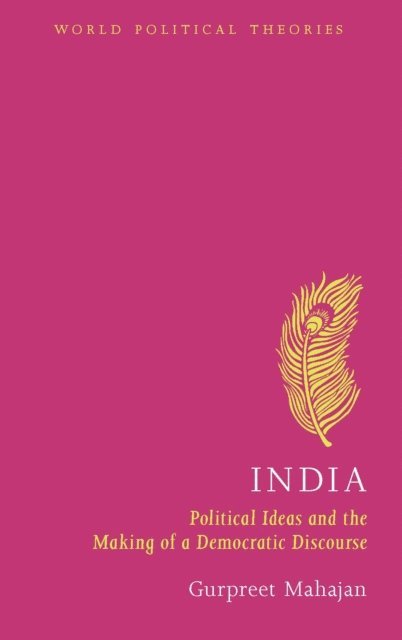
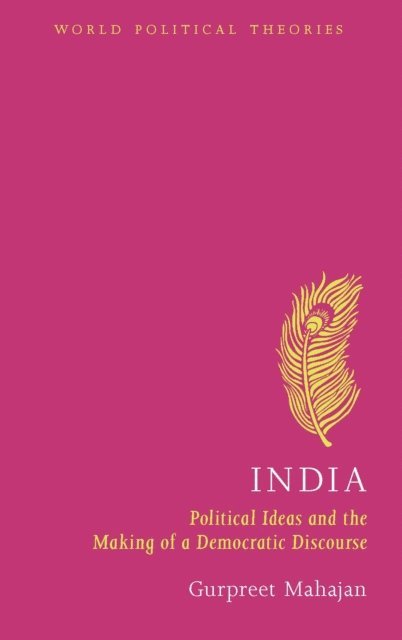
In this groundbreaking work, Gurpreet Mahajan tackles the predisposition of political theory to be limited by the Western canon. Bringing into focus how concepts central to the modern democratic political imaginary are interpreted in India, this book elaborates the ways that ideas of freedom, equality and difference are layered with new meanings and how questions of religion and state, critical reason and embedded self are understood in the Indian context.Part of Zed's World Political Theories series, this remarkable work offers a glimpse of the social and political life of contemporary India, and how it differs from the dominant liberal paradigm.
E-bok
Engelska, 2013351 kr
Läs direkt efter köp
In this groundbreaking work, Gurpreet Mahajan tackles the predisposition of political theory to be limited by the Western canon. Bringing into focus how concepts central to the modern democratic political imaginary are interpreted in India, this book elaborates the ways that ideas of freedom, equality and difference are layered with new meanings and how questions of religion and state, critical reason and embedded self are understood in the Indian context.Part of Zed's World Political Theories series, this remarkable work offers a glimpse of the social and political life of contemporary India, and how it differs from the dominant liberal paradigm.
E-bok
PDF, Spanska, 2015160 kr
Läs direkt efter köp
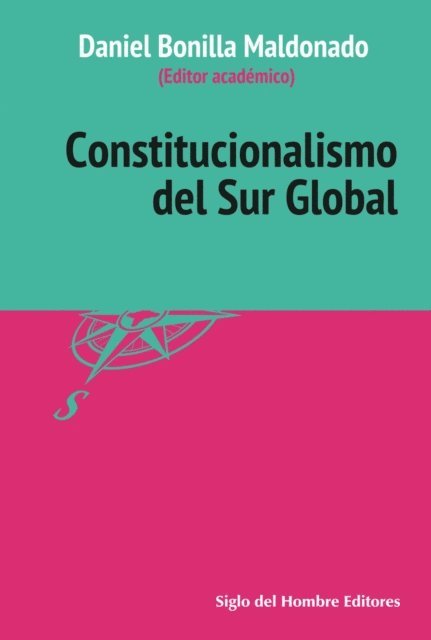
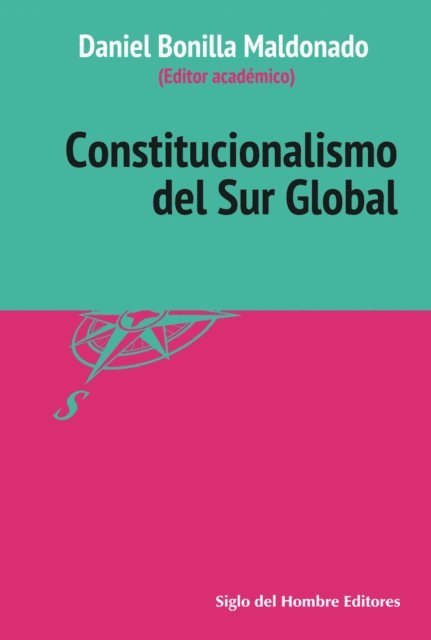
El Tribunal Supremo indio, El Tribunal Constitucional sudafricano y la Corte Constitucional colombiana son tres de los tribunales más importantes y creativos del Sur Global. Este libro explora de manera detallada la jurisprudencia de estos tres tribunales sobre: derechos sociales y económicos, diversidad cultural y acceso a la justicia. Temas relacionados directamente con la pobreza y la desigualdad, la violencia política, las minorías culturales y la consolidación del Estado de derecho. Este libro es una contribución valiosa a la discusión sobre los límites y estructura del constitucionalismo contemporáneo.
E-bok
Spanska, 2015160 kr
Läs direkt efter köp
El Tribunal Supremo indio, El Tribunal Constitucional sudafricano y la Corte Constitucional colombiana son tres de los tribunales más importantes y creativos del Sur Global. Este libro explora de manera detallada la jurisprudencia de estos tres tribunales sobre: derechos sociales y económicos, diversidad cultural y acceso a la justicia. Temas relacionados directamente con la pobreza y la desigualdad, la violencia política, las minorías culturales y la consolidación del Estado de derecho. Este libro es una contribución valiosa a la discusión sobre los límites y estructura del constitucionalismo contemporáneo.