Gwendolin J. Blossfeld - Böcker
Visar alla böcker från författaren Gwendolin J. Blossfeld. Handla med fri frakt och snabb leverans.
4 produkter
4 produkter
755 kr
Skickas inom 10-15 vardagar
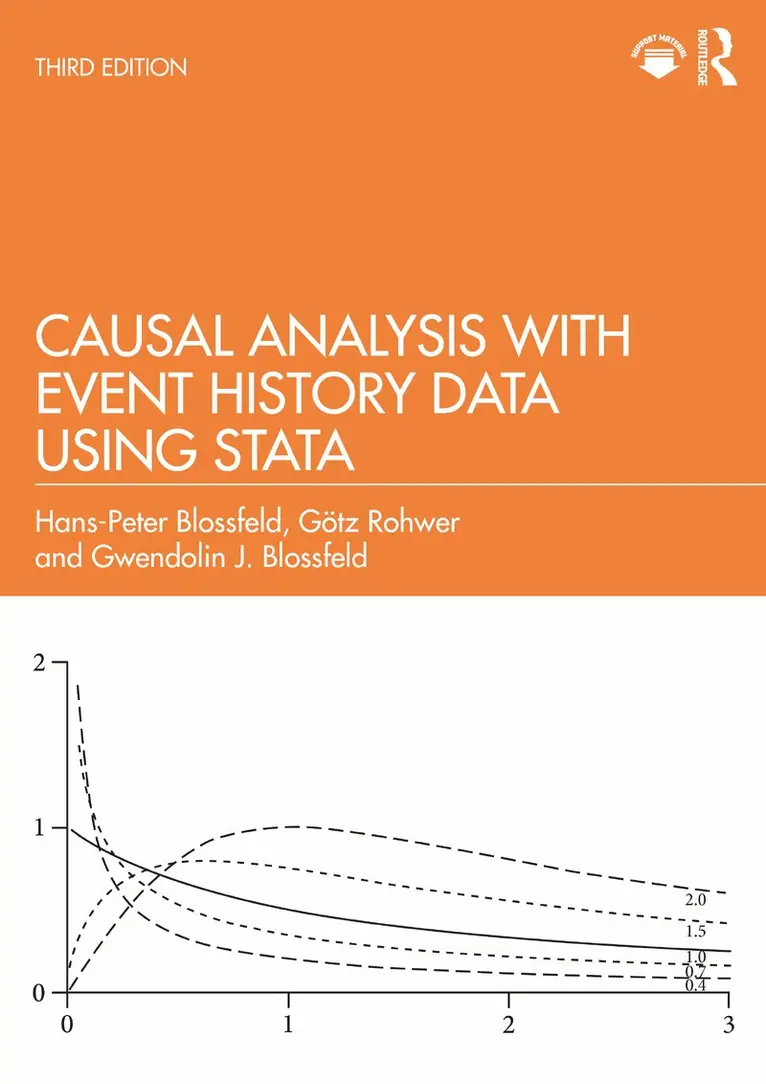
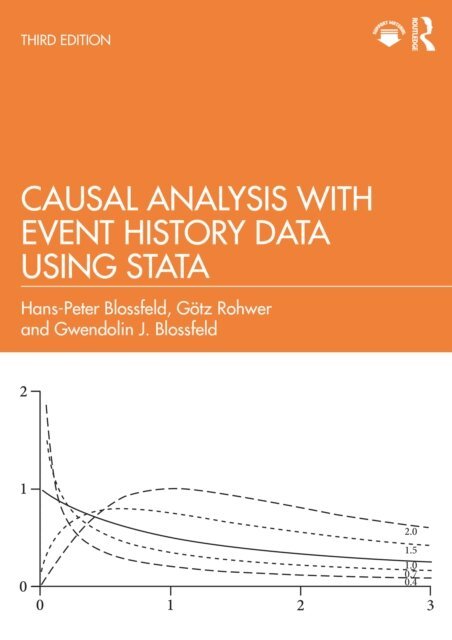
This third edition of Causal Analysis with Event History Data Using Stata provides an updated introduction to event history modeling along with many instructive Stata examples. Using the latest Stata software, each of these practical examples develops a research question, points to useful contextual background information, gives a brief account of the underlying statistical concepts, describes the organization of input data and the application of Stata statistical procedures, and assists the reader in interpreting the content of the results obtained. Emphasizing the strengths and limitations of continuous-time event history analysis in different fields of social science applications, this book demonstrates that event history models provide a useful approach to uncover causal relation- ships or to map a system of causal relationships. In particular, this book demonstrates how long-term processes can be studied, how different forms of duration dependencies can be estimated using nonparametric, parametric and semiparametric models, and how parallel and interdependent dynamic systems can be analyzed from a causal-analytical point of view using the method of episode splitting. The book also shows how changing contextual information at the micro, meso and macro levels can be easily integrated into a dynamic analysis of longitudinal data. Finally, the book addresses the problem of unobserved heterogeneity of time-constant and time-dependent omitted variables and makes suggestions for dealing with these sometimes difficult methodological problems.Causal Analysis with Event History Data Using Stata is an invaluable resource for both novice and experienced researchers from a variety of fields (e.g. sociology, economics, political science, education, psychology, demography, epidemiology, management research and organizational studies, as well as medicine and clinical applications) who need an introductory textbook on continuous-time event history analysis and who are looking for a practical handbook for their longitudinal research.
Comparison Between Continuous-Time and Discrete-Time
Event History Analysis with Stata
Häftad, Engelska, 2025
756 kr
Skickas inom 10-15 vardagar
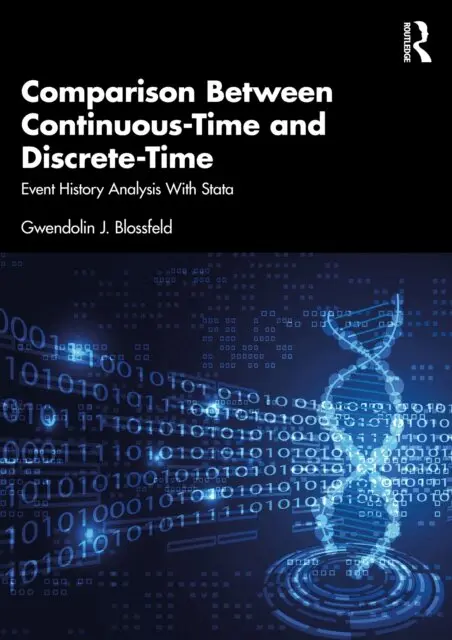
Comparison Between Continuous-Time and Discrete-Time: Event History Analysis with Stata elucidates the statistical concepts and empirical applications of both continuous-time and discrete-time event history models. Empirical scientists have increasingly collected data on the timing of events, with the understanding that events can occur at any point in time and may be recorded using different observation schemes. However, time-continuous processes are not always observed with fine-grained temporal resolution; in some cases, they are captured with larger observation intervals (monthly, yearly, biennially, and quadrennially).This book introduces the need for discrete-time event history analysis methods and adeptly discusses the limitations of the discrete-time approach when compared to continuous-time models. It offers an in-depth comparison of both methods and sheds light on how they differ and align. By utilizing the statistical software Stata and using a campus example data set, the book provides practical examples that showcase the implications of larger observation intervals in discrete-time applications.This book serves as an essential resource for researchers, students, and practitioners seeking to comprehend the nuances of event history analysis in both continuous and discrete-time frameworks. Its comprehensive exploration of statistical techniques and real-world applications will equip readers with a deeper understanding of the strengths and limitations of each method, thus enabling more informed and robust decision-making in empirical research.
2 040 kr
Skickas inom 10-15 vardagar
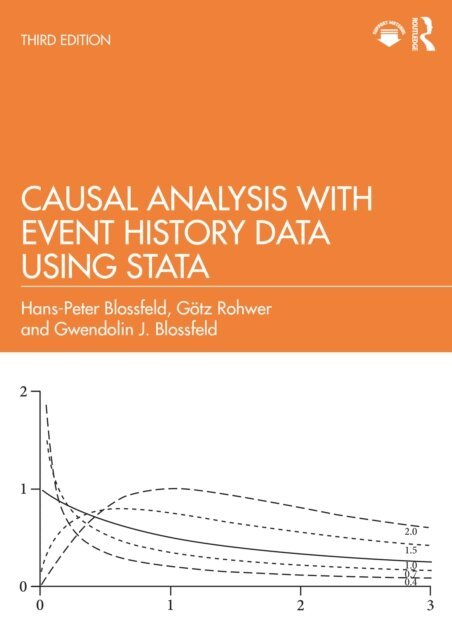
This third edition of Causal Analysis with Event History Data Using Stata provides an updated introduction to event history modeling along with many instructive Stata examples. Using the latest Stata software, each of these practical examples develops a research question, points to useful contextual background information, gives a brief account of the underlying statistical concepts, describes the organization of input data and the application of Stata statistical procedures, and assists the reader in interpreting the content of the results obtained. Emphasizing the strengths and limitations of continuous-time event history analysis in different fields of social science applications, this book demonstrates that event history models provide a useful approach to uncover causal relation- ships or to map a system of causal relationships. In particular, this book demonstrates how long-term processes can be studied, how different forms of duration dependencies can be estimated using nonparametric, parametric and semiparametric models, and how parallel and interdependent dynamic systems can be analyzed from a causal-analytical point of view using the method of episode splitting. The book also shows how changing contextual information at the micro, meso and macro levels can be easily integrated into a dynamic analysis of longitudinal data. Finally, the book addresses the problem of unobserved heterogeneity of time-constant and time-dependent omitted variables and makes suggestions for dealing with these sometimes difficult methodological problems.Causal Analysis with Event History Data Using Stata is an invaluable resource for both novice and experienced researchers from a variety of fields (e.g. sociology, economics, political science, education, psychology, demography, epidemiology, management research and organizational studies, as well as medicine and clinical applications) who need an introductory textbook on continuous-time event history analysis and who are looking for a practical handbook for their longitudinal research.
Comparison Between Continuous-Time and Discrete-Time
Event History Analysis with Stata
Inbunden, Engelska, 2025
2 040 kr
Skickas inom 10-15 vardagar
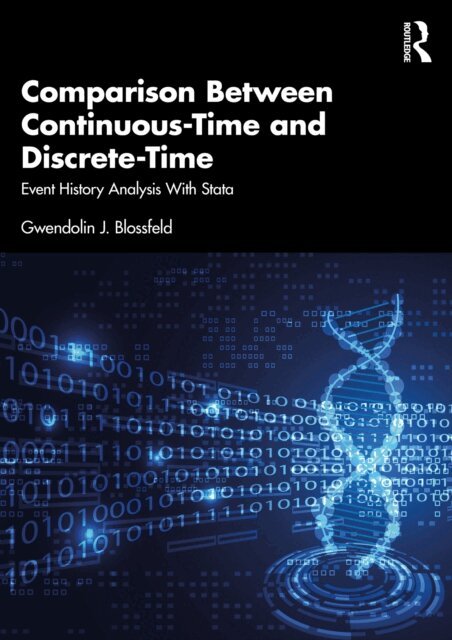
Comparison Between Continuous-Time and Discrete-Time: Event History Analysis with Stata elucidates the statistical concepts and empirical applications of both continuous-time and discrete-time event history models. Empirical scientists have increasingly collected data on the timing of events, with the understanding that events can occur at any point in time and may be recorded using different observation schemes. However, time-continuous processes are not always observed with fine-grained temporal resolution; in some cases, they are captured with larger observation intervals (monthly, yearly, biennially, and quadrennially).This book introduces the need for discrete-time event history analysis methods and adeptly discusses the limitations of the discrete-time approach when compared to continuous-time models. It offers an in-depth comparison of both methods and sheds light on how they differ and align. By utilizing the statistical software Stata and using a campus example data set, the book provides practical examples that showcase the implications of larger observation intervals in discrete-time applications.This book serves as an essential resource for researchers, students, and practitioners seeking to comprehend the nuances of event history analysis in both continuous and discrete-time frameworks. Its comprehensive exploration of statistical techniques and real-world applications will equip readers with a deeper understanding of the strengths and limitations of each method, thus enabling more informed and robust decision-making in empirical research.